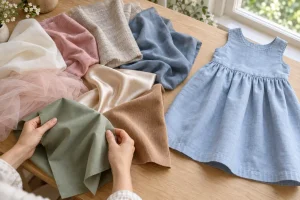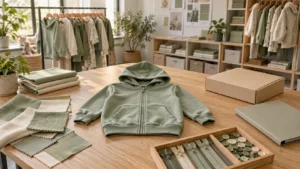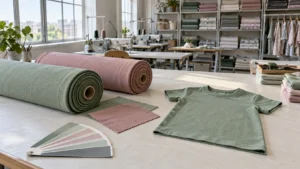
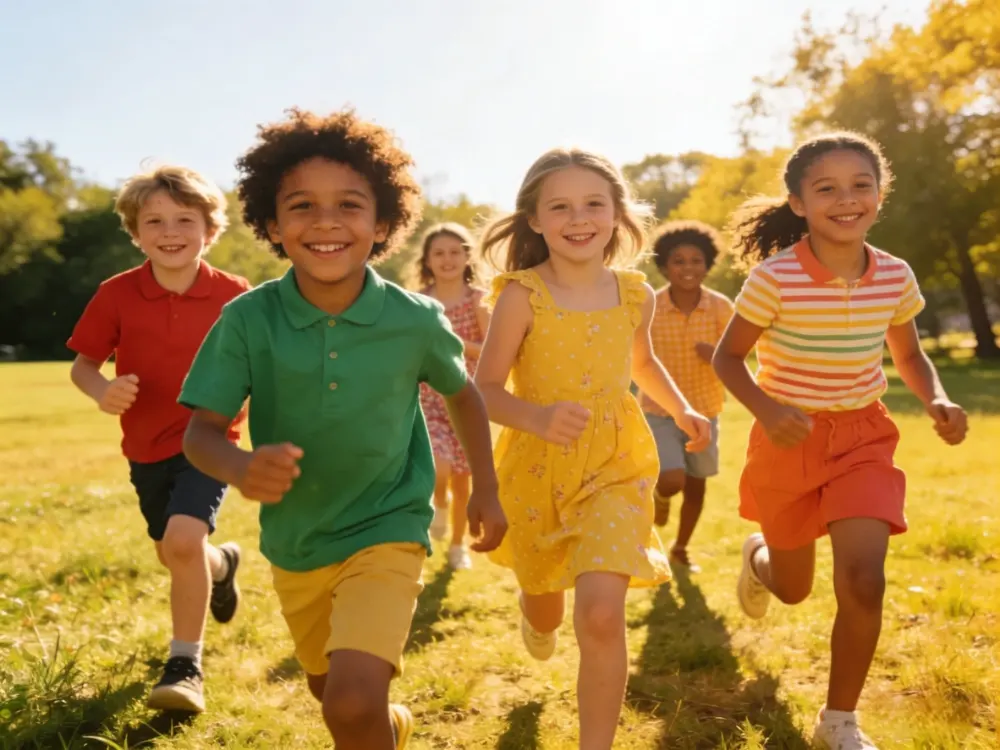
As a parent, you know how hard kids are on their clothes—they get them dirty, crawl around in them, and outgrow them in just a few months.
For children’s clothing retailers, this means you need a kids’ wear manufacturer that delivers durability, comfort, and affordability all at once.
Thankfully, the internet changed how sourcing works. You don’t need to fly out and visit factories anymore. You can get all the supplier details you need right from your desk.
In this guide, I’ll show you exactly how to find a kids clothing manufacturer, even if you’re a complete beginner, so you can easily secure a reliable partner.
How to Find a Children’s Wear Manufacturer
From my experience, here are the best ways to filter down your options and find a potential partner.
- Online Marketplaces: Use B2B platforms like Alibaba, Etsy, or Sewport. They let you filter through verified suppliers in one spot. It’s also the easiest way to compare MOQs and check certifications.
- Social Media: Don’t ignore Instagram and LinkedIn. You can browse a manufacturer’s portfolio and DM potential partners directly.
- Search Engines: Run specific keyword searches to find independent factories. Just make sure to verify they are legitimate through their official website or other digital footprints.
- Trade Shows: Go to industry events. This lets you check fabric quality with your own hands and build trust face-to-face.
The first three methods can be done online. The last one requires travel. Either way, you need a strategy. Look at factors like location, production capacity, and minimum orders to make the right call.
The Best Ways to Find a Kidswear Manufacturer
If you ask me the best method, I’d pick Alibaba. Alibaba.com is the world’s largest B2B wholesale website. It helps buyers (like brands and businesses) find manufacturers. It covers multiple industries, children’s wear included.
On Alibaba, you’ll find global factory listings, but you must evaluate quality yourself. Prioritize suppliers with Verified Supplier and Trade Assurance badges.
Advantages of Alibaba
- Vast Supplier Network: As the global leader in B2B platforms, Alibaba connects millions of factories. It offers a huge range of fabrics and price points to meet almost any children’s wear production need.
- Trade Assurance Protection: The platform’s Trade Assurance service protects your payments throughout the process. If a supplier ships late or products fail to meet quality standards, you can apply for a refund. This greatly reduces cross-border transaction risks.
- Verified Manufacturer System: By filtering for the Verified Supplier badge, you can quickly identify real manufacturers. These factories are inspected on-site by third-party institutions, helping you effectively avoid middlemen or shell companies.
- Efficient Price Comparison: With the RFQ (Request for Quotation) function, you can send your requirements to multiple factories with one click. You’ll quickly get multiple quotes for side-by-side comparison, allowing you to lock in the most cost-effective partner.
How to Evaluate and Screen Potential Manufacturers
You can use the methods above to establish initial contact with multiple potential manufacturers and start your screening process. Keep going until your requirements are met.
- Check compliance and certifications. A legitimate manufacturer must hold proper certifications, such as OEKO-TEX and CPSIA. These are non-negotiable requirements in the textile industry.
- Request samples for quality control. Be sure to order samples before mass production. Test the fabric softness, stitch durability, and fit personally.
- Evaluate communication efficiency. During the early negotiation stage, assess the supplier’s response speed. Make sure they can understand complex instructions and solve problems quickly.
- Clarify the Minimum Order Quantity (MOQ). For startups, the biggest hurdle is often the MOQ. An overly high MOQ may strain your budget. Therefore, you should prioritize suppliers that offer flexible MOQs.
Take this screening process seriously. Spend time on thorough research and evaluation. This will minimize the risk of costly errors and turn your fashion design into reality sooner.
The Importance of Sampling
Sampling is the bridge between a sketch and a finished product. It is your only chance to actually touch the fabric, pull at the seams, and check the fit before you spend real money.
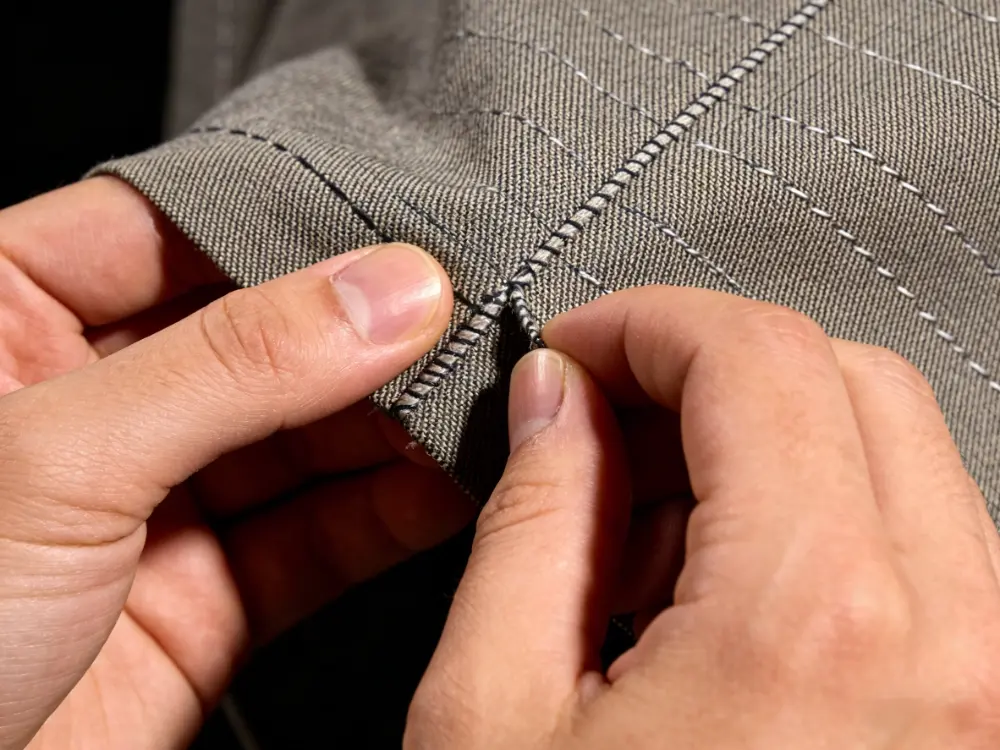
Test your prototypes hard. You need to catch design flaws and safety risks now, not later. This ensures your final product meets the strict standards of children’s wear.
Skipping this step is gambling with your budget. It often leads to production disasters and a warehouse full of dead stock.
Treat sampling as an insurance policy, not an expense. It protects your brand’s reputation and guarantees that what you unbox in bulk is exactly what you ordered.
Avoid These Manufacturers
If you spot any of these warning signs during your talks, walk away. You need to avoid getting burned by a bad deal.
- Refusing Safe Payments: If a supplier insists on wiring money to a personal bank account, stop. If they refuse secure options like Alibaba Trade Assurance, that is a major red flag. Legitimate factories always use transparent channels to protect your funds if a dispute happens.
- Poor Communication: If they take days to reply to a simple question, move on. If their answers about production specs are vague, cut ties immediately. Bad communication now guarantees headaches and delays later.
- Refusing Samples: If a manufacturer discourages you from ordering samples, run. If they suggest skipping straight to bulk production to “save time,” they are hiding something. Usually, it means their quality is poor or they can’t actually replicate your design.
- Suspiciously Low Prices: If a quote is way below the market average, be suspicious. It often means they use unsafe, cheap fabrics or violate labor laws. In the children’s clothing industry, cutting corners like this almost always leads to failed safety tests.
Local vs. Overseas: Making the Choice
Local Manufacturers: offer faster communication and quicker delivery, which is great for urgent projects. However, be realistic: if you are based in the US or Europe, labor and material costs will be steep. That eats into your profit.
Overseas Manufacturers: Suppliers in places like China, India, and Vietnam offer the lowest unit costs and massive capacity. If you can plan ahead for longer shipping times, your profit margins will be much healthier.
| Feature | Local Manufacturers (USA/Europe) | Overseas Manufacturers (China/Asia) |
| Cost | High (Labor & Materials) | Low (Cost-effective) |
| Lead Time | Short (Faster Shipping) | Long (Requires Planning) |
| MOQ | Low | Flexible (varies by factory) |
| Best For | Luxury / Quick Restocks | Scalability / High Margin |
Which One Should You Choose?
If you want the best value without sacrificing quality, look at China. They have deep experience in the children’s clothing industry and the advanced machinery to back it up. Whatever your specific requirements are, they can make it happen.
5 Best Children’s Clothing Manufacturers
If you’re still worried about finding your ideal manufacturer, don’t stress. I’ve got 5 trustworthy children’s clothing manufacturers to recommend to you.
HAPA (China)
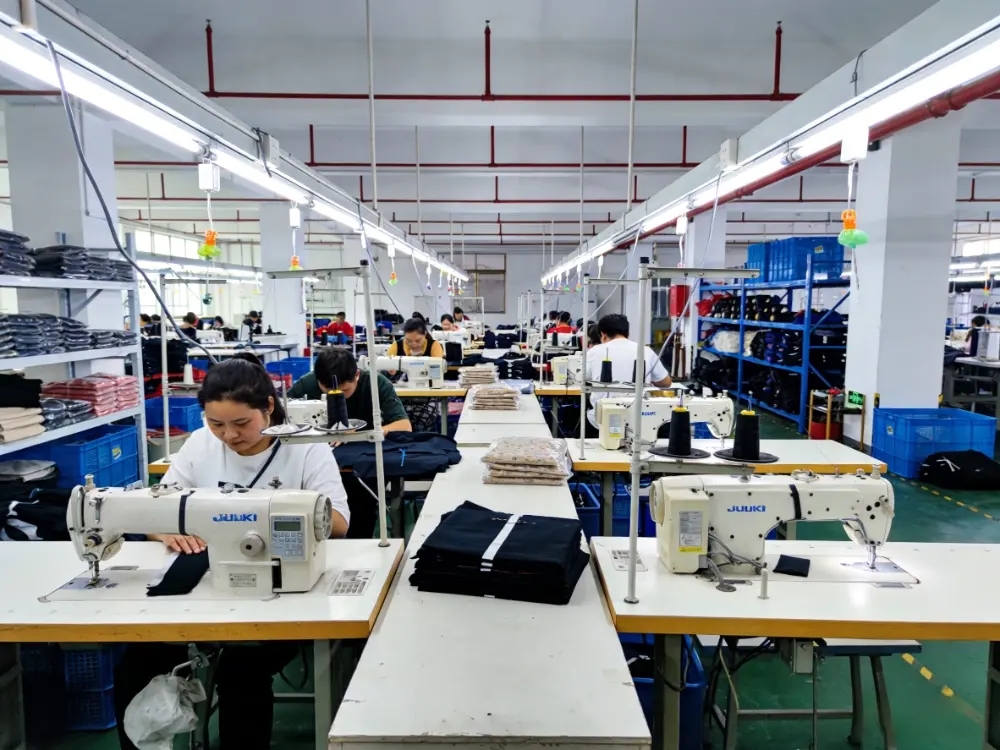
HAPA stands out as a specialist in premium kids’ wear manufacturing. Unlike generalist factories, HAPA focuses exclusively on children’s safety standards and eco-friendly fabrics. They offer a unique “One-Stop Growth Plan” for new brands, handling everything from design tech packs to final packaging with competitive MOQs.
Hongyu Apparel (China)
Hongyu focuses on startups and independent designers. They handle everything end-to-end, from sourcing fabric to final delivery. They really shine when it comes to complex custom designs and offer flexible production runs for growing businesses.
Appareify (China)
Known for speed and strict quality control, Appareify is a go-to for private label brands. They have a wide range of manufacturing capabilities, including sustainable fabrics, making them a versatile choice for almost any niche.
Mega Apparel (USA)
Based in the US with global reach, Mega is perfect for startups because their minimums are tiny—often just 35-50 pieces. They specialize in custom “cut and sew,” giving you total control over every detail of the garment.
Royal Apparel (USA)
If “Made in USA” and sustainability are your top priorities, Royal Apparel leads the pack. They use organic cotton, bamboo, and recycled blends. They are the ideal choice for brands wanting ethical, sweatshop-free production, whether for wholesale blanks or custom finished goods.
How to Communicate Efficiently with Children’s Clothing Manufacturers
Prepare a Full Tech Pack — Your Common Language for Production
Don’t start a conversation with only a simple design picture. Manufacturers speak technical details, not mind-reading. A complete, clear tech pack for each style will cut down misunderstandings and mistakes dramatically.
Include these essentials:
- Multi-view detailed sketches: front, back and side profiles
- Bill of Materials (BOM): list fabric, stitching, buttons, zippers and all trims clearly; mark safety rules like nickel-free and lead-free explicitly
- Graded measurement spec sheet: exact measurements for all sizes such as 2T, 3T, 4T
- Fit sample: send a physical sample if possible, so the factory truly understands fabric hand feel, weight and real fit
Use the Right Way to Ask for a Quote
If you want fast, serious replies from real manufacturers, include these three clear details in your first inquiry:
- Exact order quantity: drop vague phrases like “hundreds of pieces”. Be specific: e.g. 3 styles, 3 colors per style, 300 pieces per color per style
- Compliance requirements upfront: state standards clearly, such as GOTS-certified organic cotton or OEKO-TEX dyes. This quickly filters out low-quality factories
- Clear target timeline: specify your deadline for samples and bulk delivery
Use the Right Tools for Smooth Communication
Email is still the best for formal, recordable agreements. For quick daily updates, use these tools:
- WeChat / WhatsApp: most Chinese factories prefer these for real-time updates, fabric swatch sharing, and short videos of sample progress
- Project boards: Trello or Notion to track every SKU from design, sampling, pre-production approval to bulk production
- Video calls: a 10-minute live feedback session on samples works better than a 20-page PDF report
Respect Cultural and Production Differences
- Understand what “yes” really means: in many manufacturing cultures, suppliers may say “yes” out of politeness even if a request is difficult. Always follow up with “how” — ask for factory machine photos or past samples with the same technique to confirm they can really deliver
- Plan around Chinese holidays: the biggest shutdown is Chinese New Year (January–February). Factories stop completely during this period, so plan orders 2–3 months in advance
- Use the sandwich feedback method: praise what the factory did well first, list clear technical changes, then end with positive expectations. This keeps communication respectful and productive
Conclusion
With this guide, you should now know how to find a kids clothing manufacturer for your business. As we discussed earlier, this process is more than just comparing prices.
A top-tier children’s wear manufacturer respects your timelines and quality standards, and is willing to grow with you.
If you want to avoid repeated trial and error and partner with a supplier that meets all your requirements, HAPA is ready to serve you wholeheartedly.
FAQ
What is a typical Minimum Order Quantity (MOQ) for custom kidswear?
The industry standard MOQ is typically 300 to 500 pieces per style. This quantity allows the factory to purchase fabric rolls efficiently. However, some flexible manufacturers offer lower MOQs, such as 50 to 100 pieces, for startups. Expect to pay a higher unit price for smaller orders.
What is the difference between OEM and ODM in kids’ clothing manufacturing?
OEM (Original Equipment Manufacturer) means the factory produces clothing based on your unique designs and tech packs. You own the intellectual property. ODM (Original Design Manufacturer) means the factory uses their own designs, and you simply add your brand label. OEM is best for custom brands; ODM is faster for generic styles.
How can I protect my kids’ clothing designs when working with overseas factories?
Always have the manufacturer sign an NNN Agreement (Non-Disclosure, Non-Use, Non-Circumvention) before sharing any files. This is stronger than a standard NDA. You should also register your trademark in the country of manufacture. Working with a reputable, established partner is your best defense against theft.
What specific qualifications or certifications should I look for when selecting a children’s clothing manufacturer?
Look for ISO 9001 to ensure consistent quality management. Social compliance audits like BSCI or SMETA show they treat workers fairly. For safety, they must provide a Children’s Product Certificate (CPC) for the US market. OEKO-TEX Standard 100 is also crucial to prove fabrics are free from harmful chemicals.