Bamboo fabric is known as the “fifth major natural fiber.” It ranks right after cotton, linen, wool, and silk. Now, it is huge in the fashion industry. Many brands even use it as a main selling point.
But do you really know bamboo fabric? Is it actually “natural and eco-friendly,” or is that just hype? This blog will show you the truth about this “breathing” fabric.
What is bamboo fabric?
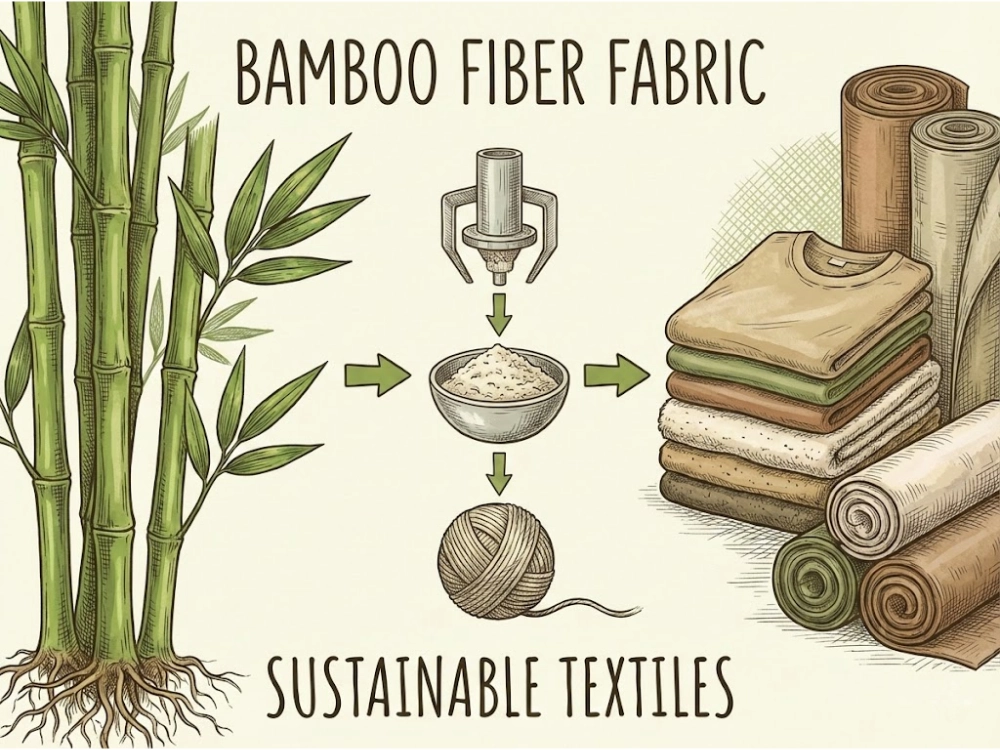
Bamboo fabric isn’t just peeled directly off the plant. It goes through a special process to become fiber.
Technically, it is a “regenerated cellulose fiber.” But don’t worry, it is still considered a natural and eco-friendly fabric.
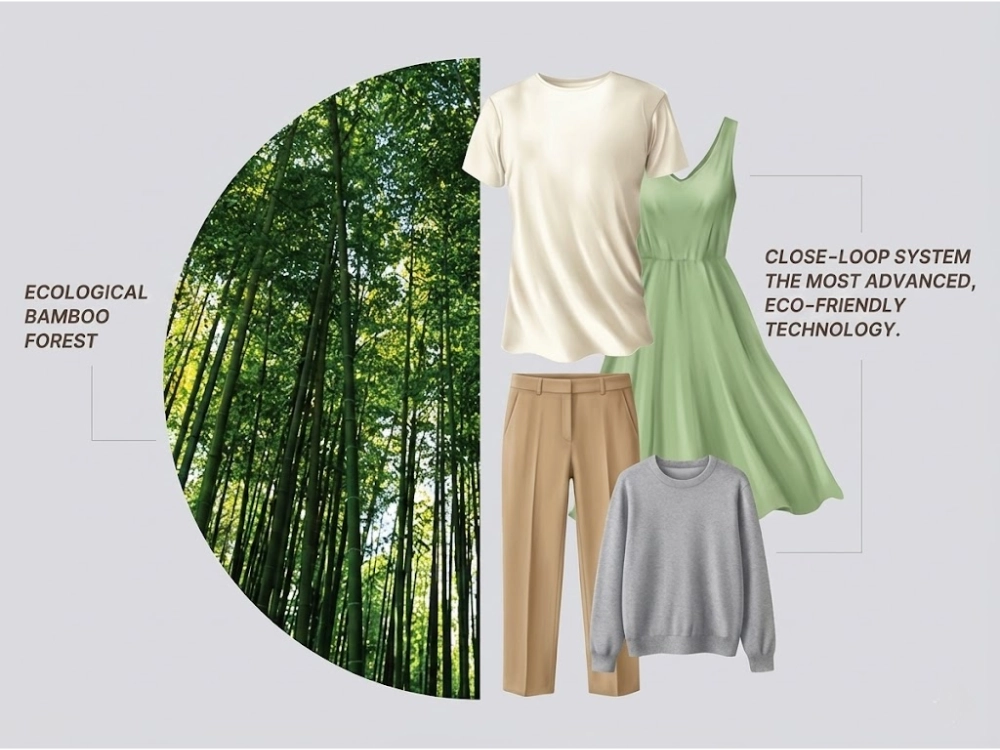
It comes from bamboo, one of the fastest-growing plants on Earth. Bamboo matures in just 3 to 5 years. It doesn’t need pesticides or fertilizers. It also absorbs carbon dioxide. That makes it a truly sustainable resource.
There are two main ways to process bamboo: Natural Bamboo Fiber and Bamboo Pulp Fiber.
1.Natural Bamboo Fiber (Bamboo Linen)
This fiber is extracted directly from the bamboo stem using mechanical methods, similar to how hemp or flax is processed. Because it retains the plant’s natural properties, the texture tends to be coarser and stiffer.
Consequently, it is rarely used for clothing and is found mostly in home textiles that don’t require high softness, such as carpets and curtains.
2.Bamboo Pulp Fiber (Regenerated Fiber)
This is the material used in the vast majority of “bamboo fiber” clothing on the market. While it starts as bamboo, it undergoes a chemical process (such as alkali hydrolysis or sulfonation) to turn the plant material into a pulp, which is then dissolved and spun into fibers.
Essentially, it is a type of regenerated cellulose fiber. It belongs to the same family as viscose (rayon), modal, and lyocell—the only difference is that the raw material comes from bamboo instead of wood.
Is Bamboo Fabric Truly Sustainable?
Yes, bamboo fits sustainability goals. But it heavily depends on how it is made.
Bamboo grows incredibly fast. It thrives with very little water. It needs no pesticides or fertilizers. Compared to thirsty crops like cotton, bamboo is a clear winner for the environment.
What the Science Says Research backs this up. A study in Industrial Crops and Products confirms it: bamboo has a smaller footprint than cotton or wood during the farming stage. This is thanks to its rapid growth.
Here is the catch. Most bamboo fabric is made using the “viscose process.” This method uses strong chemicals to dissolve the bamboo. If factories don’t manage waste correctly, these chemicals cause serious pollution.
How to Choose To make a better choice, check the label. Look for reliable certifications like OEKO-TEX. This ensures the final fabric is free from harmful chemical residues.
Is bamboo a good quality fabric?
Generally speaking, yes—it has a well-deserved reputation for being incredibly comfortable and highly practical.
Why do people love it?
- Silky Hand-Feel: It feels buttery soft against the skin—think of it as a plant-based alternative to silk.
- Hypoallergenic: It is gentle and non-irritating, making it a go-to for people with sensitive skin.
- Temperature Regulation: It is breathable and moisture-wicking, keeping you cool and dry.
- Odor Resistance: It naturally resists odors, which is exactly why it is a staple for socks, underwear, and activewear.
Durability and Care When manufactured correctly (or blended with structural fibers), bamboo fabric is durable, low-maintenance, and holds its shape well without excessive shrinking.
A Note on Quality Not all bamboo fabric is created equal. The quality largely depends on the processing method:
- Top-Tier: Bamboo processed via the Lyocell method (or mechanically) is the gold standard. It offers superior durability and is far more eco-friendly.
- Standard: Cheaper bamboo viscose, if not subject to strict quality control, can be prone to pilling or wearing out faster.
The Verdict As long as you buy from reputable brands that prioritize quality manufacturing, bamboo is a fantastic, versatile material that adds a touch of everyday luxury to your wardrobe and home.
Why Is It So Popular?
Since hitting the market, bamboo fiber has enjoyed massive popularity, with major retailers adopting it for a wide variety of products. Here are the key drivers behind its success:
Healthy, Comfortable, and Naturally Antibacterial
Bamboo fiber contains a unique bio-agent known as “Bamboo Kun,” which inhibits 99% of common bacteria (such as E. coli and Staphylococcus aureus) and significantly reduces odor. It is particularly gentle when worn next to the skin, making it ideal for those with sensitive skin or who sweat easily. It keeps you feeling fresh and non-sticky, even in the heat of summer.
Superior Moisture Wicking and Breathability
Tests indicate that bamboo fiber is three times more absorbent than cotton and wicks moisture away much faster. Even in humid conditions, a bamboo T-shirt rapidly evaporates sweat, keeping your skin dry and eliminating that uncomfortable, stuffy feeling.
Eco-Friendly and Sustainable
Bamboo lightens the load on our planet. It has a short growth cycle (maturing in just 3–5 years), sequesters 1.5 times more carbon than trees, and causes virtually zero pollution during cultivation. Compared to cotton—which requires heavy pesticide and water use—the production of bamboo fiber reduces the carbon footprint by over 60%, achieving a truly green cycle from “plant to garment.”
Highly Durable and Long-Lasting
When processed correctly, bamboo fiber clothing is incredibly robust. It retains its shape and softness even after repeated washing, significantly extending the lifespan of the garment.
Bamboo Fabric vs. Cotton: Which Is Better?
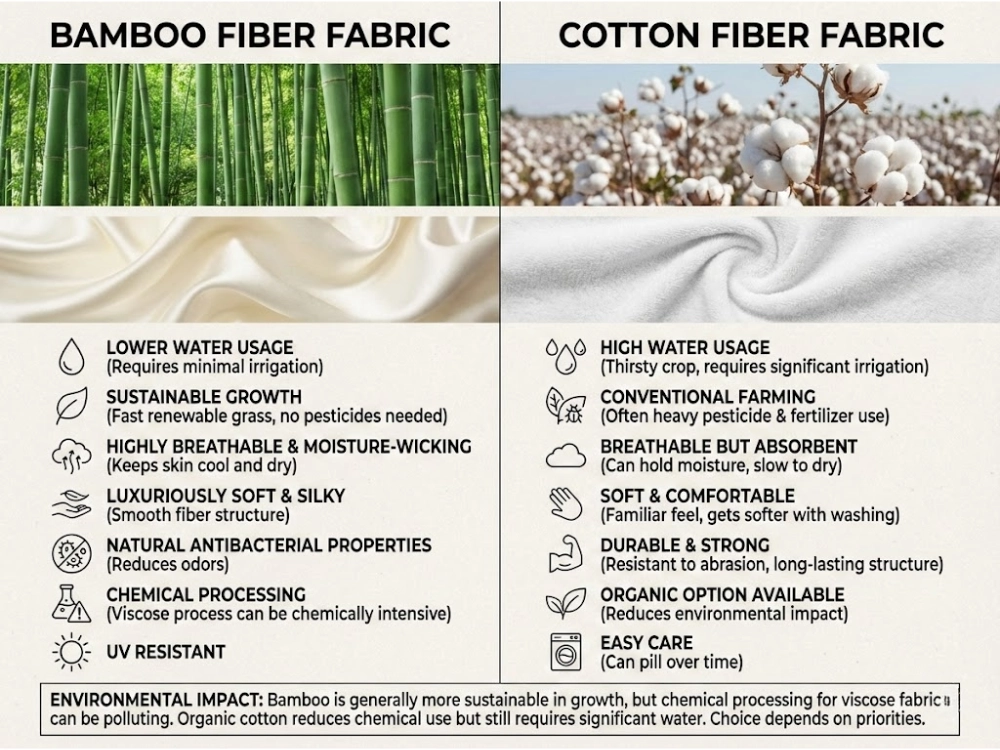
Bamboo fiber and cotton each have their own advantages and disadvantages. Bamboo fiber has better breathability and moisture absorption. Research has shown that it has 20% -50% higher breathability than cotton(source:Leelinework), strong water absorption capacity, and can absorb nearly three times its own weight of moisture, keeping the skin dry and comfortable.
Bamboo fiber is also more environmentally friendly. Bamboo grows quickly, requires little to no irrigation, does not use pesticides, and has a high yield. If environmentally friendly processes are used during processing, it saves about 70% more water than cotton and has lower carbon emissions.
But cotton is more durable. Especially high-quality cotton, wear-resistant and washable, still strong even when wet, with a long lifespan. Cotton supply chain is mature and has comprehensive advantages, so it is widely used in the textile industry.
The Feel of Bamboo Fabric
Bamboo fiber fabric is renowned for its incredible softness, often compared to silk. It has a smooth, luxurious texture that feels significantly softer than cotton. This is because bamboo fibers are naturally round and smooth, meaning there are no sharp spurs to irritate the skin. This makes it the perfect choice for anyone with sensitive skin.
Wearing bamboo adds a touch of luxury to your daily life, whether it’s upgrading your wardrobe or improving your sleep quality. Its comfort is truly unparalleled. Once you experience how cool, dry, and soft it feels against your skin, you’ll fall in love with it instantly.
Common Applications of Bamboo Fiber in Clothing
Bamboo fiber has become an important raw material in the textile industry, and due to its smoother and rounder microstructure compared to cotton, it is widely favored for its “silky” texture and moisture wicking properties.
- Underwear
This can be said to be the most popular application area of bamboo fiber fabric. Bamboo fiber has natural antibacterial properties that help reduce bacteria that cause odors – a crucial feature for underwear and socks that need to stay fresh.
- Sportswear
Bamboo fiber is increasingly replacing synthetic polyester fiber in gyms. Bamboo fiber has excellent temperature regulation function. It has good breathability, can dissipate heat during exercise, and can keep warm during rest.
For people who are prone to sweating during sleep or night sweats, bamboo fiber helps regulate body temperature and prevent overheating during sleep.
- Baby & Children’s Clothing
Because it is naturally hypoallergenic and incredibly soft, bamboo fiber is the ideal choice for infants and children—especially those with eczema or highly sensitive skin.
How to choose high-quality bamboo fiber fabric
Bamboo fiber fabric has surged in popularity thanks to its silky feel, breathability, and eco-friendly reputation.However, not all bamboo products are created equal, and quality can vary significantly between brands. To ensure you don’t waste money on inferior goods, use this simple guide to find the best bamboo textiles.
Check the fabric type on the label
The processing method will affect the quality. Labels will tell you the truth.
- Bamboo viscose fiber (or bamboo artificial silk): This is the most common type. It is silky soft and usually more affordable in price.
- Bamboo Lyocell fiber: This fabric has higher quality. The production process is more environmentally friendly. The fabric is more sturdy and durable. The price is usually higher as well.
- Bamboo linen: This type of fabric is relatively rare. At first, the texture may be slightly rough, but it is very durable.
Understand fabric blending
100% bamboo fiber is not the best choice for all products. Blended fabrics can usually improve performance.
- 100% bamboo fiber: most suitable for bed sheets or loose sleepwear. It is very silky smooth. But it may deform when used for tight clothing.
- Bamboo fiber+cotton blend: This blend enhances the structural feel of the fabric. The fabric is more durable and washable. Very suitable for T-shirts and baby clothing.
- Bamboo fiber+spandex (elastic fiber): This is crucial for sportswear or underwear. It provides the necessary elasticity and resilience.
The Touch Test
If you purchase from a physical store, please feel the fabric. High quality bamboo fiber fabric has unique characteristics.
- Temperature: It should immediately feel cool.
- Texture: It should feel smooth and soft, not rough or stiff.
- Weight: Good bamboo fiber fabric has a good drape. Avoid choosing fabrics that feel too thin or fragile.
Inspect the Workmanship
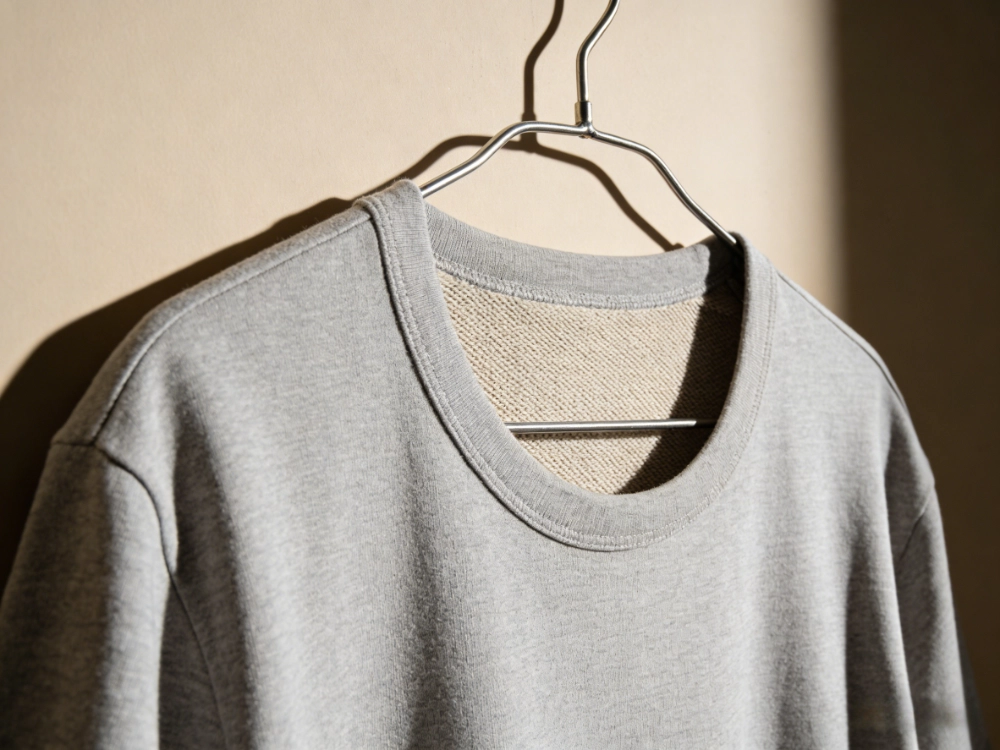
If the sewing process is not good, no matter how good the fabric quality is, it is useless. Carefully examine the details.
- Check the seams: The seams should be straight and firm.
- Check for loose threads: Excessive loose threads indicate rough production processes.
- Check for pilling: Does the fabric surface look fuzzy already? If so, it will likely pill and look old after just one wash.
Check for Certifications
The processing of bamboo fiber may involve harmful chemicals. Authentication can ensure security.
- OEKO-TEX ® Standard 100: This is the most important certification label. It means that the final product does not contain harmful substances. Safe and harmless to your skin.
- FSC certification: This means that the raw material bamboo comes from sustainably managed forests.
Is Bamboo Fiber Fabric Suitable for Children’s Clothing?
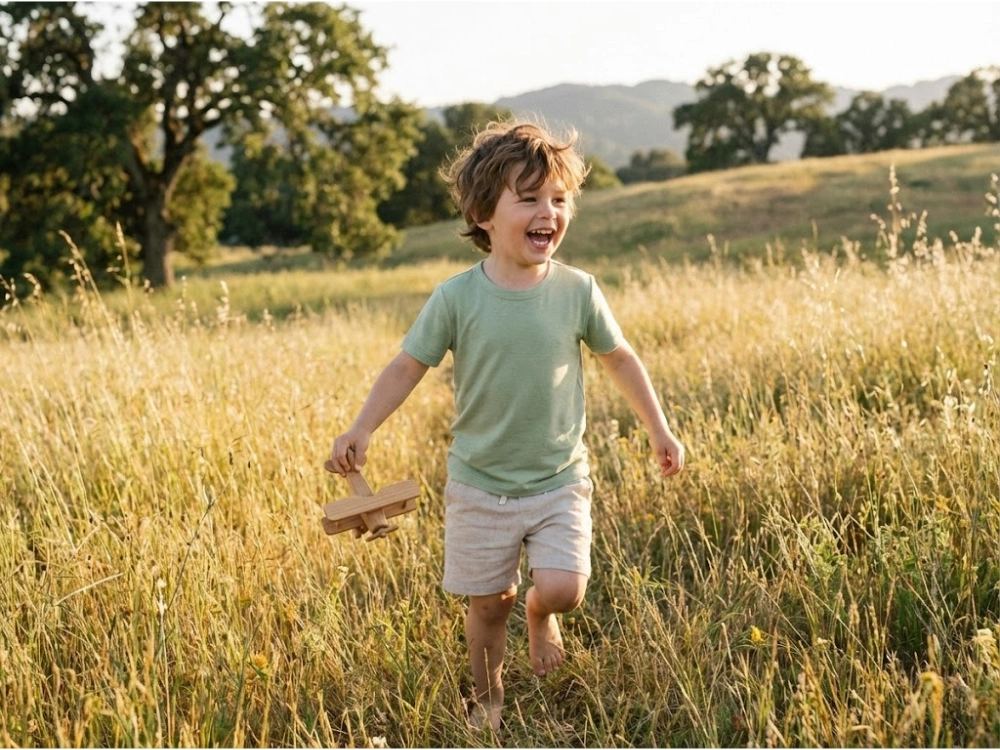
Bamboo fiber is one of the best materials out there for making high-quality kids’ clothes. It is famous for being buttery soft—much smoother than regular cotton—making it super gentle on a baby’s delicate skin.
It’s also a lifesaver for active kids. Because the fabric is naturally breathable and wicks away sweat, it keeps them dry and comfortable while they run and play. Plus, it’s great at regulating temperature, keeping them cool in the heat and cozy in the cold.
For parents of children with sensitive skin or eczema, bamboo is a game-changer. It is naturally hypoallergenic and helps keep odors and bacteria at bay. Best of all? It’s durable. You can wash it over and over, and it will still stay soft and hold its shape. It’s the perfect mix of safety, sustainability, and comfort.
Conclusion
High-quality bamboo fiber is more than just a trend—it is a sustainable choice that parents and children everywhere are falling in love with.
At HAPA, we are a leading children’s clothing manufacturer dedicated to doing things the right way. We are committed to using certified, eco-friendly methods to process our bamboo fiber, ensuring that every garment we produce is safe, comfortable, and kind to the planet.
If you are looking to develop your own line of bamboo fiber children’s clothing, or simply need a reliable manufacturing partner, please feel free to contact us. We provide ideal solutions for high-quality, safe, and sustainable apparel manufacturing.
FAQ
Is bamboo fabric better than cotton?
In terms of softness, bamboo is often better than cotton. It feels like silk and is naturally smoother on the skin. Bamboo is also more absorbent and wicks moisture faster. However, high-quality cotton is usually more durable and holds its shape better over time.
What is bamboo fabric made of?
Bamboo fabric is made from the cellulose pulp of the bamboo plant. The bamboo is crushed and dissolved into a thick liquid. This liquid is then forced through a spinneret to create fibers. Most bamboo fabric on the market is technically “bamboo viscose” or “bamboo rayon.”
Is bamboo fabric toxic to humans?
No, the finished bamboo fabric is safe and non-toxic for consumers. While chemicals are used to break down the bamboo pulp, they are washed out during production. The final fabric is hypoallergenic and safe for sensitive skin. To be sure, always check for safety certifications like OEKO-TEX.
Is bamboo fabric natural or synthetic?
Bamboo fabric is considered “semi-synthetic” or “regenerated cellulose.” It starts as a natural plant material. However, it requires a chemical process to turn that plant into a soft textile. It is not a raw natural fiber like wool or organic cotton.