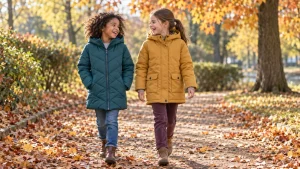
To choose the best winter layering clothes for kids, I’d start with the whole outfit. The base layer should feel comfortable, the clothes over it should add enough warmth, and the coat should suit the weather. Thermals, fleece, sweaters, and protective jackets can all work. The combination depends on your child’s plans.
On a school day, your child might wait outside in the cold, sit in a heated classroom, then run around at recess. Clothes that are easy to remove and put back on make those changes easier. Before shopping, check the closet for what still fits and what’s missing.
How to layer kids’ clothes for winter
For outdoor play, I’d consider merino or synthetic base layers, fleece or another warm layer, and suitable wind and rain protection. On an ordinary school day, your child’s usual long-sleeve tops and sweaters may work. Try the whole outfit before deciding.
As you compare clothes, ask:
- Does the fabric feel comfortable against your child’s skin?
- Is there enough warmth for the activity and time outside?
- Do the sleeves and waistbands bunch up or press into their body?
- Can your child manage the zippers and buttons? If not, will someone be there to help?
- Can you manage the washing and drying the clothes need?
| Layer | Clothes to consider | What it should do | What to check |
|---|---|---|---|
| Base | Thermal top and leggings; a suitable everyday long-sleeve top | Feel comfortable against the skin and help handle sweat | Fabric, seams, fit, and suitability for the activity |
| Mid | Fleece, sweater, cardigan, sweatshirt, or light insulated jacket | Add warmth | Thickness, room in the sleeves, and ease of removal |
| Outer | Weatherproof shell or insulated winter coat | Protect against the weather | Wind and rain protection, coverage, and room for the clothes underneath |
These are three jobs, not a rule to wear three garments. A coat that provides both warmth and weather protection may make a separate mid layer unnecessary.
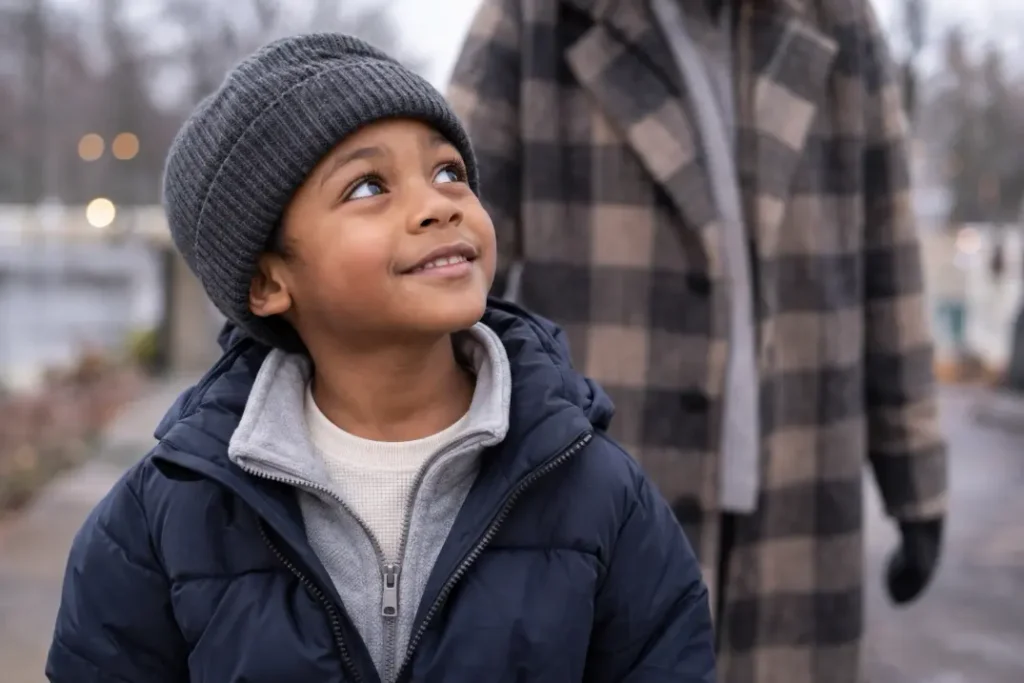
Which kids’ base layers work best in winter?
Have your child try this layer against bare skin. Fabric that feels nice in your hand may still bother them when worn. Changing it after everything else is on is a nuisance, so think ahead about how much they’ll sweat and whether their clothes might get wet.
Thermal tops and leggings for active outdoor days
For snow play, I’d look for thermal tops and bottoms designed for outdoor activity. Read the fabric label and what the description says about wicking. “Thermal” alone tells you little about how the clothes handle sweat.
Ask your child to squat and reach overhead. The waistband shouldn’t dig in, and the top should still overlap the bottoms. Feel along the inside seams for rough spots, especially where another waistband or cuff will sit.
Merino wool or synthetic base layers?
Merino is worth considering if your child likes its feel and you can follow the care instructions. If frequent washing, drying time, and durability are higher on your list, look at synthetic performance layers.
REI’s comparison of base-layer fabrics also discusses fit: a wicking layer works better when it sits comfortably close to the body. I wouldn’t choose by fiber content alone. Thickness, fabric construction, and how your child feels in it also count.
If your child finds wool scratchy, try another material. I’d rather do that than buy a whole set I have to persuade them to wear.
Is an ordinary long-sleeve top enough for school?
An everyday long-sleeve top can work for a day spent mostly in a heated classroom. Add suitable clothes for the journey and outdoor recess.
For a long cold-weather outing, especially with sweat or wet snow involved, I’d reconsider that all-cotton school top. Cotton can stay damp for a long time. Keep those comfortable tops for everyday wear and choose a more suitable base layer for longer outdoor play.
Which winter mid layers for kids add warmth without bulk?
A roomy sweater can feel tight inside a coat. Put both on your child, then ask them to bend their elbows and move their shoulders. You’ll soon see whether the sleeves are crowded. Choose the mid layer’s thickness with that coat in mind.
Fleece jackets and pullovers
Fleece is worth trying when you want a warm layer your child can remove separately. Reima’s winter layering advice includes it as a mid-layer option and stresses leaving space between clothes. Don’t squeeze everything together just to fit in another garment.
A full-zip fleece comes off without going over your child’s head. With a pullover, check the neck opening and whether removing it pulls the shirt underneath up too.
The right thickness depends on the coat. Ordinary fleece also needs suitable protection over it in wind or rain, however warm it feels.
Sweaters, cardigans, and sweatshirts
You may not need to buy anything here. The sweater or sweatshirt in your child’s drawer might work as a mid layer. Try it over the base top and check shoulder movement, the neckline, and the cuffs.
Sweatshirts and sweaters are made differently, but both come in thin and thick versions. Read the fabric label and look at the garment you’re buying.
For school, I’d check washing instructions and whether your child can take it off alone. Let them try the cardigan buttons. Put hoodies on with the coat to see how the two hoods sit and whether fabric bunches behind the neck.
Lightweight insulated jackets and vests
You can add a light insulated jacket beneath a roomy weatherproof shell. A vest is another option if you want to leave the arms free, though it won’t add that extra warmth around the arms.
Try the outer coat too. Check that it zips easily and that the sleeves aren’t squeezing the filling flat. If the outfit feels that tight, I’d change the combination or size. A coat that already supplies enough warmth may not need another padded layer inside it.
How should you choose a child’s outer layer?
Choose for the weather your child will face. An uninsulated weatherproof shell relies on the clothes underneath for warmth. A coat with its own filling changes how much you need inside it.
Waterproof shells for wet or changeable weather
On rainy or damp days, you can put a suitable rain shell over the warm clothes. A thin shell without insulation provides little warmth by itself, so what goes underneath still matters.
Water beading on the fabric doesn’t prove the whole jacket is waterproof. Check whether the description says “waterproof” or “water-resistant,” then look at the seams and zippers. REI’s rainwear guide explains the distinction between a surface water-repellent finish and the waterproof barrier that keeps water out.
What to wear under a kids’ winter coat
With an insulated coat, I’d choose the inner clothes after considering the coat’s warmth, the weather, and the day’s plans. Standing around waiting and running outside may call for different combinations.
When you choose a kids’ winter coat, have your child wear the planned inner layers to try it on. Close the zipper, then ask them to hug their shoulders, sit, and turn their head. Notice anything that restricts movement. A style name such as “puffer” doesn’t tell you how warm that particular coat is or which weather it will suit.
How should you layer pants, socks, hats, and gloves?
Include the pants, socks, and shoes in the fitting too. Fleece pants, rain pants, and insulated snow pants have different uses. REI’s guide to children’s winter clothing explains what each type protects against, so you can decide which suits the day.
Once your child has everything on, check:
- Do the leggings make the pants tight at the waist? Does fabric bunch behind the knees when your child squats?
- Will snow play or sitting on wet ground call for snow pants or rain pants? Ordinary indoor pants may need an outer covering.
- Are the socks comfortable inside the boots? If the boots are already tight, don’t add thicker socks.
- Do the coat, hat, and gloves fit together without crowding the neck or cuffs?
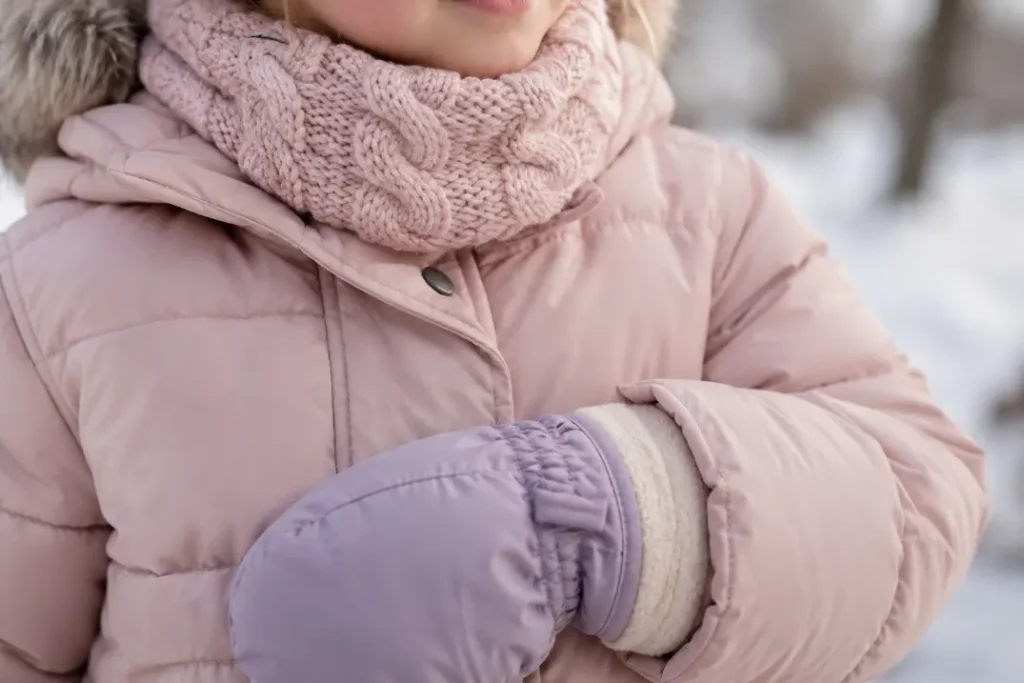
Before changing sizes, measure your child and check that brand’s size chart. Then try the outfit together. An age label won’t tell you whether two thick waistbands feel comfortable when your child sits.
How many winter layers does your child need?
I wouldn’t decide by counting garments. Consider the weather, activity, time outside, and how warm the clothes already are. Different combinations can provide the next-to-skin comfort, insulation, and weather protection your child needs.
The American Academy of Pediatrics’ winter safety guidance recommends several thin layers, dry clothes, and indoor warming breaks for children playing outside in winter. Going indoors, starting to run around, and stopping for a rest are all times to check whether you need to add or remove clothes.
Before leaving, I’d think through the adjustments:
- Which piece is easiest to remove if your child gets hot?
- Do you have something to add when they slow down?
- Check for sweaty clothes after active play, and change damp clothing promptly.
- Where can you go indoors if the weather changes or your child feels uncomfortable?
If your child is still cold, go inside to warm up, then work out what needs to change.
Kids’ winter layering guide for school, rain, and snow
Use these combinations as starting points. You can adjust them for the forecast, time outside, school requirements, and how your child feels.
| Day or activity | Clothes to consider | What to watch for |
|---|---|---|
| School with heated classrooms | Everyday top or suitable base layer, removable sweater or fleece, and a weather-appropriate coat | Take off the coat indoors; check whether more clothing is needed before recess |
| Outdoor play in damp weather | Base layer suited to the activity, warmth as needed, and protective outer jacket and pants | Damp inner clothes; changes in activity that call for adding or removing a layer |
| Snow play or longer outdoor trips | Base top and bottoms, enough insulation, and suitable snow jacket and pants | Gaps at the waist and cuffs; bring dry clothes and plan indoor breaks |
Cold school mornings and warm classrooms
An easy-to-remove fleece or cardigan can help here. Once your child gets into the warm classroom, they can take off a layer without changing the whole outfit.
Ask the school what’s needed for outdoor recess. Then lay out the clothes and let your child practice. Can they start the zipper themselves? Will the coat fit in the school’s storage space? I’d check those details before the first morning in the outfit.
Outdoor play on damp days
Think about the parts of the outfit that might touch water as your child plays: knees, cuffs, the seat of the pants, and footwear. A rain jacket covers only some of those areas.
For anything likely to get wet, I’d pack a dry replacement. When you put everything away for the trip home, keep the dry clothes separate from the wet ones.
Snow play and longer outings
Ask your child to reach up and bend over in the full outfit before leaving. Moving can reveal a gap at the waist that you missed while they stood still.
Think about rest time too. Your child may feel comfortable while running and need another layer once they stop. Bring suitable spares and know where you can go indoors to warm up. Spare clothes make adjustments easier; you still need those indoor breaks.
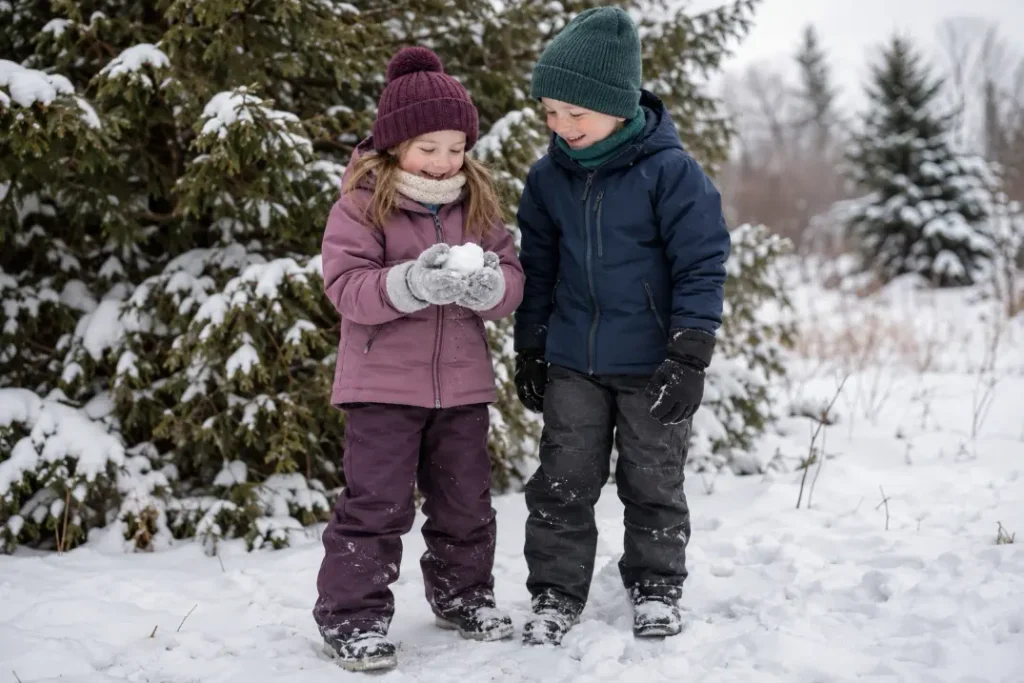
How can you buy kids’ winter layers on a budget?
I’d lay out a complete outfit before deciding what to buy. Maybe the fleece still fits and you’re missing a jacket that keeps out wind and rain. Or perhaps the coat is fine and the base-layer leggings are the piece your child has outgrown.
You can work through purchases in this order:
- Replace clothes that no longer fit or do the job you need them to do.
- Check the places and activities you have planned, then buy any weather protection that’s missing.
- Read the care instructions. Can you wash and dry the clothes as directed before your child needs them again?
- If you’re considering secondhand clothes, check zippers, buttons, worn fabric, and flattened filling.
- Decide which pieces need spares based on laundry frequency and how likely they are to get wet.
For a new coat, when you shop often means a trade-off between price and selection. Even on sale, the coat needs to fit over the clothes you’ve chosen and arrive before you need it. If you’re buying for next winter, read the return conditions first.
What can you overlook when layering kids’ winter clothes?
If your child says the outfit feels awkward, find out where it’s uncomfortable before replacing clothes. I’d check for these problems:
- Adding thick clothes when the sleeves are already tight. Try another combination or a better-fitting coat.
- Piling hoods and thick collars together. Have your child sit and turn their head to check for discomfort behind the neck.
- Assuming warm clothes will also keep rain out. Check wind and rain protection separately.
- Buying every piece a size bigger. Check each layer’s fit first, then put them together.
- Leaving the same clothes on during play, rest, and time in a heated room. Reconsider the layers as activities change.
- Choosing zippers or buttons your child can’t use. Let them practice, and make sure someone can help when needed.
Conclusion
If you’re still unsure what to buy, have your child try tomorrow’s outfit. Let them walk around and sit down. Check for tight sleeves, a waistband that digs in, or a coat that’s hard to fasten, and ask what feels uncomfortable.
I’d change the uncomfortable piece first and keep the clothes that work. Make sure your child can remove a layer when they’re hot and has something to add when needed.
FAQs about kids’ winter layering clothes
Can pajamas work as a winter base layer?
Sometimes, but I’d look at the fabric, fit, and activity before deciding. For a long outing in the cold where your child may sweat, choose a suitable wicking base layer. Have them try the pajamas under the other clothes to see whether they bunch up or leave gaps around the waist when they move.
What can a child wear if they don’t like wool base layers?
Try a synthetic performance base layer. I’d have your child try one first to check the fabric’s feel and whether the seams rub, then look at its intended use and care instructions. Don’t rush to buy several sets. Wool isn’t essential to a warm, comfortable winter outfit.
Does a puffer coat need another warm layer underneath?
Not always. Consider the coat’s warmth, the weather, and what your child will do outside. “Puffer” describes a style; it isn’t a warmth rating. Try the planned clothes together and add a layer if needed. If that makes movement difficult, change the combination.
Should you buy winter clothes a size bigger for layering?
I’d use measurements and a try-on to decide. Base layers should feel comfortably close, while outerwear needs room for the clothes underneath. Check sleeve length and ease of movement before automatically sizing up. Excess fabric can bunch, and an oversized coat may fit poorly around the cuffs or hood.
What should kids wear in a car seat during winter?
The AAP recommends thin layers and advises against bulky coats under a car-seat harness. Adjust and fasten the harness according to the seat manufacturer’s instructions, then put a coat or blanket over the secured straps if needed. You can’t tell whether a garment fits safely under the harness just from its name.