Sequins are the timeless hallmark of glamour, designed to make you the focal point of every gala, wedding and special occasion. Yet even the finest sequin gown requires a precise hem adjustment to perfect its fit, silhouette and flow — a task that ranks among the most challenging when you need to alter a sequin dress.
With over a decade of couture sequin craftsmanship experience, we know the near-zero margin for error when working with sequins affixed to delicate base fabrics. Improper alteration can ruin the gown’s fluid lines, cause painful skin irritation from sharp sequin edges, and even leave your piece unwearable.
This guide walks you through the full professional process to hem a sequin dress, teaching you to achieve a flawless, figure-flattering fit without damaging fabric, disrupting sequin placement, or compromising your gown’s original design.
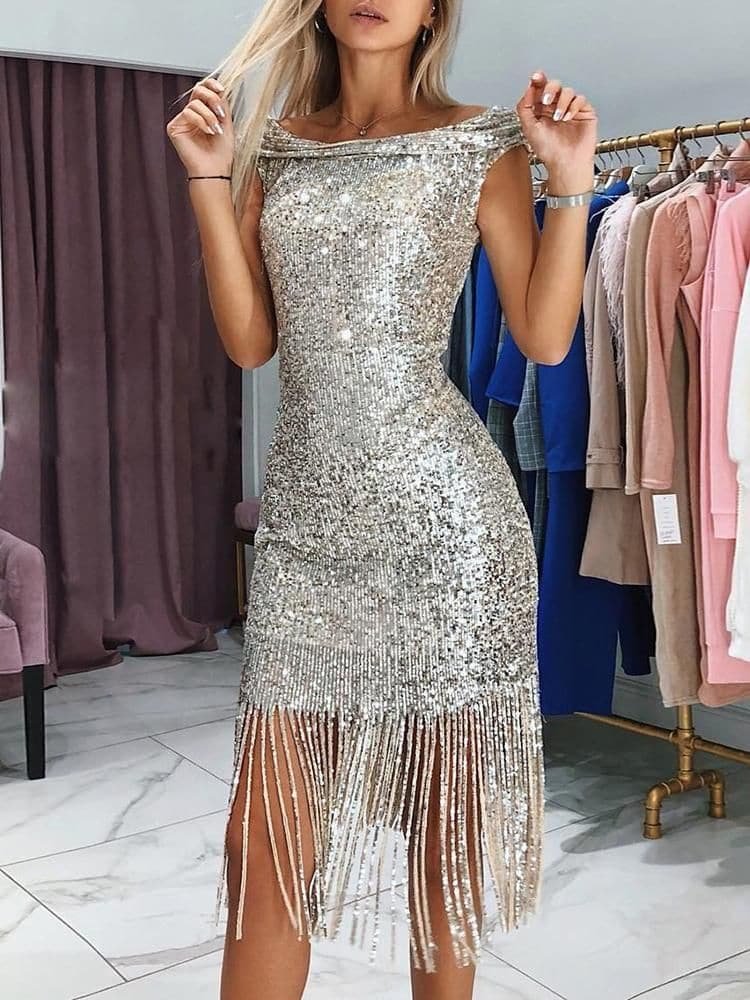
Essential Tools for Trimming the Hem of a Sequin Dress
Before you begin any hemming work, you will need to prepare the following tools:
Sequin Removal & Prep Tools
- Fine-Tipped Seam Ripper: Precisely cuts through sequin stitching without damaging the delicate base fabric.
- Dual Scissors Setup: An all-purpose pair dedicated solely to cutting sequins, and a separate pair of fabric shears reserved exclusively for cutting the clean base fabric, to prevent blade dulling and damage.
- Fine-Tipped Tweezers: Clears away residual sequin debris to prevent needle breakage and thread skipping during sewing.
Marking & Measuring Tools
- Tailor’s Chalk / Disappearing Ink Pen: Safely marks the hemline, avoiding fabric damage that can be caused by pinning.
- Flexible Clothing Measuring Tape: Enables precise measuring and positioning to ensure a consistently even, level hem around the entire circumference of the dress.
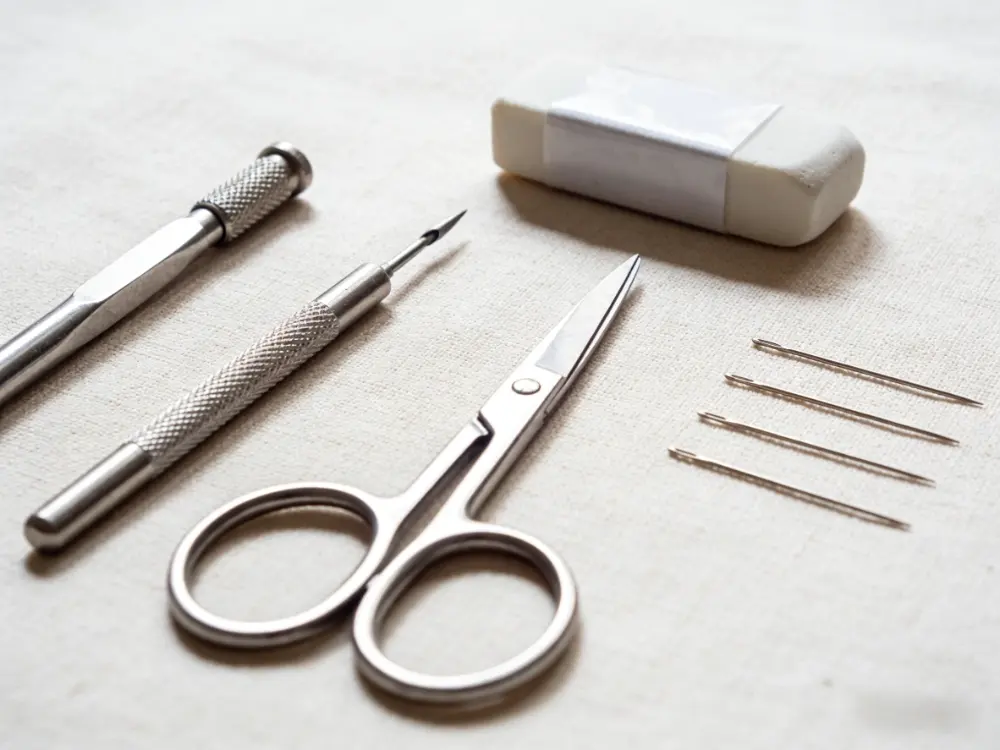
Hem Sewing Tools
- Size 10/11 Sharp Fine Hand Sewing Needles: Allows for flexible, controlled hand sewing, eliminating the risk of sewing machine needle breakage and avoiding a stiff, rigid hem finish.
- High-Tenacity Polyester Thread: Resists abrasion from the sharp cut edges of sequins, ensuring long-term durability and a secure, long-lasting seam.
- Thimble: Protects your fingers, improves hand sewing efficiency, and delivers more stable, consistent stitching pressure.
- Soft Twill Bias Binding Tape: Wraps the sharp cut edges of sequins to eliminate skin irritation and scratching, while boosting overall wearing comfort.
Professional Step-by-Step Guide to a Perfect Sequin Gown Hem Alteration
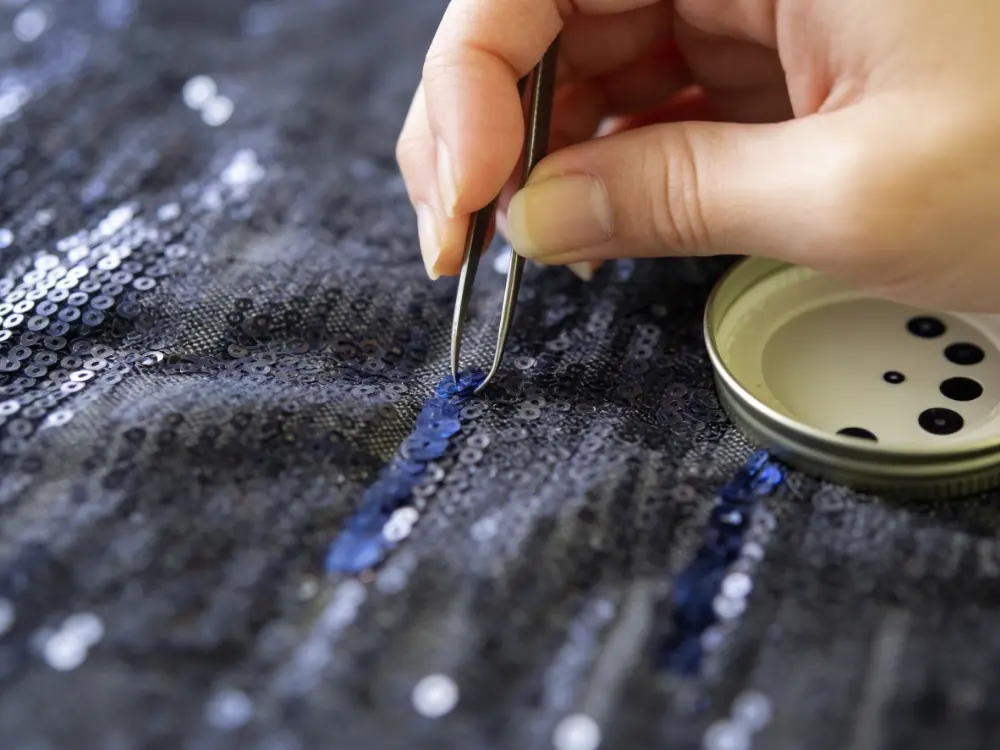
Hemming sequin fabric is not a casual DIY project — it is a precision-driven process that requires meticulous attention to detail. Whether you are altering a high-end evening gown or adjusting a delicate children’s party dress, following these exact steps will ensure your hem delivers a professional-grade drape, with zero damage to the intricate decorative details on the fabric.
Step 1: Precisely Secure and Mark the Perfect Hemline
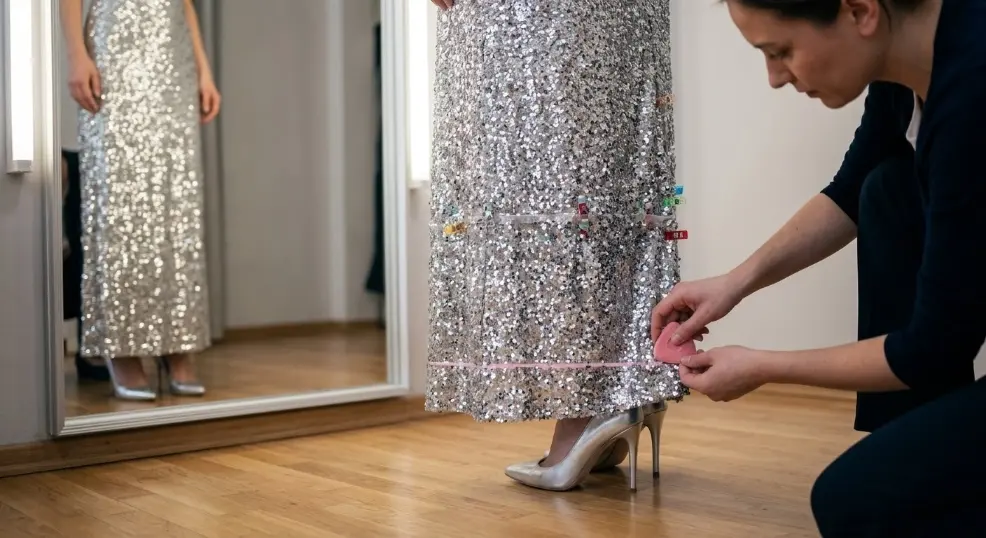
The foundation of a flawless hem is accurate measurement. Have the wearer try on the gown with the exact pair of shoes they plan to wear for the formal event.
Never force standard straight pins through dense layers of sequins — this can permanently distort the sequins, or even snag and tear the delicate mesh base fabric underneath.
Instead, use tailor’s chalk or a disappearing ink pen to mark the desired hem length. If you absolutely need to use pins for securing, be sure to insert them horizontally through the gaps between sequins, piercing only the base fabric layer. Draw a clear, continuous marking line along the full circumference of the skirt.
Step 2: Sew a Staystitch to Lock the Sequins in Place
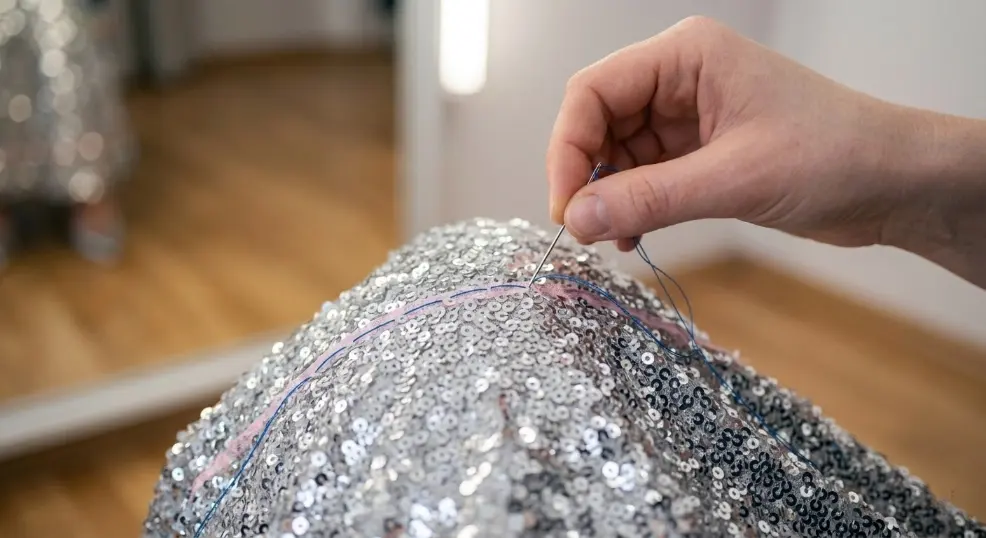
This is the critical step that separates amateur alterations from professional garment manufacturing. Sequins are almost always secured to the fabric with a continuous chain stitch; if you cut the fabric without pre-reinforcing this stitching, the sequin threads will unravel in a domino effect, leading to widespread sequin loss.
Thread your sewing needle (or, if you are highly skilled and have a specialized presser foot, use a sewing machine with extreme caution) and sew a straight line of stitching approximately 1/2 inch (1.27 cm) above your marked hemline. This staystitch will act as a barrier, securely locking in the remaining sequin stitching threads and ensuring sequins do not fall off the gown when you begin cutting the fabric.
Step 3: The “Clear Strip” Method: Remove Sequins From the Seam Allowance Area
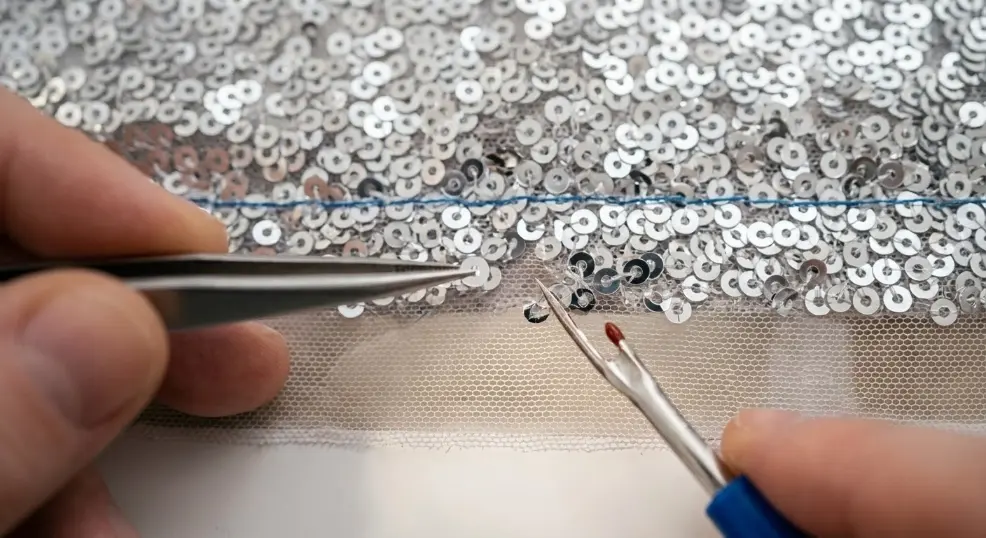
This is the secret to a perfect hem — one that delivers a clean, invisible finish on the outside, and comfortable, irritation-free wear on the inside. You must never simply fold over and sew sequined fabric directly; this will result in a stiff, bulky hem with sharp edges that scratch the skin, an absolutely unacceptable flaw for a high-quality garment.
Using a fine-tipped seam ripper or small scissors, carefully snip each thread that holds the sequins to the base fabric, working only below the staystitch you sewed. Take extreme care not to cut the base fabric itself. Use tweezers to remove the loosened sequins. You will need to clear a 1 to 1.5 inch wide sequin-free strip along the entire bottom edge of the skirt. This ensures the final folded hem lays perfectly flat and smooth, with no irritation from sequins rubbing against the skin.
Step 4: Safely Trim Excess Fabric to Prevent Snagging and Damage
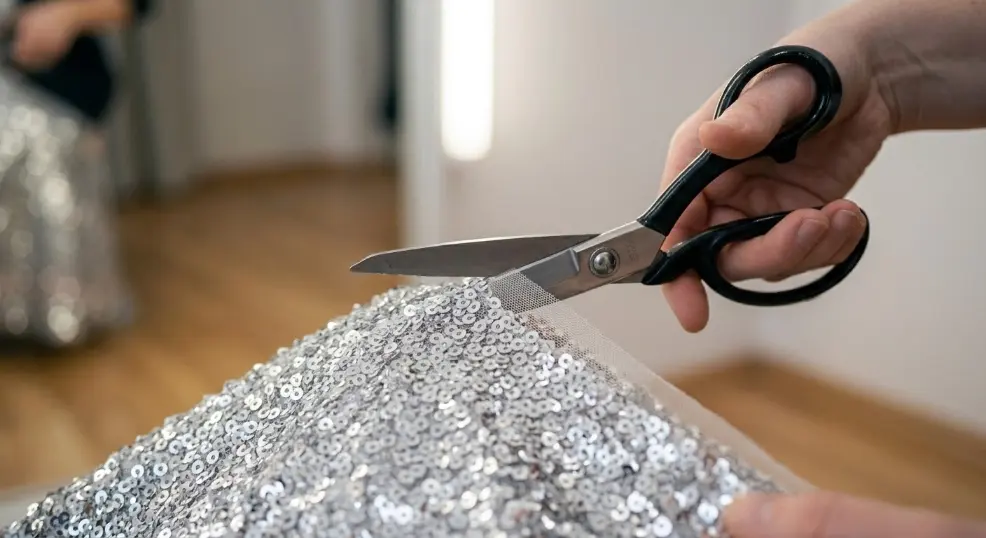
Once the sequins in the seam allowance area are completely removed, mastering how to cut sequin fabric properly is your next priority.
Switch to a sharp pair of fabric shears. Carefully cut away the excess fabric length along the bottom edge of the cleared strip. Because you have pre-removed the sequins, your high-quality shears will glide smoothly through the mesh, chiffon, or woven base fabric, without dulling the blade on hard sequins, and without creating frayed edges or snags.
Step 5: Fold and Secure the Cleared Hem Edge
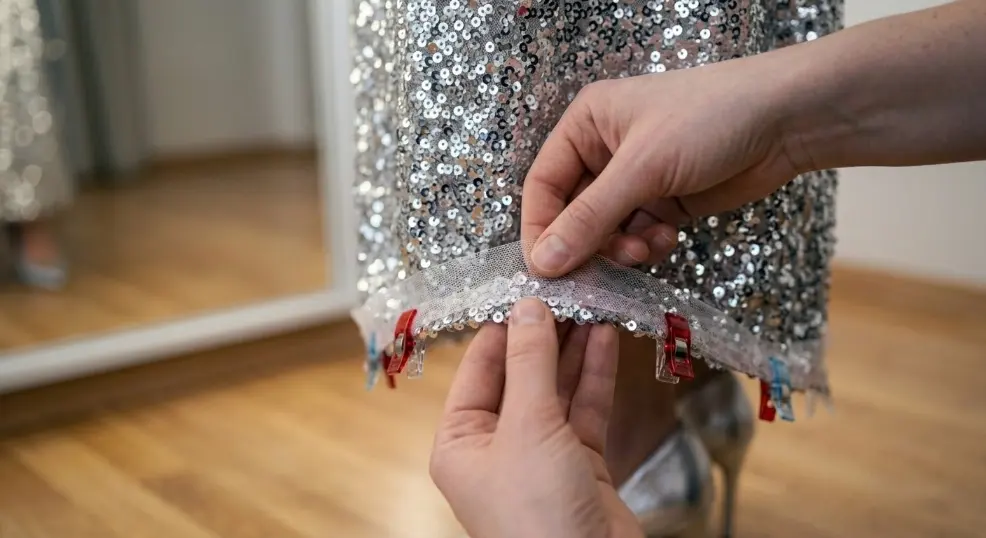
With a clean, sequin-free edge, folding the hem becomes straightforward.
Fold the cleared fabric up toward the inside of the gown, aligning the folded edge perfectly with the lowest row of intact sequins. With no plastic sequins in the fold, the fabric will lay completely flat and smooth. At this stage, do not use sewing pins — instead, use small sewing clips (fabric clips) to secure the folded hem. This prevents accidental piercing of the delicate base fabric during the securing process.
Step 6: Hand-Sew the Hem for an Invisible, Flawless Finish
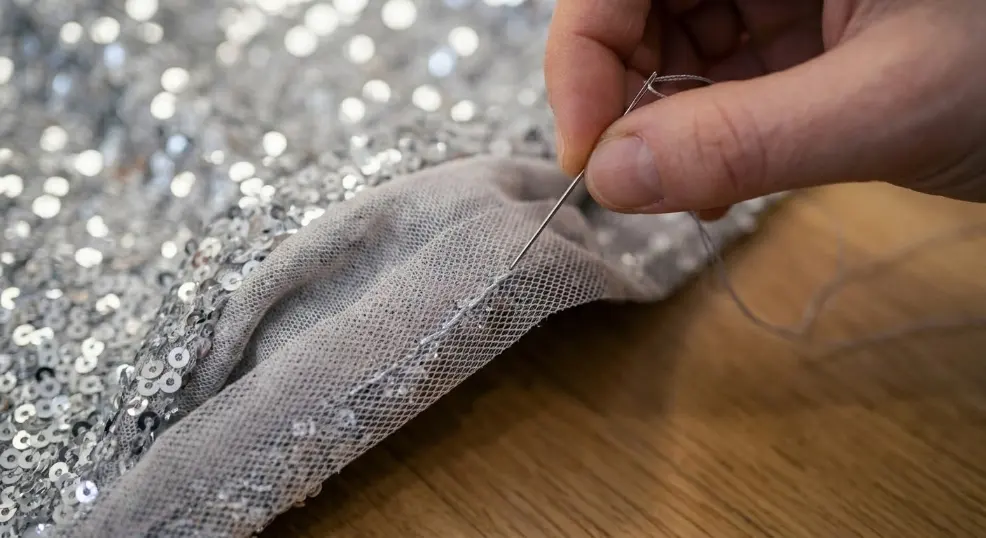
While sewing machine stitching is faster, hand sewing is the universally recognized gold standard for luxury event gowns and delicate sequined garments. A sewing machine needle can easily strike hidden sequins in the fabric, leading to needle breakage and even permanent damage to the entire gown.
Thread a fine needle with durable polyester sewing thread. Use a slip stitch (also known as a ladder stitch) to secure the folded hem edge to the inside of the gown. Each stitch should pick up only a single fiber of the base fabric. Hand sewing not only protects the garment from damage, but also preserves the natural, fluid drape of the sequined fabric to the maximum extent, ensuring the skirt flows beautifully and fluidly with the wearer’s every movement.
Final Professional Quality Check
- Have the wearer do a final fitting, walking and turning to confirm the skirt has a natural, fluid drape, and the hem remains level with no twisting or poor fit.
- Run your hand along the inside of the hem to confirm no sharp sequin edges or debris remain, with zero risk of skin irritation — this is especially critical for children’s garments.
- Verify that all sequins are secure, no stitches are visible on the outside, and the gown’s original design aesthetic is perfectly preserved.
Critical Precautions & Key Considerations
Sequin gowns feature a uniquely intricate construction. Before performing any hem alterations, you must first clarify the fabric’s properties and the garment’s technical structure — failure to do so can distort the gown’s silhouette or cause irreversible, permanent damage. When making alterations, keep the following critical guidelines in mind:
Confirm the Base Fabric First
- Stretch mesh / stretch base fabric: Must be sewn with elastic thread, with a widened stitch length, to prevent standard non-stretch thread from snapping when the fabric is stretched.
- Non-stretch woven fabric: After folding the hem, press and set each layer separately with an iron, to prevent bulkiness and ensure the hem lays smoothly and flush against the body.
Pay Close Attention to the Direction of the Sequin Layout
Sequins have a fixed grain direction: the smooth, flat side felt when stroking the fabric is the correct forward direction. All marking and folding must be done along this grain direction throughout the entire process, to prevent sequins from flipping up and creating uneven light reflection across the gown’s surface.
Account for the Weight of Decorative Elements
A significant hem shortening will remove a large volume of sequined fabric, disrupting the skirt’s original drape and weight distribution. Before cutting, always pin the new hemline in place, and have the wearer test the gown on and walk around to confirm the silhouette and drape remain balanced and flattering.
Map Out the Lining Structure
Formal gowns almost always feature multiple lining layers. Each layer must be separated from the outer shell fabric, and measured, cut, and finished independently. This ensures all layers are perfectly matched in length, preventing the inner lining from peeking out below the hem or rubbing and irritating the skin.
Professional Advice from Sequin Garment Manufacturers
Handling Lined Sequin Dresses with Care
As a professional sequin dress manufacturer based in Guangzhou, China, we have an in-depth understanding of the intricate construction of lined sequin dresses. The outer sequin-embellished mesh and the inner skin-friendly lining fabrics (such as silk, chiffon, or spandex) have entirely different physical properties, which means they require exceptional care during handling and maintenance:
- Storage: For short-term storage, hang the dress on thick, wide-shoulder padded hangers. For long-term storage of heavily embellished gowns, flat storage is preferred. When folding, place acid-free tissue paper between each layer to prevent snagging, scratching, and shape distortion.
- Cleaning: Prioritize professional dry cleaners with proven experience in gown care and embellished garment cleaning. For localized stains, only gently blot the reverse side of the fabric to clean. Rubbing, machine washing, and spin-drying are strictly prohibited, as these can cause sequin loss and structural damage.
- Dressing & Undressing: Remove all sharp jewelry before putting on or taking off the garment. For pull-over styles, place a silk scarf over the head and face to prevent snagging on hair or makeup. For zippered styles, smooth the fabric completely before pulling up the zipper to avoid snagging and tearing the delicate fabric.
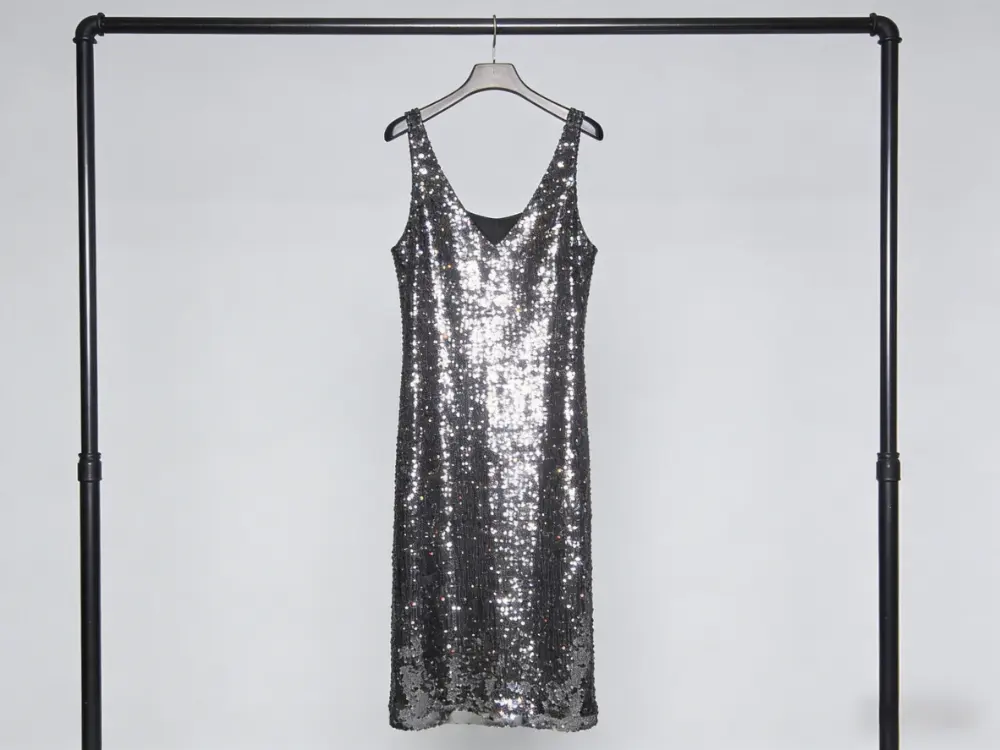
How to Prevent Skin Irritation From the Hem Edge After Shortening a Sequin Garment
Hem alterations on sequin garments are often a complex challenge. Straight cutting and machine overlocking will slice through sequins, leaving sharp, plastic serrated edges that cause stinging and itching against the wearer’s skin. Below are the professional solutions we use in our factory production lines and haute couture workrooms:
- Hand Removal of Sequins From the Seam Allowance: Systematically remove each sequin within the hem fold’s seam allowance, leaving only the soft base fabric for stitching. This eliminates skin irritation at the source, making it the preferred solution for close-fitting evening gowns and children’s formal wear.
- Soft Fabric Binding: Use skin-friendly bias-cut binding tape to fully enclose the sharp cut edges of the sequins, eliminating all risk of skin irritation. This method is ideal for heavyweight fabrics with all-over sequin embellishment.
- Extended Lining Barrier: Extend the lining’s bottom edge to fully cover the rough raw edge of the sequin hem fold, secure it with invisible blind stitching, and use the lining to completely eliminate any risk of friction against the skin. This is a universal, reliable solution for all lined gowns.
Is It Expensive to Alter a Sequin Dress?
Altering a sequin dress costs far more than modifying standard clothing. In markets like Australia, Europe, and the US, a professional couture seamstress charges $150-$300 USD for a basic sequin gown hem alteration, with heavily embellished styles costing even more — 3-5 times the price of a standard dress alteration.
The high cost stems from the extreme technical difficulty and labour involved. Seamstresses must manually remove sequins one by one from the seam allowance, execute high-risk cutting of delicate tulle or chiffon base fabric, and finish the hem with a hand-applied blind stitch for an invisible, non-irritating result. The process has near-zero margin for error, and takes multiple times longer than a standard alteration.
Conclusion
A perfect sequin dress hem alteration relies on professional tools, precise techniques, and careful attention to detail. For fashion brands, international boutiques, and wholesalers looking to permanently solve issues like inconsistent sizing, poor workmanship, high return rates, and customer complaints, partnering with a professional manufacturer is the optimal solution.
HAPA is a specialised OEM/ODM manufacturer focused on sequin girls’ dresses. With our standardised professional production line dedicated to high-quality sequin apparel production, we ensure every sequin dress has a perfectly sized, flawlessly constructed hem from the start of production. We save you time and money, while eliminating customer complaints and return risks at the source.
FAQ
Can sequin dresses be shortened?
Yes, sequin dresses can definitely be shortened, though it requires more care than altering standard fabrics. A skilled tailor will carefully remove the sequins along the new hemline before cutting and folding the backing fabric to ensure a clean, scratch-free edge that drapes beautifully.
Can I use a sewing machine on sequin fabric?
Yes, you can use a sewing machine, but you must use a heavy-duty needle (like a size 14 or 16) and sew slowly to prevent the needle from breaking or dulling quickly. For a truly professional finish, it is best practice to remove the sequins directly within the seam allowance so the machine stitches only the base fabric, preventing bulky or scratchy seams.
Can a full sequin dress be altered?
Yes, a full sequin dress can be altered, including taking in the waist or adjusting the shoulders, as long as the garment is constructed with a stable backing fabric. The process is labor-intensive because the tailor must carefully unpick the sequins along the alteration lines and often re-sew them by hand afterward to seamlessly camouflage the new stitches.
How to shorten sequin fabric?
When hemming sequin fabric to shorten it properly, first mark your new hemline and carefully snip off the sequins just above that line without cutting the actual base thread holding the remaining sequins in place. Once that seam allowance is completely cleared of sequins, you can safely cut the base fabric, fold it up, and stitch the hem for a flawless, comfortable finish.