Imagine running a thriving kids’ boutique without leaving your home. 2026 is the perfect time to start a children’s boutique, as millennial and Gen Z parents value safety, uniqueness and sustainability far more than generic fast fashion, creating strong demand for curated children’s clothing.
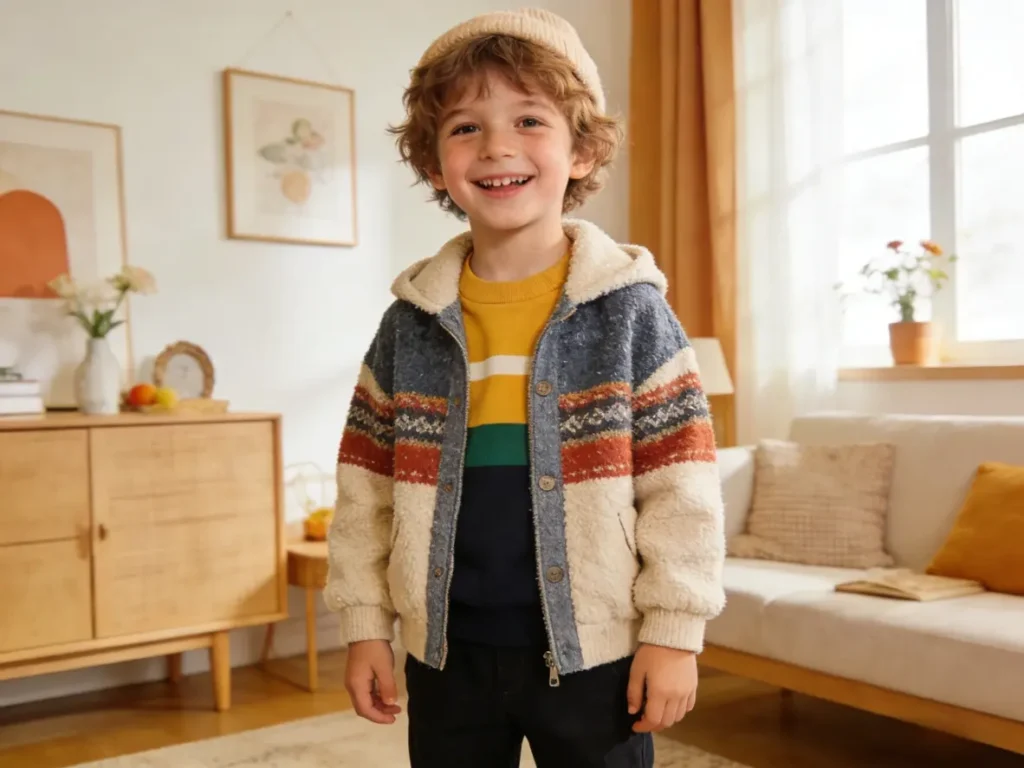
The kids’ wear market is full of opportunities, but passion alone won’t build a sustainable business — you need strategy.This guide shows you how to launch a lean, profitable online kids’ store from home with minimal investment.If you are looking for solid online children’s boutique ideas, this guide will help you execute them.
We’ll walk you through every step of building your own children’s brand: from concept and sourcing to securing your very first order.
2026 Kids’ Wear Market Trends
Understanding the current market is critical before opening your boutique. To succeed, you need to be aware of the latest kids fashion trends 2026.
According to the latest report by Grand View Research, the global kids’ wear market is projected to expand at a CAGR of 6.8%, with its valuation approaching $260 billion by 2026. This confirms parents’ willingness to spend on children’s clothing remains strong.
However, the 2026 kids’ wear market is vastly different from five years ago. Millennial and Gen Z parents are now the dominant consumers. They care about more than just cuteness — they prioritize values and functionality.
To succeed, focus on labels like organic cotton and recycled materials. Parents are willing to pay a premium for sustainable and eco‑responsible brands.
Steps to Start a Kids’ Clothing Boutique
Starting a kids’ boutique isn’t hard — just follow these 7 steps.We have compiled this essential guide to help you start a children’s boutique successfully.
Step 1: Find Your Niche in the Kids’ Wear Market
Don’t try to sell clothes to everyone — it’s the most common mistake new store owners make. If you aim to please everyone, you’ll end up pleasing no one. For a new kids’ boutique, the secret to success is to focus on a specific niche and become an expert in it. The advantages are clear:
Lower competition costs: You no longer compete with giants, but serve a targeted group of customers overlooked by the mainstream market.
Build brand loyalty: When your store specializes in meeting a specific need (e.g., “for sensitive skin” or “gothic kids’ wear”), parents will see you as an irreplaceable resource.
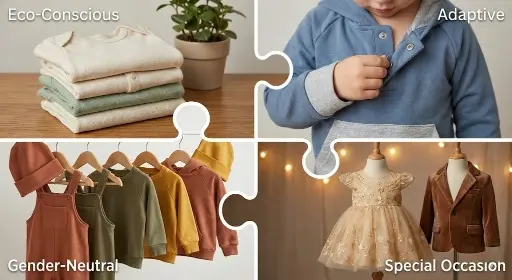
4 Hot Niche Directions to Watch in 2026
These niches represent some of the best online children’s boutique ideas for new entrepreneurs:
- Eco-Conscious & Ethical Fashion: With growing environmental awareness, modern parents prefer products made of organic fabrics with transparent supply chains — making “sustainability” no longer an option, but a necessity for brands.
- Adaptive & Sensory-Friendly Clothing: A long-overlooked blue ocean market, designed to provide stylish, accessible and functional clothing for children with sensory sensitivities (such as autism) or mobility impairments.
- Gender-Neutral & Minimalist: Breaking the traditional “pink-blue” gender divide, this style features earth tones and high-quality basics. It’s not only aesthetically premium but also highly favored for being easy to pass down among siblings.
- Special Occasion & Heritage Clothing: Amid the flood of fast fashion, parents are more willing to invest in well-crafted, luxurious, heirloom-worthy formal wear for important moments like birthdays and weddings.
How to Validate Your Niche (The Data Test)
Before investing a single dollar, run this simple market validation test:
- Open Google Trends.
- Enter your niche keyword (e.g., “Bamboo Baby Pajamas”).
- Analyze the trend line over the past 5 years.
The Green Light: If the line is steadily rising or stable at a high volume, you have found a profitable market.
The Red Flag: If the line is dropping sharply, pivot immediately. Do not fight the data.
Step 2: Create a Comprehensive Business Plan
Don’t just daydream — sit down and craft a detailed plan. For example: Where will you allocate your budget? How much investment is needed?
According to research from Harvard Business Review, businesses with a written business plan grow 30% faster than those without one.
When writing your plan, the first core decision you’ll face is: Where will you sell?
Business Model Comparison: Online vs. Brick-and-Mortar vs. Hybrid
| Comparison Dimension | Online Boutique | Brick-and-Mortar Store | Hybrid Model (Click-and-Mortar) |
| Startup Costs | Low ($2,000 – $10,000) Mainly for inventory, website setup (Shopify), and digital marketing. | High ($50,000 – $150,000+) Mainly for rent deposits, renovation, fixtures, and heavy initial stock. | Medium/Variable Starts online, testing offline waters via Pop-up Shops, balancing capital risk. |
| Market Reach | Unlimited (Global/National) Can sell to anyone, anywhere, but faces fierce global competition. | Limited (Local Community) Relies heavily on foot traffic within a 3-5 mile radius. | Local + Global Deepens local loyalty while reaching remote customers via the web. |
| Operational Focus | Traffic & Logistics Key tasks: SEO, social media ads, packaging, and shipping/returns. | Location & Service Key tasks: Site selection, window displays, and in-store atmosphere. | Data Synchronization Key challenge: Ensuring real-time inventory sync to avoid overselling. |
| Major Risks | High CAC (Customer Acquisition Cost) Ad spend can burn through budget quickly if targeting fails. | High Fixed Costs Rent, utilities, and staff wages must be paid regardless of sales volume. | Management Complexity Requires expertise in both e-commerce tech and retail operations. |
| 2026 Verdict | ⭐⭐⭐⭐⭐ (Best Entry Point) Ideal for beginners with limited capital to test the waters. | ⭐⭐⭐ (High Stakes) Best for established brands or those with significant financial backing. | ⭐⭐⭐⭐ (Growth Phase) The logical next step for profitable online brands looking to scale. |
Step 3: Legal Requirements & Brand Building
Before selling kids’ clothing, ensure your business is legal — don’t wait until you receive a letter from the tax office to address these matters.These are crucial steps when you start a children’s boutique to ensure long-term viability.
Legal Compliance First
- Choose a business structure: Decide whether to register as an LLC (Limited Liability Company) or a Sole Proprietorship. LLC is usually preferred, as it separates your personal assets (e.g., house, car) from business risks.
- Obtain an EIN (Employer Identification Number): This is your business’s “social security number.” You’ll need it to open a bank account and file taxes, whether you hire employees or not.
- Apply for a Resale Certificate: This is the most critical step. As a retailer, you can exempt sales tax when purchasing from wholesalers with this certificate. Without it, your purchase costs will increase by 8%–10% directly.
- Kids’ clothing safety compliance (CPSIA): Often overlooked by new owners. To sell kids’ clothing in the U.S., you must ensure products meet the CPSIA (Consumer Product Safety Improvement Act) standards, especially for flammability and lead content. Make sure your supplier provides a CPC (Children’s Product Certificate).
Build a Memorable Brand Identity
In 2026, a brand is more than just a logo — it’s how customers feel about you. Parents don’t just buy clothes; they buy a lifestyle.
- Define your brand persona: Is your brand minimalist and nature-focused (e.g., Earthy Tones), or playful and colorful? This tone determines your website font, Instagram filters, and packaging box colors.
- Master brand storytelling: On your “About Us” page, don’t just say “We sell the best clothes.” Tell them why. Did you struggle to find non-irritating fabrics? Or do you want to pass down a craft?
- Visual consistency: Whether on your TikTok profile or the thank-you card included in packages, your logo, color palette, and tone must be highly consistent. This repetition is the fastest way to build trust.
Step 4: Sourcing Strategy – Securing High-Value Inventory
Inventory makes or breaks your boutique. In the 2026 landscape, customers demand higher quality than ever before. Partnering with a reliable supplier isn’t just about stocking shelves—it’s about protecting your brand’s reputation.
How to Source: The 3 Primary Channels
Direct-to-Source (The Margin Maximizer)
Cut out the middleman to maximize margin retention.
Search via Google or vetted platforms, but aim to work directly with specialized manufacturers like HAPA.
- Proprietary Aesthetics: Gain access to unique pieces (e.g., delicate sequin dresses, couture-style tulle skirts) that aren’t saturated on mass wholesale platforms.
- Agile Inventory: Factories like HAPA support boutique growth with low, flexible MOQs and mixed-batch ordering, reducing your inventory risk.
- Compliance Transparency: Enjoy direct access to certifications (100% Cotton, GOTS, Oeko-Tex)—a critical selling point for health-conscious parents.
Wholesale Marketplaces (The Aggregators)
Platforms like Faire, FashionGo, and Tundra are common entry points.
- Pros: Low barrier to entry, one-stop sourcing, and often offer “Buy Now, Pay Later” (Net-60) terms.
- Cons: Market Saturation. You risk selling the exact same products as your competitors. Plus, platform fees are often built into the wholesale price, eroding your profit margins.
Trade Shows (The Physical Circuit)
Events like Magic Las Vegas and Playtime New York remain relevant.
- Pros: Tactile Validation. You can touch and test fabrics in person—crucial for premium children’s apparel.
- Cons: High overhead (travel/lodging) and establishing accounts often requires committing to larger opening orders.
The Golden Rule: Never Skip the Sample
Treat sample orders as your first line of Quality Control (QC).
Always order samples to verify texture, fit, and finish. Trusted partners like HAPA welcome sample requests because they stand behind their product quality.
Red Flag: Avoid any supplier that refuses samples or charges unreasonable “penalty fees” for them.
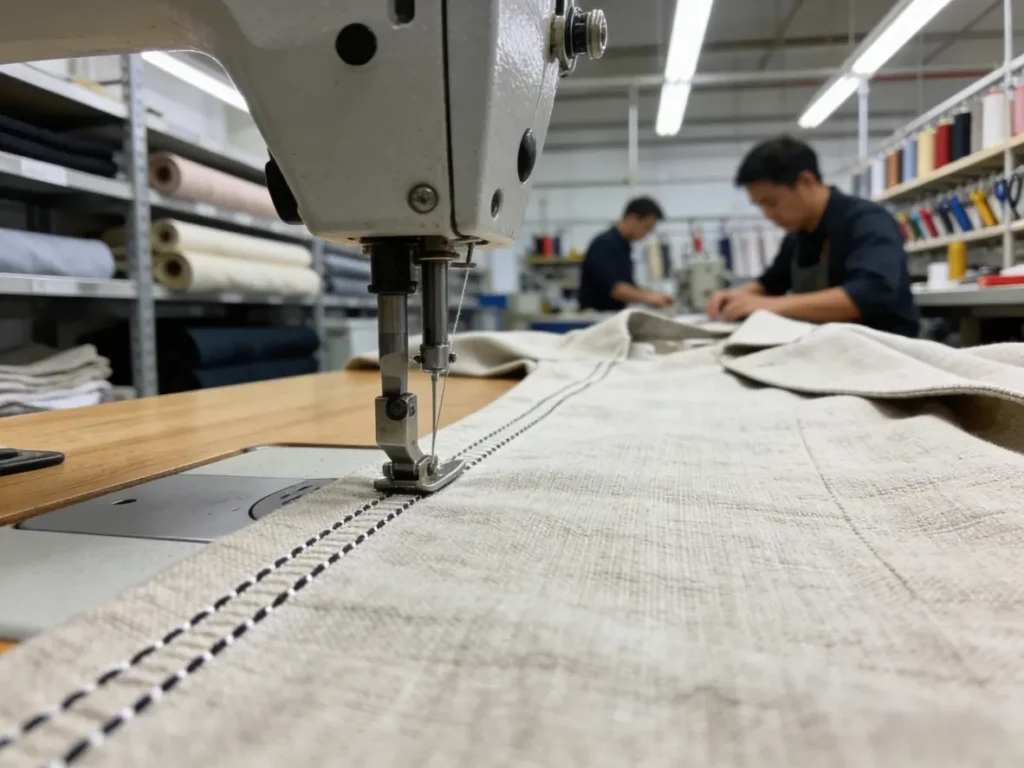
3 Critical Questions to Ask Before Ordering
- “What is your Minimum Order Quantity (MOQ)?”
Why ask: Focus on Inventory Agility. Choose partners with flexible MOQs (50–100 pieces) to test the market without tying up cash in unproven stock. - “Do you provide Digital Assets?”
Why ask: Speed to market. Top-tier children’s clothing suppliers like HAPA provide high-resolution editorial and e-commerce (white background) photos, saving you hundreds of dollars on photography fees. - “What is your Turnaround Time (TAT)?”
Why ask: Supply Chain Predictability. In-stock items should ship in 2–5 days; custom orders may take weeks. rigorous clarity here prevents “out of stock” disasters during peak seasons.
Step 5: Build Your Online Store
In 2026, you don’t need coding skills to create an online shop.The focus here is not technology, but user experience.A poorly built website — slow, hard to navigate, with blurry photos — will drive away 90% of visitors immediately.
If you have no coding experience, Shopify is the most beginner-friendly choice.If you want full customization and know basic code, WooCommerce + WordPress is also a strong solution.
Besides good looks, include these 3 essential pages to build trust and encourage purchases:
- About Us: Tell your real story. Parents much prefer supporting genuine people over cold, anonymous businesses.
- Shipping & Returns: Keep policies clear and transparent. If returns feel difficult or confusing, customers won’t buy at all.
- Contact Us: Show a real email or even a phone number. This simple step greatly increases credibility.
Step 6: How to Price Your Products for Profit
A fatal mistake many new store owners make: “Since I work from home and have no rent, I can sell cheaper than others.” This mindset will put your shop out of business in 6 months.
Never price by feeling. Don’t just copy competitors’ prices — your pricing must be data-driven.
According to TrueProfit’s 2026 Industry Benchmark Report, successful clothing boutiques should target a gross margin of 60%–70%. This ensures a 10%–20% net profit after deducting marketing and operational costs.
In 2026, pricing must not only cover costs but also leave room for future growth — such as hiring staff, running ads, and offering seasonal discounts.This financial foresight is vital when you start a children’s boutique.
Step 7: Promote Your New Kids’ Boutique
Many new boutique owners believe “great products will sell themselves” — this is the biggest myth. In the algorithm-driven era of 2026, no traffic means no sales.
- Pinterest Marketing: Post high-quality kids’ outfit inspiration images and link back to your website. Many expectant mothers search for children’s clothing ideas on Pinterest during
pregnancy, bringing you long-term free traffic. - User-Generated Content (UGC): Encourage customers to tag your brand in photos. Seeing real kids wearing your custom kids’ wear is the most powerful social proof, and also the most cost-effective marketing method.
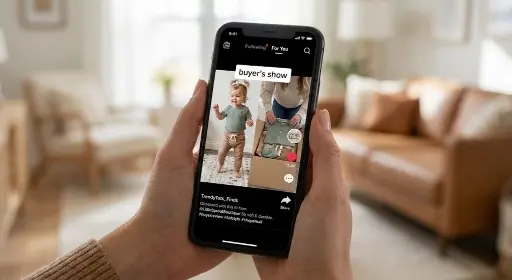
- Short-Form Visual Storytelling: Post short videos on TikTok and Instagram Reels to showcase fabric texture and wearing effect. Dynamic content grabs busy parents’ attention better than static images.
- Email List Building: Don’t over-rely on social media algorithms. Collect customer emails with a first-order discount to build your own private traffic pool — your highest ROI asset.
- Paid Advertising: Google Shopping ads and Meta (Facebook/Instagram) ads work the fastest, putting your products in front of targeted potential customers accurately.
How Much Does It Cost to Open A Children’s Boutique?
The capital required to launch a children’s boutique in 2026 varies drastically based on your chosen business model.If you plan to start a children’s boutique 2026 with a lean approach, the costs are lower.
You can launch an agile e-commerce operation for as little as $2,000, whereas establishing an immersive retail storefront can easily exceed $100,000.
Below is a breakdown of the investment landscape for the two most common models:
The Digital-First Model (Home-Based Online Boutique)
Estimated Capital: $2,000 – $10,000
- The Strategy: This is the “Lean Startup” approach. With zero rent and minimal overhead, you can allocate the majority of your budget directly to inventory and customer acquisition.
- Opening Stock ($1,000 – $5,000): Initial inventory mix from wholesale partners.
- E-commerce Infrastructure ($300 – $1,000): Shopify subscription, domain registration, and premium theme licenses.
- Compliance & Formation ($200 – $800): LLC filing fees, Resale Certificates, and business licenses.
- Brand & Launch Marketing ($500 – $2,000): Visual identity (logo), packaging experience, and initial ad spend (CAC).
- Operational Hardware ($200 – $500): Thermal label printers, steamers, and basic photography setups.
The Brick-and-Mortar Model (Physical Retail Store)
Estimated Capital: $50,000 – $150,000+
- The Strategy: This requires significant upfront Capital Expenditure (CapEx). You aren’t just selling clothes; you are building a physical destination and customer experience.
- Lease Acquisition ($5,000 – $15,000): First and last month’s rent plus security deposits.
- Build-Out & Aesthetics ($10,000 – $50,000): Flooring, lighting design, fitting rooms, signage, and painting (Tenant Improvements).
- Fixtures & Tech ($5,000 – $20,000): Merchandising racks, hangers, POS systems, and checkout counters.
- Merchandise Density ($20,000 – $50,000): Sufficient stock depth to create a full, inviting visual display.
- Working Capital Reserve ($10,000+): A cash buffer for payroll and utilities to sustain operations until the store reaches break-even.
Expert Tip: The “Resilience Fund”
Whichever model you choose, financial advisors strongly recommend adding a 20%–30% Contingency Fund to your total budget.
This buffer mitigates cash flow risks caused by unexpected events—such as shipping surges, import tariffs, or slower-than-anticipated initial sales—ensuring your business survives the critical “Valley of Death” (the startup phase).
Are children’s boutiques profitable in 2026?
Yes, even in 2026, running a children’s boutique remains a highly promising, high-return business.The industry is largely recession-proof: kids grow quickly and constantly outgrow their clothes, making children’s apparel a daily necessity rather than a luxury.
To succeed, you’ll need curated product selection, differentiated positioning, and integrated online‑offline operations.By staying away from low-cost, homogeneous competition, small but refined kids’ boutiques can fully capture the benefits of parenting consumption upgrading and achieve steady, reliable profits.
Where Do Boutiques Source Their Inventory?
Boutiques mainly source inventory through three channels:
Online Wholesale Marketplaces
This is the most beginner-friendly channel. Platforms like Faire, FashionGo and Hubventory gather thousands of brands.
- Pros: Low barrier to entry, often with Net-60 payment terms and low minimum order quantities (MOQs) from many brands.
- Cons: Fierce competition and high product similarity — the same items are sold by other boutiques too.
Industry Trade Shows
For owners who want to touch fabrics in person and build long-term partnerships, trade shows are a must.
- Famous shows: MAGIC Las Vegas, Playtime New York or ENK Children’s Club.
- Pros: Check quality on-site (texture never lies) and discover niche brands not yet widely available online.
Direct from Manufacturers
This is the best way to maximize profits. Work directly with original factories or brands like HAPA, skipping middlemen.
- Pros: Get the lowest factory-direct prices for higher profit margins.
- Customization: Many manufacturers offer private label service, allowing you to add your own brand tags — a key step to build independent brand assets.
Common Mistakes in Children’s Boutique Operations
Don’t overlook these common mistakes — they can put your business at serious risk.
The Inventory Trap: Buying Too Deep
This is the most common mistake for new owners and the top cause of capital chain rupture.
- Wrong move: Seeing a pretty dress and ordering 10 pieces per size right away, fearing stockouts.
- Result: If the style flops, you’ll be stuck with dozens of unsellable items. Children’s clothing is highly seasonal — kids will outgrow them by next year, leaving you no choice but to sell at a loss.
- Right move: Follow the Wide and Shallow principle. Offer many styles (e.g., 20 styles) but keep low stock per style (2–3 pieces per size). Test market response first, then quickly restock top sellers.
Ignoring Repeat Customers
Most new owners spend 100% of their effort chasing new customers while ignoring existing buyers.
- Wrong move: Only emailing customers when trying to sell, with no regular interaction. No surprise elements in packages.
- Result: Rising customer acquisition costs, as you must keep paying for new traffic.
- Right move: Children’s clothing has high repurchase rates. Build an email list, send birthday wishes and coupons. Remember: getting a repeat order from an old customer is 5 times easier than a first order from a new one.
Cheap Visual Impression
Online, your product images are your storefront.
- Wrong move: Using dim phone photos or directly stealing blurry images from wholesale sites.
- Result: Customers will subconsciously assume your products are low-quality and untrustworthy.
- Right move: Shoot in natural light even with a phone. Or use high-resolution model photos from suppliers like HAPA, giving your website an instant premium look.
Trying to Please Everyone
- Wrong move: Selling $10 cartoon T-shirts alongside $100 handmade dresses; mixing streetwear and pastoral styles.
- Result: Your store becomes a “general store” — customers can’t remember your brand, and search engines can’t rank you accurately.
- Right move: Dare to narrow down. Focus on one niche (e.g., “sequin kids’ wear”) and become the go-to expert in that segment.
Scaling Tips for Startup Brands
Once your boutique gains a solid foothold, the key to scaling up is shifting from pure product sales to professional brand operation.
Startup owners should adopt a private labeling strategy as early as possible — adding custom tags or unique packaging to wholesale products. This instantly raises your pricing power and builds a lasting competitive brand moat.
Be sure to use automated marketing tools (such as automated email responses and abandoned cart recovery sequences) to save manpower. Let the system nurture customer relationships 24/7, instead of drowning in manual customer service.
When order volume grows steadily, outsource logistics to a 3PL (third‑party logistics) provider or expand into wholesale without hesitation.Free yourself from tedious packing and shipping, and focus on brand building and strategic decisions — this is the essential path from a small shop owner to a real entrepreneur.
Launch Your Children’s Boutique
Starting a children’s clothing brand is a meaningful journey. Many aspire to start a children’s boutique, but few execute the vision. It’s not a race of funding — the real secret to success is understanding kids and truly connecting with parents.
In an age of overflowing fast fashion, thoughtfulness and care are your strongest competitive edge. Don’t be intimidated by big brands, because today’s parents are moving away from generic, mass-produced products.
HAPA focuses on supporting startup brands. We use safe, durable, non-toxic fabrics and create unique, innovative designs. Best of all, we support small-batch production, which is extremely friendly for new brands and helps you scale without inventory risks.
Ready to launch your collection? Visit HAPA now and build a brand parents can trust.
FAQ
What is the market outlook for the children’s boutique industry in 2026?
The market outlook is positive and growing. The global children’s wear market is projected to reach approximately $241 billion in 2026. Key drivers include a rising demand for sustainable and organic fabrics, gender-neutral designs, and “mini-me” styles that match adult trends. E-commerce and social media shopping continue to be the fastest-growing sales channels.
Can I start a children’s clothing brand with no experience?
Yes, you can start with no prior experience, but you need a strong plan. Success requires researching a specific niche (like “organic toddler wear”) rather than trying to sell everything. You must rely on experienced partners, such as a professional OEM manufacturer, to handle the technical production while you focus on marketing and branding.
How much money do I need to start a small boutique?
The startup cost depends on your business model.
Online/Dropshipping: $1,000 – $5,000 (Low risk, lower margins).
Private Label (Online): $5,000 – $15,000 (Buying wholesale inventory to brand).
Custom Cut & Sew Line: $20,000+ (Design, sampling, and manufacturing costs).
Brick-and-Mortar Store: $50,000 – $100,000+ (Rent, fixtures, insurance, and significant inventory).
Where can I find the best wholesale children’s clothing suppliers?
There are three main ways to find children’s clothing suppliers, you can go to online B2B platforms for wholesale, you can go to trade shows, or you can directly contact manufacturers to cooperate.