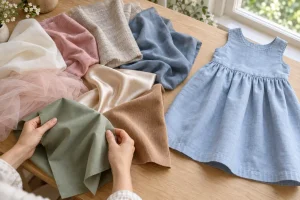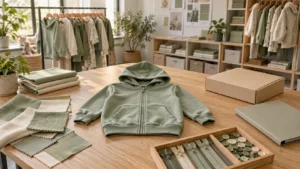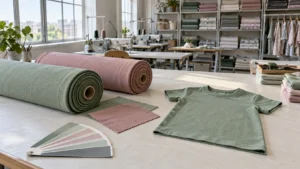
The right kids’ clothing manufacturer depends on what you need to buy. A factory developing your own designs serves a different purpose from a wholesaler supplying finished outfits. Before comparing prices, decide whether you want an original collection, ready-made stock, or blanks you can personalize.
This guide compares 20 manufacturing and production partners for children’s clothing brands and retailers. You’ll also find practical ways to check samples, compare minimum orders, and work out whether an attractive quote leaves enough room for profit.
Why I Selected These 20 Children’s Clothing Manufacturers
This list was not compiled at random—it is based on extensive market feedback and in-depth research. The main selection criteria are:
- Strong Manufacturing Capability: All children’s clothing manufacturers on this list have been established for more than 10 years and own their own kids clothes factory. This means they possess solid production capacity and quality control, rather than operating merely as trading companies.
- Safety & Compliance: Safety is the top priority in children’s apparel production. These manufacturers hold relevant industry certifications and ensure full compliance with safety standards (such as CPSC/CPC) throughout the entire production process.
- One-Stop Service: They provide comprehensive end-to-end solutions, from design concepts to final production. Whether you need simple essentials or complex, highly detailed garments, these manufacturers have the technical expertise to bring your products to life.
20 Best Kids Clothing Manufacturers & Factories
| # | Manufacturer | Region | MOQ | Best For |
| 1 | HAPA | China | Low (Flexible) | One-Stop Shop / Sustainable Full service from design to production; eco-friendly focus. |
| 2 | Appareify | China | Flexible | High Quality / Complex Designs Premium craftsmanship and bespoke tailoring. |
| 3 | Hongyu Apparel | China | 50 (Stock) 100 (Custom) | Streetwear / Fast Fashion Fast turnaround; great for trends. |
| 4 | AEL Apparel | China | 50–150 pcs | Eco-Friendly / Customization Sustainable fabrics and custom orders. |
| 5 | Steve Apparel | USA (HQ) Pakistan (Mfg) | 50 pcs | Startups / Private Label Budget-friendly for new brands. |
| 6 | Royal Apparel | USA | None (Wholesale) 1,200+ (Custom) | Made in USA / Organic Blanks High-quality blanks for printing locally. |
| 7 | MEGA Apparel | USA (HQ) Pakistan (Mfg) | Low (Flexible) | Sublimation / Sportswear All-over printing and athletic wear. |
| 8 | TACK Apparel | USA (HQ) Pakistan (Mfg) | 50 pcs | Custom Cut & Sew Flexible customization for testing markets. |
| 9 | Zega Apparel | USA (HQ) Pakistan (Mfg) | 50 pcs | Full Service End-to-end service (Tech Packs to Production). |
| 10 | Thygesen Apparel | Vietnam | 3,000 pcs | Mass Production / Functional Fabric High volume bamboo/performance fabrics. |
| 11 | Argus Apparel | USA (HQ) Pakistan (Mfg) | Flexible | Tech Pack Development Helps beginners turn ideas into specs. |
| 12 | Strawberry Stripes | India | None / Very Low | Handcrafted / Embroidery Boutique brands doing small, detailed batches. |
| 13 | Aksem Baby | Turkey | Low (Flexible) | European Style / Knits High-quality Turkish cotton. |
| 14 | TAIAN LIANCHUANG | China | 200–300 pcs | Hemp & Organic Cotton Niche eco-friendly hemp blends. |
| 15 | Indie Source | USA | ~300 (Prod) None (Dev) | High-End Development / Made in USA Premium designer development. |
| 16 | Good Clothing Company | USA | 10–50 pcs | Small Batch / Independent Designers Capsule collections and market testing. |
| 17 | K–Embroidery | Vietnam | 30 (Custom) 15 (Stock) | Smocked / Hand Embroidery Traditional hand-smocked dresses. |
| 18 | The Pima Company | Peru | 400 (Total) 40 (Per style) | Pima Cotton Luxury, ultra-soft baby apparel. |
| 19 | MK Kids | India | 200–1,000 pcs | Wholesale / Bulk Knits Low-cost, high-volume basics. |
| 20 | Seam Apparel | USA (HQ) Pakistan (Mfg) | 50 pcs | Startups / Diverse Styles Guidance and variety for new brands. |
1. HAPA – High Quality, Unique Designs, Leading Children’s Fashion
Founded: 2010
HAPA is a premier children’s apparel manufacturer based in Guangzhou, China, with a real talent for unique, complex styles. They handle the kind of detailing—like sequined dresses, tie-dye, and intricate beading—that an ordinary kids clothes factory often struggles to get right.
Safety is a major focus here. Because they focus exclusively on kids’ wear, HAPA holds multiple certifications to ensure every fabric and accessory meets strict non-toxic and physical safety standards.
Their catalog is impressive, covering everything from dresses, suits, and jackets to casual tees and pajamas for boys and girls. What makes them especially good for small to mid-sized brands is their flexibility—they offer small-batch production and free sampling to help you get started.
Pros:
- Specializes in complex detailing and difficult-to-manufacture styles.
- Holds multiple certifications for strict non-toxic and physical safety standards.
- Offers low and flexible MOQs (Minimum Order Quantities) with free sampling for small brands.
Cons:
- Complex detailing and hand-work may lead to longer production times.
- Offshore manufacturing requires factoring in international shipping costs and customs.
2. Appareify – Leading the Way in Sustainable and Bespoke Clothing Production Solutions.
Founded: 2017
Appareify specializes in high-end bespoke apparel, offering flexible, end-to-end solutions for brands of all scales.
As one of the best kids clothing manufacturers in China, they utilize eco-friendly textiles like organic cotton and bamboo. With a monthly capacity exceeding 400,000 units, they combine competitive pricing with rapid turnarounds (7–20 days) and startup-friendly MOQs.
Pros:
- Massive production capacity (400,000+ units monthly) paired with rapid 7–20 day turnarounds.
- Strong commitment to eco-friendly textiles like organic cotton and bamboo.
- Startup-friendly MOQs with highly competitive pricing.
Cons:
- As a high-volume overseas manufacturer, communication across time zones can sometimes cause slight delays.
- Not suitable for brands requiring domestic “Made in USA/EU” labeling.
3. Hongyu Apparel – A Versatile One-Stop Solution for Diverse and Fast-Paced Fashion Needs.
Founded: 2003
Hongyu Apparel is a leading manufacturer defined by quality construction and design innovation. They enforce rigorous production controls to ensure every garment meets international safety standards.
In childrenswear, they prioritize safety and comfort through hypoallergenic materials like bamboo and organic cotton. Their streamlined manufacturing process ensures fast delivery for both samples and bulk orders, helping brands accelerate their time-to-market.
Pros:
- Over two decades of established industry experience.
- Prioritizes hypoallergenic, safe materials specifically tailored for childrenswear.
- Streamlined manufacturing allows for fast delivery of both samples and bulk orders.
Cons:
- Focus on fast-paced, streamlined production might limit extremely slow-fashion, artisanal detailing.
- Subject to international shipping delays and tariffs.
4. AEL Apparel – Expert Custom Manufacturing for Brands Seeking Precision and Premium Quality.
Founded: 2010s
AEL Apparel is recognized for premium craftsmanship and exacting quality. They strictly adhere to global standards, using safe, non-toxic fabrics to ensure garments are durable and skin-friendly.
Backed by high-efficiency operations, AEL offers production cycles as short as 7–20 days, enabling brands to respond instantly to emerging market trends.
Pros:
- High-efficiency operations with fast production cycles (7–20 days).
- Strict adherence to non-toxic, skin-friendly global fabric standards.
- Excellent for brands needing to react quickly to emerging fashion trends.
Cons:
- Premium craftsmanship often comes with slightly higher unit costs than budget overseas factories.
- May require higher volume commitments to secure the fastest turnaround times.
5. Steve Apparel – Empowering Startups with Low MOQs and Personalized Custom Manufacturing.
Founded: 2015
Steve Apparel delivers stylish, functional clothing for global markets, utilizing eco-friendly materials tailored to children’s growth and comfort needs.
Their key advantage lies in full customization capabilities. Rather than simple private labeling, they enable brands to engineer unique, bespoke children’s clothing lines from scratch.
Pros:
- True “from scratch” customization rather than just simple private labeling.
- Very accommodating to startups with low MOQs.
- Utilizes eco-friendly materials tailored to children’s needs.
Cons:
- Since production is in Pakistan, shipping to North America or Europe takes longer.
- Full bespoke customization from scratch requires longer lead times for design and sampling.
6. Royal Apparel – The Gold Standard for Eco-Friendly, American-Made Wholesale Basics.
Founded: 1992
The top choice for brands seeking “Made in USA” quality, Royal Apparel guarantees ethical, sweatshop-free production and fast North American distribution.
As an industry leader in sustainability, they offer an extensive portfolio of eco-fabrics ideal for childrenswear, including 100% organic cotton, bamboo viscose, and recycled RPET blends.
Pros:
- “Made in USA” label appeals to domestic consumers and ensures fast North American shipping.
- Industry leaders in sustainability (organic cotton, RPET blends).
- Highly ethical, sweatshop-free production standards.
Cons:
- Significantly higher manufacturing costs compared to Asian or South Asian manufacturers.
- More focused on “basics” and standard knits; less suited for highly complex, heavily embellished garments.
7. MEGA Apparel – Specializing in Custom Sports and Casual Wear for Emerging Fashion Brands.
Founded: 2010s
MEGA Apparel is a solid partner for startups and small businesses because they balance quality with fresh designs. Where they really shine is customization.
They offer cool techniques like 3D puff printing, glow-in-the-dark effects, and silk screen printing—great for making children’s clothes that actually stand out.
Pros:
- Excellent at specialty printing techniques (3D puff, glow-in-the-dark, screen printing).
- Strikes a good balance between quality and fresh, trend-driven designs.
- Highly customized options for emerging fashion brands.
Cons:
- Focus is heavily on casual/sportswear; may not be ideal for formal childrenswear.
- Overseas production facilities mean longer transit times.
8. TACK Apparel – Bringing Your Unique Designs to Life with Comprehensive Customization Services.
Founded: 2010s
TACK Apparel is known for being reliable and having some of the lowest minimums (MOQ) around—you can start with just 35 to 50 pieces per design.
They offer a true “one-stop service.” They handle the whole mess for you—from tech packs and fabric sourcing to cutting, sewing, and finishing. It’s why so many kids’ clothing brands trust them.
Pros:
- Extremely low MOQs (35 to 50 pieces per design).
- Comprehensive end-to-end service, handling everything from tech packs to finishing.
- Great for absolute beginners who need their hands held through the manufacturing process.
Cons:
- Very low MOQs usually result in a higher cost-per-unit.
- Reliance on overseas production for the actual sewing and cutting.
9. Zega Apparel – A Full-Service Manufacturing Hub Offering “Concept-to-Completion” Production.
Founded: 2018
Zega Apparel is an experienced manufacturer that delivers quality craftsmanship and on-trend styles. They are especially strong in the children’s wear sector.
They give you plenty of options, including private labeling (your own brand tags), embroidery, and organic fabrics that are safe for sensitive skin.
Pros:
- Offers a wide variety of customization options, including embroidery and private labeling.
- Strong access to organic, sensitive-skin-friendly fabrics.
- Good balance of quality craftsmanship and on-trend style adaptation.
Cons:
- Relatively newer company compared to legacy manufacturers.
- Communication can sometimes lag due to the time difference between the sales office and the factory floor.
10. Thygesen Apparel – Innovation-Driven Manufacturing for High-Performance Functional and Activewear.
Founded: 1931
With over 90 years in the game, Thygesen is a veteran. They have a major factory in Vietnam and specialize in high-quality production, even for smaller batches.
They are leaders in sustainable kids’ wear, focusing on certified safe fabrics like organic cotton and hypoallergenic bamboo. Everything they make meets strict ISO, CE, and OEKO-TEX safety standards.
Pros:
- Over 90 years of deep industry expertise and reliability.
- Impeccable safety credentials (ISO, CE, OEKO-TEX certified).
- World-class capacity for high-performance and functional activewear fabrics.
Cons:
- May have higher MOQs for bespoke custom fabrics despite accommodating smaller batches for standard items.
- European headquarters and Vietnam production can complicate logistics for smaller North American brands.
11. Argus Apparel – Streamlining Your Brand’s Launch with Expert Tech Packs and Production Services.
Founded: 2010s
Based in Los Angeles, Argus Apparel is a great option if you want a manufacturing partner closer to home. They are a favorite for startups because they make the process less intimidating. Their sweet spot is children’s clothing with an eco-friendly angle. They work with GOTS organic cotton and hypoallergenic bamboo, so you know the fabrics meet strict US safety standards. Plus, their supply chain is solid. Whether you need a small run or are ready to scale up, they have the flexibility to handle it.
Pros:
- US-based team makes communication, tech pack creation, and domestic logistics incredibly easy.
- Strong supply chain for GOTS organic cotton and hypoallergenic bamboo.
- Highly flexible, able to handle both small startup runs and scalable bulk orders.
Cons:
- Domestic US services (and any US-based production they do) will be more expensive.
- May outsource larger bulk runs internationally, meaning quality control is split across borders.
12. Strawberry Stripes – Premium Private Label Manufacturing for Playful and High-Quality Children’s Wear.
Founded: 2010s
If you’re looking for something with a bit more “soul,” check out Strawberry Stripes. Based in India, they specialize in timeless, high-quality designs. The real killer feature here is their hand-embroidery.
This is the kind of detailed craftsmanship that massive, automated factories just can’t replicate. It’s perfect if you want your brand to have that boutique, hand-finished feel.
Pros:
- Offers incredible, boutique-level hand-embroidery that automated factories cannot replicate.
- Gives garments a unique, high-value “soul” and artisanal feel.
- Excellent for premium, higher-priced children’s boutique brands.
Cons:
- Hand-embroidery is labor-intensive, leading to much longer production lead times.
- Difficult to scale up rapidly if a specific design suddenly goes viral.
13. Aksem Baby – Delivering Unmatched Softness and Safety in Organic Baby Clothing Manufacturing.
Founded: 2000s
Operating out of Bursa—Turkey’s famous textile hub—Aksem Baby really knows their stuff. They are obsessive about quality control, so the final garments are always durable and super soft. They offer a true “turnkey” solution.
They handle the whole headache: technical design, fabric sourcing, quality checks, and packaging. For brands targeting the European or global markets, their speed and quality make them a no-brainer.
Pros:
- Located in a world-renowned textile hub, ensuring access to incredibly soft, premium cotton.
- Strict quality control targeting the high standards of the European market.
- True turnkey service handling design, sourcing, and packaging.
Cons:
- Shipping to North America or Asia can be costly compared to regional options.
- Focus is heavily on baby/infant wear; may not be suitable for older children’s apparel.
14. TAIAN LIANCHUANG – Professional Textile Experts Delivering Quality Garments for the Global Market.

Founded: 2000s
TAIAN LIANCHUANG is a pro at high-quality kids’ and infant wear, backed by a very strict quality management system. But their biggest edge is vertical integration. Basically, they make their own fabrics in-house—weaving, dyeing, and printing everything themselves (including hemp, bamboo, and organic cotton).
This gives them huge control over cost and quality. They are also very startup-friendly and usually offer flexible MOQs to help get you moving.
Pros:
- Vertical integration (weaving, dyeing, printing in-house) allows for immense quality and cost control.
- Specialists in sustainable materials like hemp, bamboo, and organic cotton.
- Startup-friendly with flexible MOQs.
Cons:
- Because they weave their own fabrics, creating a brand-new, non-standard custom fabric might require a higher volume commitment.
- Language barriers and time zone differences require clear, detailed tech packs.
15. Indie Source – The Premier Development and Production Powerhouse for Modern Fashion Brands.
Founded: 2012
Indie Source is a U.S.-based manufacturer specializing in high-end childrenswear and ready-to-wear apparel, recognized for its agile, full-service production capabilities.
Tailored specifically to support emerging brands, they offer accessible Minimum Order Quantities (MOQs). This structure allows businesses to market-test unique children’s clothing designs without significant upfront capital exposure.
Pros:
- Highly agile and tailored to support modern, emerging brands.
- Accessible MOQs allow for market-testing without massive upfront capital.
- Excellent domestic communication and high-end ready-to-wear expertise.
Cons:
- Premium US-based development and production services come at a premium price.
- Waitlists for their services can occasionally occur due to high domestic demand.
16. Good Clothing Company – Scaling Sustainable Fashion with Ethical, Small-Batch US Production.
Founded: 2015
Good Clothing Company is dedicated to producing high-quality, comfortable, and eco-conscious children’s apparel, with a strict emphasis on safe, non-toxic fabric selection.
Their flexible service model covers the entire development lifecycle—including pattern making, grading, and sampling—ensuring garment integrity and construction quality prior to mass production. Their seasoned team and commitment to process innovation maintain their competitive edge in the childrenswear sector.
Pros:
- Excellent for ethical, eco-conscious brands wanting small-batch US production.
- Provides comprehensive development services (pattern making, grading, sampling) before mass production.
- Highly transparent and accessible for US-based designers.
Cons:
- Small-batch US manufacturing means unit costs are significantly higher.
- Production capacity is lower than massive overseas facilities, which may hinder rapid scaling.
17. K–Embroidery – Exquisite Hand-Smocked and Embroidered Children’s Wear for Boutique Brands.
Founded: 1990s
Specializing in premium embroidery and bespoke craftsmanship, K–Embroidery combines traditional artisanal hand-smocking with modern machinery. They are notable for offering some of the industry’s lowest MOQs.
Operating on a factory-direct model, they eliminate supply chain intermediaries. This provides a cost-efficient solution for sourcing complex, labor-intensive designs that would otherwise carry prohibitive production costs.
Pros:
- Factory-direct model eliminates middlemen, keeping costs low for highly labor-intensive smocking/embroidery.
- Offers some of the lowest MOQs in the industry for this level of bespoke detailing.
- Ideal for classic, traditional boutique childrenswear.
Cons:
- Very niche aesthetic; not suitable for modern streetwear, activewear, or casual basics.
- Hand-smocking requires longer lead times.
18. The Pima Company – Luxurious Softness and Durability Featuring Peru’s Finest Pima Cotton.
Founded: Information not widely publicized
The Pima Company specializes exclusively in premium apparel crafted from 100% Peruvian Pima cotton, ensuring every garment offers exceptional durability and comfort suitable for delicate skin.
They are equipped to meet the varied requirements of both commercial brands and individual families. Through specialized expertise and design innovation, they maintain a leading position in the textile manufacturing industry.
Pros:
- Unmatched fabric quality; Peruvian Pima cotton is globally recognized for durability and softness.
- Perfect for delicate skin and luxury baby brands.
- Equipped to handle both individual commercial brands and wholesale families.
Cons:
- Pima cotton is a luxury commodity, making the baseline cost of goods very high.
- Limited to cotton-based garments; not suitable for synthetic blends or outerwear.
19. MK Kids – Specialized Production for Trendy, Comfortable, and Ethical Kids’ Fashion.
Founded: 2010s
MK Kids focuses on delivering high-quality, stylish children’s clothing with a priority on material safety and skin sensitivity, utilizing sustainable textiles such as GOTS-certified organic cotton and bamboo fiber.
Their versatile production capacity serves both established brands and independent designers, ensuring all products comply with rigorous international safety and quality standards.
Pros:
- Strong commitment to certified sustainable textiles (organic cotton, bamboo).
- Strict compliance with international safety and quality standards.
- Versatile production capacity that serves both established brands and indie designers.
Cons:
- “Trendy” focus means they may cycle through materials quickly; reordering exact past fabrics could be difficult.
- Requires careful vetting of international shipping terms.
20. Seam Apparel – Helping New Brands Launch Successfully with Accessible US-Based Manufacturing.
Founded: 2012
Seam Apparel specializes in premium children’s and infant wear, seamlessly blending safety, style, and comfort. Utilizing superior fabrics and rigorous production controls, they ensure every garment is durable and gentle on sensitive skin.
Their Los Angeles-based team guarantees clear, efficient communication, managing a global supply chain to deliver cost competitiveness without compromising quality.
Pros:
- US-based team guarantees clear, efficient communication and project management.
- They manage the global manufacturing process for you, taking the headache out of overseas logistics.
- Rigorous production controls ensure durability and safety for sensitive skin.
Cons:
- Acting as an intermediary manager can sometimes add a layer of cost compared to going direct-to-factory yourself.
- Actual production happens overseas, so shipping lead times still apply.
How to Source a Children’s Clothing Manufacturer
Start with a product brief, then search for suppliers that already work in that category. “Baby knitwear manufacturer” produces a more useful shortlist than “best clothing factory” when you need cotton rompers. The same applies to smocking, outerwear, or decorated jersey sets.
Use several routes to gather leads:
- Supplier directories and marketplaces: Alibaba, Global Sources, and specialist production platforms can help identify candidates. A platform badge is not proof that a particular order will meet your requirements.
- Trade shows and referrals: Use them to inspect work and arrange technical follow-up, not to skip verification.
- Company websites and social media: Look for relevant products and consistent business details. Workshop videos are useful context, but they do not establish who will make your order.
Send the same brief to a small shortlist so you can compare responses fairly. Include the garment type, age and size range, materials, quantities by style and color, target market, and required warehouse-delivery date. If you are still deciding where to search, the wider guide to finding clothing manufacturers explains the sourcing process in more detail.
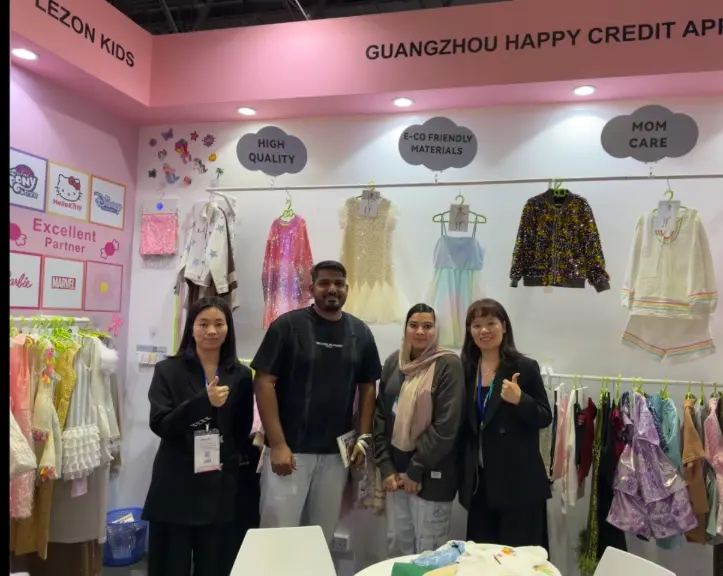
The picture shows the on-site scene of the Middle East Kids’ Wear Exhibition in December 2025, where the HAPA team is providing professional business negotiation and cooperation services for customers.
How to Choose the Right Manufacturer for Your Brand
When choosing a children’s clothing manufacturer, you can evaluate them based on the following aspects:
Assess Specialization and Expertise
A supplier’s most relevant work should resemble what you want to produce. For a smocked dress, examine the stitching and finishing around the decorative panel. For a baby bodysuit, examine the opening, seams, and fastening construction. A generic company presentation tells you less.
Request a relevant sample, then document your assessment. Check measurements before and after washing according to the proposed care instructions, inspect seams and decoration, and record changes. HAPA’s sample-development process provides one example of the stages to clarify before approving production. Home washing checks help assess usability; they do not replace required laboratory testing.
Check the Minimum Order Quantity (MOQ)
Ask what the minimum applies to. A 300-piece order can mean one style in one color, several colors sharing a fabric, or a mixed assortment. Those are different commitments.
Also check the repeat-order minimum. A first run that fits your budget may still be difficult to replenish if the supplier cannot repeat a popular size or color economically. For stocked wholesale goods, size-pack rules and minimum order value may matter more than a manufacturing MOQ.
Verify Certifications
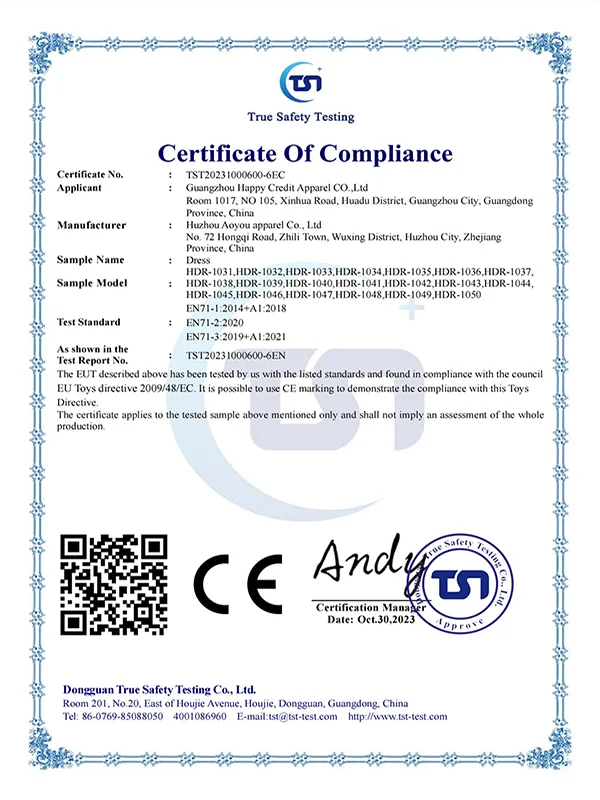
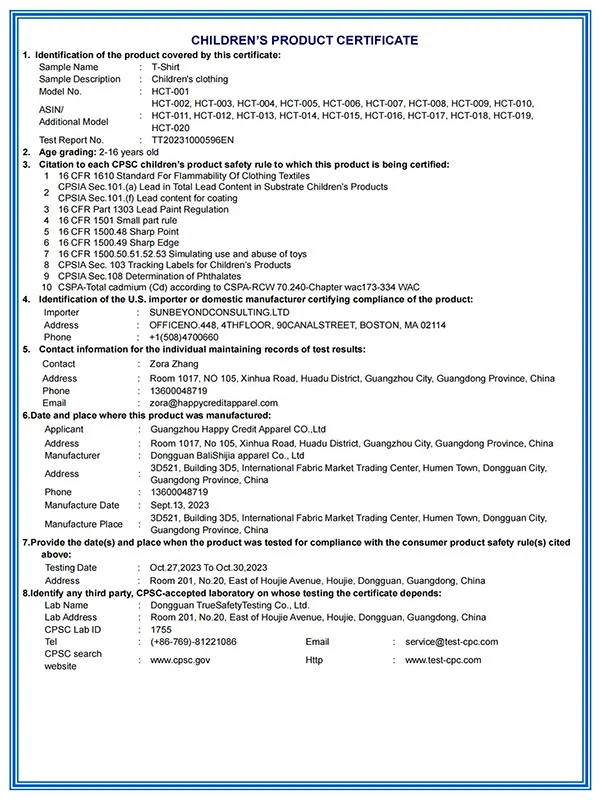
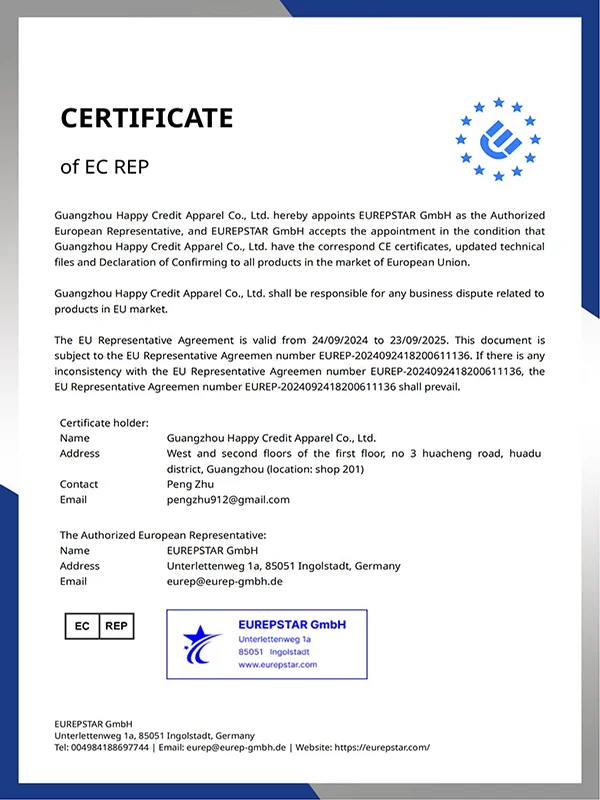
Ask for documents covering the relevant company, facility, material, or product, and check their scope and validity. A chemical-testing label, a social audit, and a product compliance certificate answer different questions.
For example, OEKO-TEX STANDARD 100 concerns textiles tested for harmful substances. It is not a blanket approval of every garment a supplier can manufacture.
For the US, the CPSC’s Children’s Product Certificate guidance explains the domestic manufacturer’s or importer’s certification responsibilities for applicable children’s product rules, including testing requirements and exceptions. Confirm the rules for your garment and current import filing obligations with an appropriate compliance specialist before ordering.
The Ultimate Vetting Checklist: 5 Critical Questions Before You Sign
Finding a manufacturer is easy—finding the right partner is the real challenge. To avoid costly mistakes, never sign a contract until you have received satisfactory answers to these five critical points. Use this checklist throughout your negotiation process:
1、Minimum Order Quantity (MOQ) & Flexibility
- The Reality: Startups typically need flexibility (e.g., 50–100 pieces) to test the market and prevent overstocking.
- What to check: Ensure the factory’s MOQ aligns with your current budget. Crucially, ask if they can scale up production seamlessly as your business grows, ensuring you won’t outgrow your supplier.
2、Production Lead Times
- The Standard: In the competitive children’s apparel market, timing is everything. Industry standards are 7–14 days for samples and 30–45 days for bulk production.
- Red Flag: Be wary of factories that promise “instant” delivery without explaining their production queue system—this often signals poor quality control or unauthorized outsourcing.
3、Production Capacity & Scalability
- The Risk: The last thing you want is delayed holiday orders due to a factory’s insufficient capacity.
- The Solution: Partner with factories that operate scalable production lines. HAPA, for instance, guarantees that your critical Q4 holiday inventory arrives on time, every time, regardless of order volume spikes.
4、Technical Capabilities & In-House Craftsmanship
- The Trap: Many factories outsource complex processes (like embroidery or sequin attachment), which drives up costs and introduces significant quality risks.
- What to verify: Always confirm they use specialized in-house equipment. This ensures consistent, stable product quality and accountability across every single order.
5、Design & Development Support
- The Value: For brands without a full in-house design team, a manufacturer that offers end-to-end solutions is invaluable.
- The Benefit: Partnering with a comprehensive Children’s Wear OEM can turn simple sketches into fully production-ready garments, potentially saving you thousands of dollars in freelance designer fees and reducing technical errors on the factory floor.
Is Selling Kids Clothing Profitable?
It can be, but a low wholesale price is only one part of the calculation. Your margin also depends on freight, duties, fulfillment, returns, advertising, and how much stock you eventually discount.
Here is an illustration, not an industry benchmark. Suppose a garment sells for $30, excluding sales tax, and its landed cost is $12. The $18 difference gives a 60% gross margin. If fulfillment and payment costs total $3, customer acquisition costs $4, and you reserve $2 for returns and markdowns, $9 remains before fixed operating expenses. That is not the same as $18 in take-home profit.
For kidswear, look beyond whether a style sells. Track which sizes sell, how quickly they sell, and why customers return them. A fixed wholesale pack may leave you with slow sizes even when the design itself is popular.
For your first buying cycle, I would prioritize:
- A focused assortment you can afford to test without heavy discounting.
- Clear landed costs rather than a comparison of factory prices alone.
- Reorder terms that let you replenish proven products.
- A cash reserve for returns, replacements, and the next purchase order.
Why Choose Chinese Children’s Clothing Manufacturers?
China is worth considering when a collection needs a combination of garment production, fabric sourcing, trims, printing, embroidery, and retail packaging. The China-based businesses in this list illustrate several of those options, from fashion-led kidswear to baby textiles and wholesale basics.
The advantage depends on the supplier and the order. A business with access to suitable materials and experienced decoration partners may be a better fit for a detailed collection than one competing mainly on simple bulk basics. Neither location nor a factory-direct label guarantees a lower total cost.
Compare quotations using the same specifications, inspection requirements, shipping terms, and delivery endpoint. Then account for duties, freight, inventory timing, and the cost of resolving problems across borders. If India is also on your shortlist, the India vs. China clothing manufacturing comparison explores the product and sourcing differences to consider.
For a retailer testing a few ready-made pieces, a local distributor may be more practical. For an established brand developing repeat collections, a direct manufacturing relationship may offer more control. Choose the route around your business, not a country ranking.
Conclusion
The best kids’ clothing manufacturer is the one whose products, order structure, and production process fit your collection. Start by deciding whether you need custom development, branded wholesale stock, or blanks. Then compare a small number of relevant suppliers using the same brief and an actual sample.
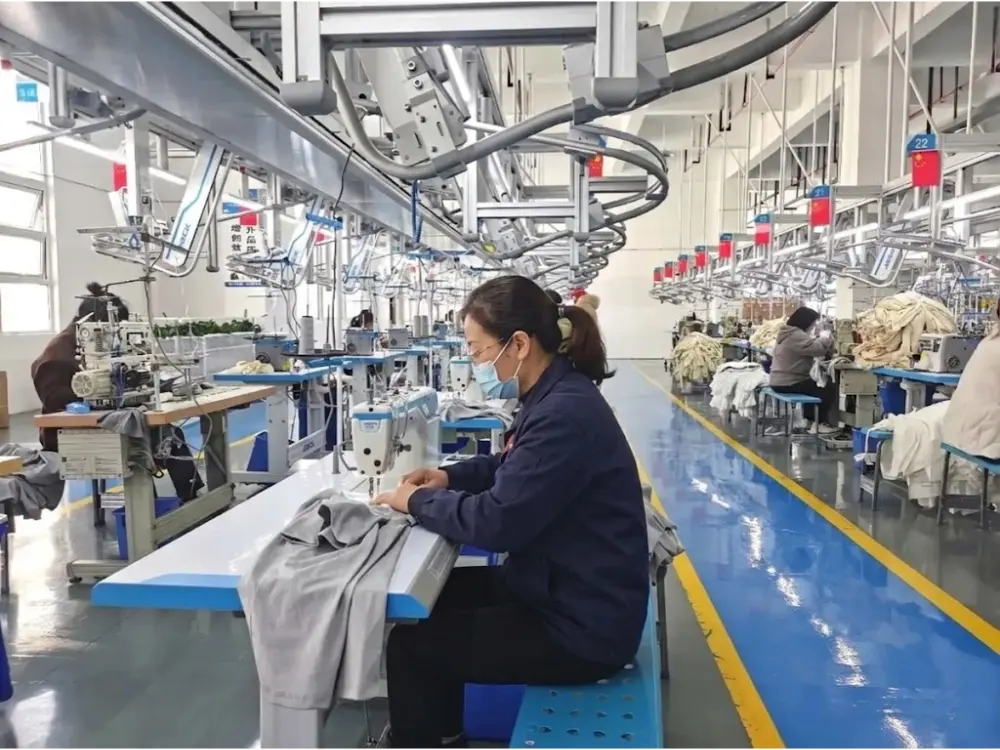
If HAPA’s product range fits your plans, share the design direction, size range, quantities, destination market, and delivery target through its children’s clothing manufacturing service. A focused brief makes it easier to establish what can be produced, what needs development, and what the order should cost.
FAQ
How do I choose the best kids’ clothing manufacturer from this top 20 list?
Look for a strong match in OEM/ODM capabilities, MOQ flexibility, and strict quality control. Always request production samples and prioritize factories with reliable communication and on-time delivery records.
How to find wholesale clothing suppliers?
Platforms like Alibaba and Global Sources are the standard starting points, but they are just directories. For serious sourcing, industry trade shows are better for vetting factory capabilities face-to-face. The golden rule? Never commit to a bulk order based on photos alone. Always order samples. You need to touch the fabric and check the stitching durability yourself to see if a supplier is actually reliable.
Can I buy clothes directly from the manufacturer?
Yes, and it’s the only way to get real control over your margins. Going direct to the factory cuts out the middleman fees and allows for full customization. The catch is volume. Factories operate on scale, so you will need to meet Minimum Order Quantities (MOQs). If you are ready to invest in inventory to get a lower unit cost, going direct is the right move.
Where are most kids clothes made?
Asia dominates the sector. You will find many of the world’s leading children’s wear manufacturers based in hubs like Guangzhou, China, as the region offers the most vertically integrated supply chains for fast fabric sourcing, diverse printing techniques, and rapid production speed.
Do these top-rated manufacturers offer both OEM and ODM services?
Yes, most top-tier factories provide comprehensive OEM (manufacturing from your tech packs) and ODM (design-to-production) services, offering flexible, end-to-end solutions for your brand.
How important are ethical and eco-friendly certifications?
They are crucial. Certifications like OEKO-TEX®, GOTS, and BSCI guarantee child-safe materials and ethical labor practices, which are essential for protecting and elevating your brand’s reputation.
What is the typical Minimum Order Quantity (MOQ) for these top factories?
While traditional factories might require 500+ pieces per style, many modern, flexible manufacturers on this list now offer lower MOQs—typically between 100 and 300 pieces—allowing you to test new collections with less risk.