Choosing a cotton-polyester blend for kidswear starts with what the garment needs to do. A soft everyday tee, a school polo that dries overnight, and a hoodie with a large print can lead you to different fabrics—even when the labels show the same percentages.
For a T-shirt, 60% cotton / 40% polyester and 50/50 jerseys are useful starting points. For a school polo, compare a polyester-rich piqué with a cotton-rich version. Keep the knit and weight similar so the comparison tells you something useful.
What Is a Cotton-Polyester Blend, and Why Use It for Kidswear?
A cotton-polyester blend combines cotton and polyester in one fabric. You may also see it called polycotton. The percentages describe the share of each fiber by weight; they don’t describe the whole fabric.
Cotton contributes moisture absorption and a familiar feel against the skin. Adding polyester offers another way to balance drying time, durability, and shape retention compared with using 100% cotton. The result also depends on the yarn, construction, and finish, so adding polyester doesn’t guarantee that a garment will resist shrinking or feel comfortable.
When I review a kidswear fabric brief, I start with the problem the garment needs to solve—not a target cotton percentage. For an everyday T-shirt, that may be the feel against the skin after washing. For schoolwear, it may be drying time and how the collar keeps its shape. I would shortlist fabrics around those requirements before deciding whether 60/40 or 50/50 is the better fit.
How Do Cotton-Polyester Blend Ratios Compare?
Any of the three fabrics below could appear on a quote as polycotton. The ratio tells you how much of each fiber the fabric contains by weight, but not how the yarn is knitted or which fiber touches the skin. This table lists cotton first. Suppliers don’t always use that order, so write both fiber names on your sample request.
| Cotton / polyester | Why consider it? | Where to start | What could change your choice? |
|---|---|---|---|
| 60% cotton / 40% polyester | A cotton-rich option when the feel of everyday basics comes first. | An everyday jersey tee; compare it with a 50/50 jersey. | Does the inside still feel soft after washing? Does the tee keep the length you approved? |
| 50% cotton / 50% polyester | An equal blend worth comparing when both feel and easy care matter. | Basics that get worn and washed often. | Check the color you’ll sell. A pale tee may be too sheer even if you liked the dark sample. |
| 35% cotton / 65% polyester | A polyester-rich option worth trying when drying time matters. | A frequently washed school polo. Compare a cotton-rich version in the same textured knit, called piqué. | How quickly does the shirt dry, and do the collar and button opening still lie flat? |
On Fruit of the Loom’s Kids 65/35 Polo, for instance, 65 means polyester, not cotton. The same product sheet lists white at 170 grams per square meter and the colors at 180. Even within one style and one blend, asking for “the white version of the navy sample” doesn’t necessarily get you the same weight. If both colors are on your order, see both before you sign off.
Cotton absorbs more moisture into the fiber than poliéster, which makes a polyester-rich shirt worth trying when drying time matters. But a buyer asking for a “breathable” fabric might mean something else entirely. Does the child need to feel air through the tee during play, or does the shirt need to be dry by the time it goes back in a school bag? Tell the supplier which of those you mean. Wicking, or the movement of liquid through fabric, is different from how readily that liquid evaporates. An equal blend means equal fiber content, not a halfway score on either measure.
Which Blend Should You Try for Each Garment?
Start with the first problem a child or parent would notice: a school collar that won’t lie flat after washing, or jogger knees that bag halfway through an afternoon of play. Use that detail to choose your samples.
Everyday T-Shirts
Ask for a 60% cotton, 40% polyester jersey and a 50/50 jersey in the same color and weight. Feel the inside where it will touch the skin. For a light-colored tee, hold a single layer of each jersey over the same dark background to compare coverage. Save a piece of each for printing if a large graphic is part of the design.
On smaller sizes, pull each tee over a head form of the intended size. If the body feels right but the neck stays wavy afterward, try a different neckband on the same jersey. If getting the tee on in the first place is the problem, measure the opening before changing fabrics.
School Polos
Compare a polyester-rich piqué with a cotton-rich piqué, using the proposed collar and button placket on both samples. If the shirts need to dry overnight, wash them in the same load, hang them side by side, and check the collar, placket, and body the next morning before pressing.
For a school polo, I would diagnose the problem by component rather than reject an otherwise suitable fabric. If the body hangs well but the collar curls, I would look at the collar construction first. If an embroidered crest pulls the chest into folds, I would ask the embroidery team to review its backing and stitch coverage. The sample should include the actual crest, preferably on the smallest size carrying that artwork. My aim is to fix the part causing the problem before reopening the whole fabric choice.
PE and Play Sets
A play set worn from breakfast through recess has a different job from a PE uniform a child changes out of after practice. For the all-day set, try the cotton-rich jersey and the 50/50. If you plan to sell the uniform as quick-drying, add a polyester-rich sports knit and ask for drying data on that particular fabric. Review the pieces separately: does a damp tee cling across the back, and do the shorts allow a full squat without pulling at the seat?
Match the test to the promise on your product page. A report showing how far water travels along a strip of fabric can support a claim about wicking; it can’t tell a parent how long the shorts take to dry. Check the report’s fabric code and finish against the fabric on offer.
Hoodies and Joggers
When choosing tecidos para moletons infantis, turn the swatch over first. French terry has visible loops on the back; brushed fleece has a fuzzy inside. Decide which you want before comparing a cotton-rich version with a more evenly blended one. On the finished set, look for fuzz where backpack straps rub the shoulders, knees that stay stretched out, and cuffs that no longer sit close to the wrist. The ribbed cuffs can have a different blend from the body, so ask for swatches of both.
Hang the matching hoodie and joggers side by side. A fabric that drapes well on top may show the pocket outlines on the pants. Sew one pocket with the proposed lining and check it in daylight. If the outline still shows, request a denser bottom fabric in the matching shade. It can be a better use of the sampling budget than changing the entire set.
Why Can the Same Cotton-Polyester Blend Feel Different?
When developing fabrics for kidswear, I never judge a material by its fiber ratio alone. Two fabrics labeled 60% cotton and 40% polyester can feel completely different. Often, the difference comes from the yarn, knit construction, and finishing process rather than the blend itself.
When comparing fabric samples, I usually focus on three things:
- Surface texture: I look at how tightly the fabric is knitted and how smooth the surface feels. Even with the same fiber content, different yarns and constructions can create very different textures.
- Feel against the skin: For children’s T-shirts, I pay particular attention to the inside of the fabric. A smooth outer surface doesn’t necessarily mean the side touching a child’s skin will feel just as soft.
- Drape and stretch: I let the fabric hang naturally and check how it stretches and recovers. Two fabrics with the same GSM can behave differently—one may feel structured, while the other falls more softly.
In my experience, GSM tells you how much a fabric weighs, not how comfortable or high-quality it is. What matters more is whether the fabric suits the garment you’re developing. An everyday T-shirt needs a comfortable feel, while joggers also need suitable stretch and shape recovery around the knees and seat.
I also encourage brands to keep a physical sample of a fabric they genuinely like. If you have a favorite T-shirt that still feels soft after washing, share it with your manufacturer and explain which qualities you want to reproduce.
Rather than simply asking for “the same 60/40 fabric,” I’d focus on helping the supplier understand the feel and performance you’re looking for. After all, two numbers on a fabric label never tell the whole story.
Choosing a Blend for Printed Kidswear
If your design has a crest or chest graphic, find out which yarn is on the print surface. It can differ from the overall blend, and the answer can change with the color of the very same style.
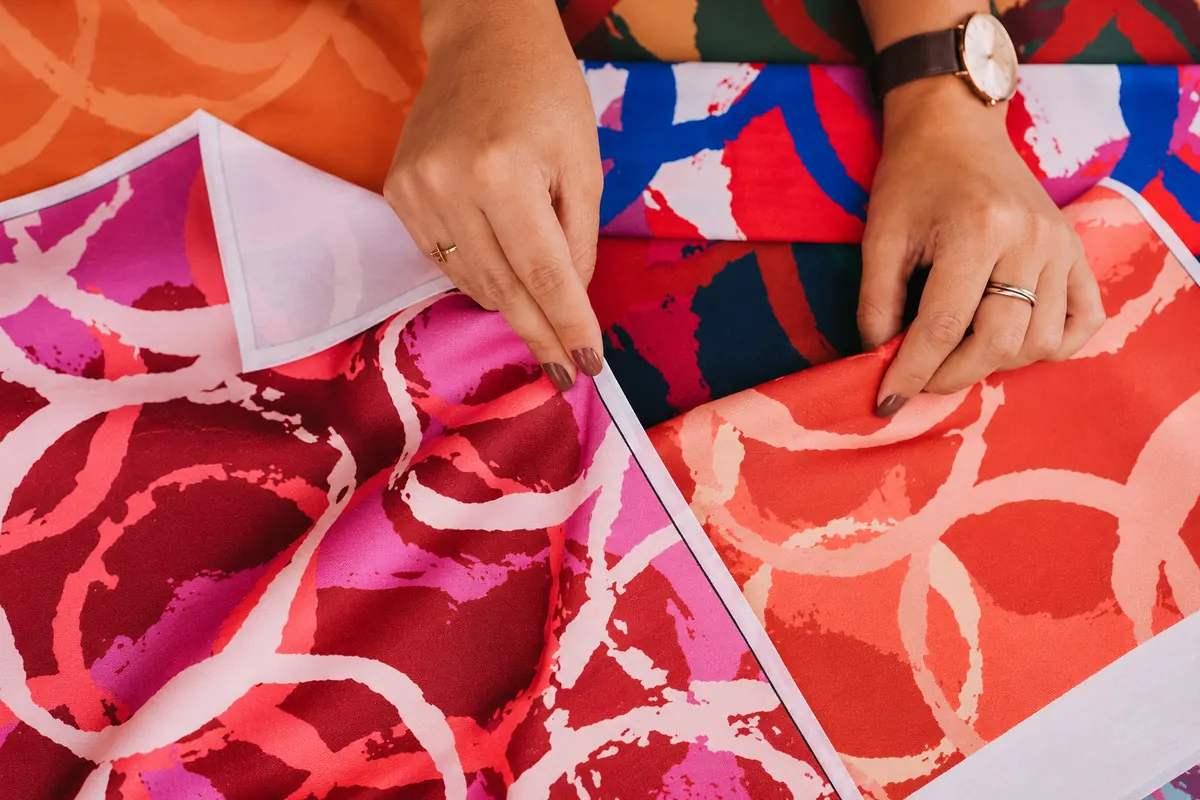
Independent Trading Co.’s SS4001Y youth hoodie is a useful example. The solid colors are 80% cotton and 20% polyester overall, with an all-cotton face. Grey Heather is 75% cotton and 25% polyester. Charcoal Heather and Royal Heather are 55% cotton and 45% polyester. Those heathers don’t have the all-cotton print surface of the solid colors.
For a pale logo on dark fleece, heat during printing can allow dye from the garment to tint the ink. I wouldn’t approve a print for the whole collection after seeing it on only one color. My preference is to trial the actual artwork and intended ink on each relevant production fabric and color, especially dark heathers. I would check the lightest part after curing and again after the holding time the printer recommends. A clean white crest on solid black doesn’t prove it will stay clean on navy heather.
A small print trial can settle the color question. To judge how a large graphic feels, ask to see the whole design at its intended size. Bend the printed panel and the unprinted fabric beside it. If a solid block of ink feels stiff where the tee needs to fold, ask the printer about changing the ink layer or leaving more fabric showing through the artwork. Keep the approved printed piece with its fabric code, shade, and artwork version.
The printing method matters too. A cotton face is a useful starting point for direct-to-garment (DTG) printing, but suitable equipment and pretreatment can also handle blends. Screen printing needs ink and curing conditions matched to the fabric. Conventional dye sublimation is generally better suited to light-colored polyester or polyester-rich fabrics, where the polyester portion takes the dye.
Does More Polyester Mean a Lower Price?
Not necessarily. If the cotton-rich jersey is already in stock in navy but the polyester-rich one needs a custom dye lot, the two prices won’t show what the change in fiber costs. Even at the same price per kilogram, different weights or usable fabric widths can change how much fabric goes into each tee.
Para compare quotes for the same garment, keep the style, fabric weight, color, print size, and quantity per color consistent. Ask suppliers to identify anything they can’t match. Compare prices per finished garment with the same work included, keeping separate dyeing or print setup charges visible.
I wouldn’t choose the cheaper blend until I understand what a reorder would involve. An in-stock shade may suit a first launch, but it may not be available in the same finish next season; a custom shade may mean meeting another dye-lot minimum. When two samples both meet the brief, I would put repeat-order availability, color consistency, and any setup charges next to the unit price. A small saving on the first run is less useful if the fabric cannot be matched for the next one.
Will Cotton-Polyester Blends Shrink or Pill?
Yes. A cotton-polyester blend can shrink, change shape, or develop small balls of tangled fibers called pills. The ratio alone doesn’t predict how much. Yarn, fabric construction, finishing, and the way the garment is washed and dried all affect the result.
For shrinkage, look at length and width separately. A tee that becomes shorter and wider needs a different response from one that changes evenly. A “preshrunk” description doesn’t remove the need to check the finished garment with its seams, neckband, and print.
Pilling is a surface issue. Check areas exposed to rubbing, such as a hoodie’s shoulders under backpack straps. A fabric can hold its measurements and still develop fuzz or pills. CottonWorks’ guidance on testes de qualidade têxtil treats dimensional change and surface appearance as separate checks.
Choose the sample that meets the appearance and fit your customer expects after the intended care routine. A higher polyester percentage alone doesn’t settle either question.
How Do You Compare Two Fabric Samples Fairly?
Decide what would rule a fabric out antes the samples arrive. An undershirt that loses too much length and a polo that needs ironing after every wash are different problems. Agree with the factory on the measurement or appearance you can accept for your style.
Compare the Swatches Side by Side
Mark the swatches A and B. Match the knit, weight, color, and finish as closely as possible. If one has been softened or brushed and the other hasn’t, note the difference. You can still choose the one you prefer; you just can’t credit the result to the fiber ratio alone.
Keep an unwashed piece of each. For the first softness comparison, cover the composition labels and describe what you feel: a smoother face or a less scratchy inside. Keep a short record of:
- The fabric code, color, and cotton/polyester percentages.
- The knit, weight, finish, and any differences between the samples.
- The wash and dry settings, cycle count, and measurement points.
- Changes in length, width, surface, seams, and print.
If the budget covers only one sewn sample, wash equal-sized swatches first and use the stronger option for the garment. The other swatch remains a reference; its fit and seam behavior still need checking in a finished piece.
Wash the Garment You Plan to Sell
Use the same care routine for both garments. On two tees of the same size, measure from the high point of the shoulder to the hem and across the chest below the armholes. Repeat at the same points after drying, with each tee flat and relaxed. Photograph both under the same light, including any twisted seams or fuzzy areas.
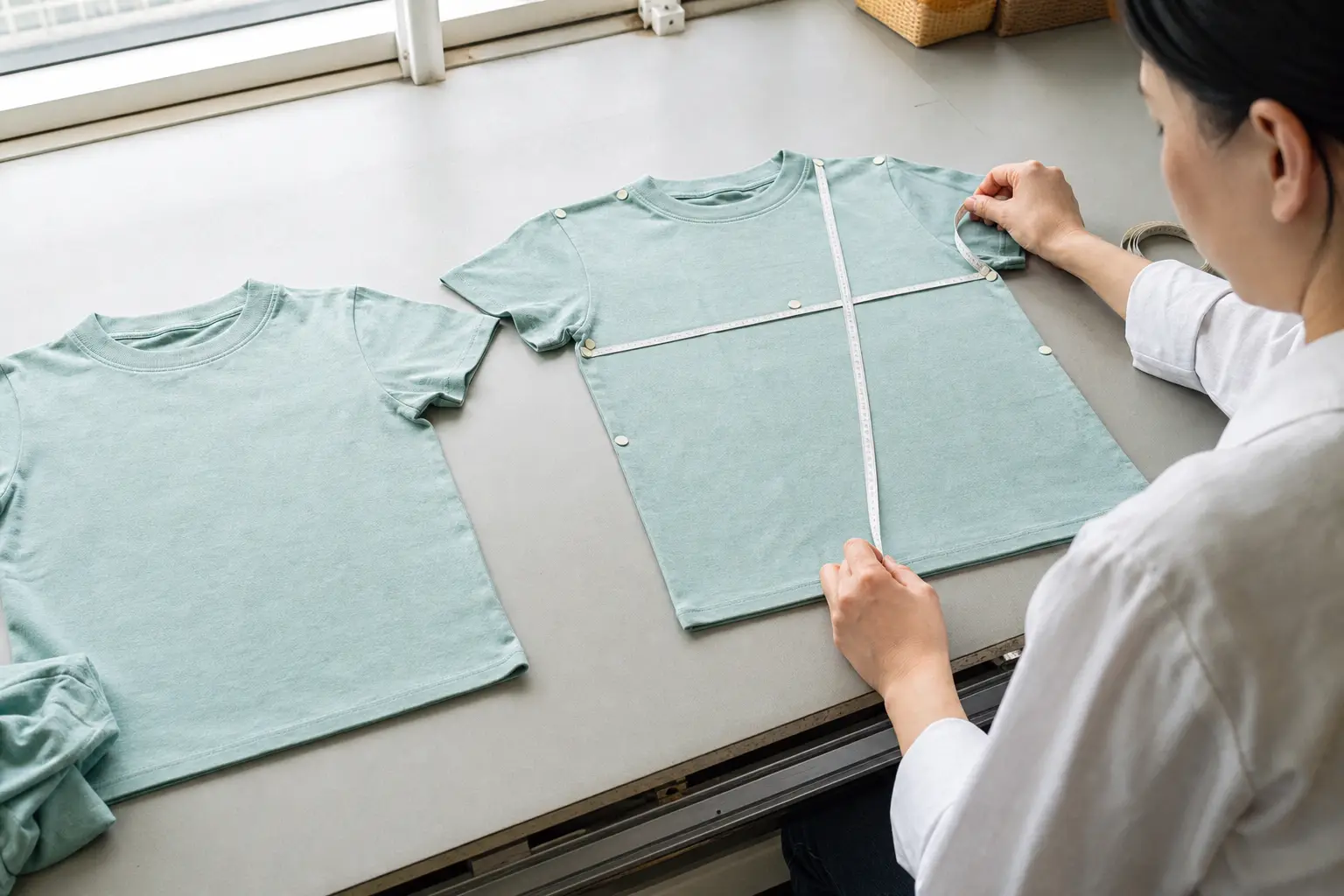
Compare length and width separately with the tolerances agreed for the style. Then look at what changed:
| What you see | What to ask for next |
|---|---|
| Measurements are acceptable, but a side seam swings forward. | Photograph the hem laid flat and ask the factory to check fabric twist and cutting. |
| The body fits, but the ribbed hem pulls in too tightly. | Check the rib separately before changing the body fabric. |
| One tee loses too much length. | Recheck the measurement points and wash another sample from the same fabric lot. |
What matters to me is identifying the cause before changing a blend. A twisted side seam, a tight ribbed hem, and a garment that loses too much length are not necessarily the same fabric problem. I would keep the approved swatch, measurement notes, and photos together so the next sample answers one clear question instead of changing several things at once. If a buyer requires a formal performance result, the test and acceptance criteria still need to be agreed with the supplier and lab.
What Should the Factory Confirm Before Cutting?
An approval note that says only “use 60/40” leaves the cutting room several ways to make the wrong shirt. When you approve the fabric and color before cutting, connect the order to the sample you handled:
- Body and trims: Record the fabric code, both fiber percentages, knit, weight range, and finish. Identify collar or cuff rib separately.
- Color and decoration: Name the approved shade and print sample, including any colors still waiting for approval.
- Reference and changes: Keep a dated garment sample and specification. Ask the factory to flag substitute fabric, face yarn, or finish before cutting.
If a stock fabric was used while your custom color was being prepared, say which features were approved. Sleeve length can be settled while bulk fabric and print remain open. For repeat orders, both sides should retain the same labeled fabric reference. A change to the cuff rib needs a cuff check; different fleece under a pale graphic needs a fresh print trial.
How HAPA Helps You Choose Cotton-Polyester Blends for Kidswear
At HAPA, my team and I help turn a fabric choice into a garment sample. We can work from sketches, reference garments, or tech packs, then review available fabrics, trims, fit, and decoration before sampling. For a school polo, I would want the target age range, two candidate blends, the school color, and the actual crest artwork—not just a request for “soft 60/40 fabric.” That lets us discuss the finished result you care about, such as a collar that stays flat after the intended wash routine. If you’re developing a new range, discuss your kidswear sample with HAPA and share the details you want us to evaluate.
Conclusão
Choose the two fabrics most likely to work for the garment, then let the samples settle the question the percentages can’t. A tee might come down to how the printed front feels; a school polo might come down to the collar straight out of the wash. Give the factory the winning fabric code, color, and sample reference so it can reproduce the choice you actually made.
Perguntas Frequentes
A few common questions can help narrow your fabric choices before sampling.
Is 60/40 or 50/50 Better for Kids’ T-Shirts?
Neither ratio is best for every tee. A 60% cotton / 40% polyester jersey is a useful starting point when a cotton-rich feel matters. A 50/50 jersey is worth comparing for frequently washed basics. Keep the knit, weight, color, and finish similar, then judge softness, fit, and the printed area after washing.
Are Cotton-Polyester Blends Breathable Enough for Summer?
They can be, but the percentages alone won’t tell you. Knit structure, weight, fit, and finishing affect how the shirt feels in warm weather. Compare airflow and the feel of the inside separately from drying time. A polyester-rich shirt may dry quickly without feeling as airy as a more open knit.
What Does CVC Mean on a Fabric Quote?
CVC stands for Chief Value Cotton. In a cotton-polyester knit, it usually means cotton makes up the larger share. It doesn’t specify how much: ask the supplier to write out both percentages for the fabric code and color you’re ordering.
Can the Top and Bottom of a Kids’ Set Use Different Blends?
Yes. A soft jersey top can work with a sturdier knit bottom. Wash the complete set together: the top still needs to meet the waistband as intended, and the colors should still look like a pair. Give each piece its own fabric specification.
Is a Cotton-Polyester Blend Stretchy Enough for Leggings?
The percentages don’t tell you. Ask for a sample in the intended size and check whether the knees and seat recover after bending and stretching. If the fabric contains elastane (spandex), have the supplier list its percentage separately rather than describing the fabric as just cotton and polyester.
Can You Skip the Wash Test if the Fabric Is Preshrunk?
No. Preshrinking treats the fabric; it doesn’t tell you how the finished garment, with its seams, rib, and print, will wash. Measure the actual sample and check its appearance under the care instructions you plan to give customers.