When you’re comparing garment manufacturers in China, it’s easy to get drawn to the lowest quote or the biggest production-capacity number. I wouldn’t choose a factory that way. What matters is whether the company makes the type of clothing you need, can handle your order size, and is clear about where and how your garments will be produced.
This guide brings together 10 China-based apparel manufacturers and manufacturing groups with different areas of focus, from broad custom clothing and kidswear to activewear, swimwear, and uniforms. I’ve reviewed the information available on their company websites and compared their product ranges, manufacturing arrangements, buyer support, and published order details. Where a company does not publish a specific MOQ or production figure, I’ve noted that too.
Why China Remains a Major Garment Manufacturing Hub
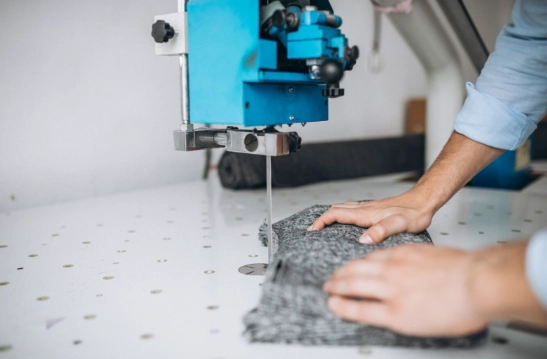
China remains an important sourcing option for fashion brands because its apparel industry is supported by a wide network of fabric mills, trim suppliers, dyeing and printing businesses, embroidery specialists, cut-and-sew factories, finishing services, and export providers. That network can make it easier to develop a garment and coordinate the different processes involved in getting it ready for sale.
The scale is still significant. China’s National Bureau of Statistics reported that exports of clothes and clothing accessories reached RMB 1,082.2 billion in 2025, down 4.4% from the previous year. That figure shows the size of the industry; it does not mean every factory is suitable for every brand or that China will always be the lowest-cost option. (National Bureau of Statistics of China)
For buyers, the practical advantages are usually found in the supplier network and the range of production capabilities:
- Access to materials and trims: Depending on the region and product, you may be able to source fabrics, linings, zippers, buttons, labels, prints, and packaging through established local suppliers.
- A wide range of manufacturing skills: China has factories specializing in knitwear, woven garments, denim, sportswear, outerwear, swimwear, decorated fashion, and many other categories.
- Different production models: You can find cut-and-sew factories, full-package manufacturers, product-development teams, and companies coordinating production through a network of facilities.
- Export experience: Many manufacturers work with overseas buyers and can support packing, shipping documents, and freight coordination. The exact service scope still needs to be agreed for each order.
One point is worth keeping in mind: China’s supply chain is extensive, but that does not mean every factory controls every stage under one roof. Some processes may be handled by specialist partners. Ask which steps are completed in-house, which are subcontracted, and who is responsible for checking the work. For a broader country comparison, see our guide to أي دولة هي الأفضل لتصنيع الملابس؟. You can also read why top brands choose clothing factories in China for a closer look at the supply-chain advantages and trade-offs.
How We Put This Shortlist Together
I focused on companies whose public websites describe garment manufacturing, OEM/ODM, private-label, or closely related production services. I looked at four things:
- Product focus: What types of garments does the company say it makes, and does that match a real buyer need?
- Manufacturing arrangement: Does it describe its own factory, a group of factories, or a wider production network? Where is the business contact located, and is the actual production site clear?
- Buyer support: Does it describe sampling, product development, material sourcing, branding, quality checks, or export coordination?
- Published order information: Does it state an MOQ or lead time? If the information is not clearly published, I have not guessed a number.
The profiles below bring the available company information together so you can compare each manufacturer’s product focus, production setup, services, and order requirements. I’ve included published MOQ, capacity, certification, and lead-time details where the companies provide them.
Quick Comparison of 10 Garment Manufacturers in China
| الشركة المصنعة | Location / production arrangement | Main focus | Publicly stated MOQ |
|---|---|---|---|
| أباريفاي | Guangzhou contact entity listed on its website; confirm the facility assigned to your order | Broad custom apparel, including kidswear, activewear, casualwear, and private label | No fixed numeric MOQ clearly stated on the profile reviewed |
| ملابس AEL | Shenzhen contact address; confirm the actual production site and contracting entity | Multi-category custom apparel, including kids clothing, activewear, denim, and loungewear | Low MOQ is advertised, but no fixed number is published on the pages reviewed |
| هابا | Guangzhou, Guangdong | Children’s clothing OEM/ODM and private label | Starting at 150 pieces, with mixed sizes; confirm style and material conditions |
| ملابس هونغيو | China; ask which factory will handle your order | Blank wholesale, logo customization, and cut-and-sew custom clothing | 50 pieces for blank/logo options; 100 pieces per design per color for cut-and-sew, according to its FAQ |
| موداكنتس | Dongguan, Guangdong; coordinated factory network | Knit basics, athleisure, and activewear | 1–20 pieces for selected product-testing models only; confirm the MOQ for regular custom production |
| ملابس نينغهاو | Shenzhen business contact with an own-factory network | Casualwear, sportswear, golf apparel, uniforms, and custom private-label clothing | No fixed numeric MOQ published on the current company profile reviewed |
| ملابس يوتكس | Shanghai-based company with a multi-factory network; confirm the assigned facility | Functional activewear, sportswear, outdoor, seamless, and swimwear | Not publicly stated on the pages reviewed |
| D&J | Dongguan, Guangdong group with an overseas Cambodia facility | Swimwear, activewear, yoga wear, diving, and watersports products | Usually 600 pieces per style/color; its FAQ says smaller orders from 100 may be considered with a 20–50% surcharge |
| ملابس ميكي | Guangzhou, Guangdong; two owned factories | Yoga wear, sports bras, leggings, and fitness apparel | Its FAQ lists flexible MOQ from 100 pieces; confirm by style, color, and fabric |
| ملابس دوفن | Guangdong; company states it operates its own factory | Uniforms, promotional apparel, polos, T-shirts, knitwear, and jackets | 100 pieces per design per color, depending on garment type, according to its FAQ |
10 Garment Manufacturers in China to Consider
1. Appareify — Broad Custom Apparel and Private-Label Production
موقع إلكتروني: appareify.com
Appareify presents itself as a custom clothing manufacturer supporting businesses from product development through production. Its public product categories include T-shirts, hoodies, activewear, swimwear, loungewear, kidswear, uniforms, and other apparel. That breadth may be useful if you are building a collection with several product types and want to discuss them with one supplier.
The company’s profile lists more than 20 R&D specialists, a stated monthly production capacity of 400,000 pieces, a 7–20 day lead-time figure, and customers in more than 50 countries. These are figures published by Appareify, so I would ask what product types, order sizes, and production stages they apply to. Its contact page identifies Guangzhou Yueyi Sportswear Co., Ltd. in Guangzhou as the contact entity. Confirm the exact factory address and which facility will make your order before moving forward.
الأفضل لـ: Brands looking for a broad custom-apparel partner across several categories, including kidswear and activewear.
Before you request a quote: Ask for the MOQ by style and color, the production site, the scope of sampling and revisions, and a clear explanation of what its stated lead time includes.
2. AEL Apparel — Multi-Category Custom Clothing
موقع إلكتروني: aelapparel.com
AEL Apparel describes itself as a custom clothing brand under AEL Group. Its product range includes T-shirts, loungewear, denim, leggings, hoodies, swimwear, activewear, and children’s clothing. The company also offers white-label and private-label options, which may suit brands that want to develop more than one category or use different branding arrangements.
AEL lists a Shenzhen contact address and describes in-house garment checks, material sourcing, and customization. Its public profile also lists 20+ R&D experts, monthly production capacity of 400,000 pieces, a 7–20 day lead-time figure, and service to more than 50 countries. Those figures are company-published. The website promotes low MOQs but does not give one fixed number on the pages reviewed. Ask which production facility will handle your order and whether the stated turnaround refers to production, dispatch, or delivery.
الأفضل لـ: Brands developing a mixed apparel range and looking for custom design, white-label, or private-label support.
Before you request a quote: Confirm the actual production address, the MOQ for your specific garment, material options, and the timeline from sample approval to shipment.
3. HAPA — Children’s Clothing OEM/ODM and Private Label
موقع إلكتروني: hapagarments.com
HAPA focuses on children’s clothing manufacturing for brands, boutiques, retailers, and private-label buyers. Based in Guangzhou, the company has been manufacturing apparel since 2010. Its kidswear range includes dresses, coordinated sets, babywear, T-shirts, hoodies, jackets, sleepwear, outerwear, and other children’s styles.
HAPA supports OEM, ODM, and private-label projects, from design and tech-pack review to pattern development, sampling, fabric and trim selection, bulk production, quality checks, labels, and packaging. The factory’s areas of work also include decorative techniques such as sequins, beadwork, and embroidery, which require attention to placement, attachment, comfort, and consistency across sizes.
الحد الأدنى القياسي لكمية الطلب لدى HAPA هو 150 قطعة، مع توفر أحجام متنوعة. The final requirements still depend on the style, colors, fabrics, and customization. For brands developing children’s collections, the main advantage is having a supplier focused on kidswear rather than treating children’s garments as a small part of a general apparel catalogue.
الأفضل لـ: Children’s clothing brands, boutiques, retailers, and buyers developing decorated kidswear or private-label collections.
Before you request a quote: Share your product references, target age range, size breakdown, sales market, and estimated quantities so the team can review the development and production requirements. You can also explore HAPA’s خدمات تصنيع ملابس الأطفال الأصلية.
4. Hongyu Apparel — Different Entry Routes for New Clothing Brands
موقع إلكتروني: hongyuapparel.com
Hongyu Apparel says it was founded in 2003 and supports brands with fabric sourcing, sampling, logo customization, cut-and-sew production, packaging, and quality checks. Its public information is useful because it separates three different ways to work with the company: blank wholesale, adding a logo to an existing blank style, and fully customized cut-and-sew production.
That distinction matters when you are starting a brand. Ordering a ready-made blank garment and adding your logo is not the same project as developing a new pattern, sourcing custom fabric, and producing a garment from scratch. Hongyu’s FAQ lists 50 pieces with mixed styles, sizes, and colors for blank wholesale and logo customization. For cut-and-sew customization, it lists 100 pieces per design per color. These are different order models, not one universal MOQ.
الأفضل لـ: New labels that want to compare ready-made blanks, logo customization, and fully custom clothing before choosing a development route.
Before you request a quote: Tell Hongyu which service model you need. Confirm the current MOQ, sample fee, revision scope, fabric availability, and whether the quoted price includes labels and packaging.

5. Modaknits — Knit Basics, Athleisure, and Activewear
موقع إلكتروني: modaknits.com
Modaknits is based in Dongguan, Guangdong, and describes its manufacturing system as operating since 2008. Its current focus includes knit basics, T-shirts, hoodies, sweatshirts, sweatpants, yoga pants, leggings, and other activewear or athleisure products. The company describes a coordinated network of four factories and 18 production lines.
One detail worth reading carefully is its small-start offer. Modaknits says selected product-testing models can start from 1–20 pieces. That is not a blanket MOQ for every custom style. The actual minimum will depend on the fabric, color, size range, branding method, and production plan. If you are considering a custom garment rather than a selected basic product, ask for the MOQ that applies to that exact design.
الأفضل لـ: Activewear and athleisure brands developing knit basics, leggings, hoodies, sweatshirts, or repeatable core styles.
Before you request a quote: Ask whether your product qualifies for the small-start model, and confirm the MOQ, fabric, branding, sample process, and terms for repeat orders.
6. Ninghow Apparel — Custom Apparel Development and Production Coordination
موقع إلكتروني: ninghowapparel.com
Ninghow Apparel describes itself as a family-owned apparel manufacturer operating its own factories and supporting international brands, retailers, wholesalers, and sourcing teams. Its product range covers polos, T-shirts, hoodies, sweatshirts, jackets, trousers, shorts, activewear, golf apparel, and uniforms. The company also describes services covering development, material sourcing, sampling, branding, production coordination, quality follow-up, and export support.
Ninghow’s business contact is in Shenzhen, while its public company information describes a wider factory network. That means you should not assume the Shenzhen contact address is the production address for your order. Ask which factory and team will handle your garment, which processes take place there, and whether any work will be subcontracted. Its current company profile does not publish one fixed numeric MOQ, so request a project-specific breakdown.
الأفضل لـ: Brands that need support connecting product development, materials, sampling, private-label details, production, and export coordination.
Before you request a quote: Ask for the assigned production facility, the contracting entity, the MOQ by style and color, and a clear division of responsibility across development and production.
7. Yotex Apparel — Functional Activewear and Technical Apparel
موقع إلكتروني: yotex-apparel.com
Yotex positions itself as a functional apparel and activewear manufacturer. Its published categories include sportswear, activewear, outdoor apparel, seamless products, swimwear, and accessories. The company describes services covering material sourcing, product development, production, bulk inspection, and delivery.
Yotex’s website lists a network of seven factories, a maximum monthly production capacity of 150,000 pieces, and a two-week lead time for repeat bulk orders. The two-week figure is specifically presented for repeat orders; it should not be treated as the standard timeline for a new style or first production run. Yotex does not publish a general MOQ on the pages reviewed. Ask which factory will make your order and whether it has experience with the fabric performance and construction details your product requires.
الأفضل لـ: Brands developing functional activewear, sportswear, outdoor garments, seamless products, or swimwear.
Before you request a quote: Confirm the assigned factory, fabric and trim sourcing, testing requirements, sample timeline, first-order lead time, and the conditions behind any repeat-order schedule.
8. D&J — Swimwear and Premium Activewear
موقع إلكتروني: dandj.cn
D&J International is based in Dongguan, Guangdong, and describes its core business as swimwear and activewear manufacturing. Its group provides raw-material sourcing and OEM/ODM services for swimwear, activewear, yoga wear, diving suits, and watersports-related products. This makes D&J more specialized than a general cut-and-sew supplier.
One point deserves attention before you place an order: D&J’s group information also refers to an overseas factory in Cambodia, alongside its Dongguan operations. If you are sourcing specifically from China, ask which legal entity and facility will produce your garments. The country of production can affect your delivery plan, customs documents, and any origin-related trade requirements. D&J’s FAQ states a usual MOQ of 600 pieces per color per style. It also says it may consider orders from 100 pieces per color per style for start-ups, with a 20–50% surcharge. Treat that as a project-specific option and confirm the current terms in writing.
الأفضل لـ: Swimwear, yoga, and activewear brands that need a supplier with category-specific development and production experience.
Before you request a quote: Confirm the production country, factory address, fabric and trim sourcing, MOQ, sample requirements, and the quality checks planned for your garment.
9. Miqi Apparel — Yoga Wear and Fitness Clothing
موقع إلكتروني: oem.miqiapparel.com
Guangzhou Miqi Apparel Co., Ltd. was established in 2013 and focuses on yoga wear, sports bras, leggings, tops, shorts, joggers, jackets, and other fitness apparel. Its current manufacturing page describes two owned factories, more than 300 team members, and a combined monthly production capacity of 400,000 pieces. It lists a typical bulk production lead time of 30–45 days after the sample and order details are approved.
Miqi’s FAQ on its main website lists a flexible MOQ as low as 100 pieces. Treat that as a published starting point, not a promise that every fabric, color, or design can be produced at that quantity. Ask the team to confirm the minimum for your exact style and whether the fabric is stocked or needs to be developed or sourced.
الأفضل لـ: Yoga, fitness, and activewear brands looking for a specialized manufacturer with development and production support.
Before you request a quote: Confirm the MOQ by style and color, fabric availability, sample fee, bulk lead time after approval, and the test requirements for stretch, recovery, and colorfastness where relevant.
10. Doven Garments — Uniforms and Promotional Apparel
موقع إلكتروني: doven-garments.com
Doven Garments describes itself as an OEM apparel supplier with its own factory in Guangdong. Its company profile says it has more than 10 production lines and has worked in customized garment production since 2008. Its listed products include polo shirts, T-shirts, knitwear, jackets, hoodies, sweatshirts, vests, sports suits, and caps.
Doven’s FAQ lists an MOQ of 100 pieces per design and per color, depending on the garment type. It also gives a bulk production estimate of 20–60 working days, depending on order quantity. Those details make Doven worth considering for buyers who need branded garments in repeatable styles, but you should still confirm the exact production site, inspection criteria, decoration methods, and schedule for your order.
الأفضل لـ: Corporate buyers, uniform programs, event organizers, and brands sourcing polos, T-shirts, jackets, and promotional clothing.
Before you request a quote: Confirm the factory address, MOQ by design and color, logo method, size breakdown, packing requirements, inspection standard, and delivery terms.
How to Choose the Right Garment Manufacturer in China
A company can look impressive online and still be the wrong fit for your product. Before you decide, I would work through these questions with every supplier on your shortlist.
1. Does the factory make your type of garment?
A factory that is good at T-shirts may not be the right choice for swimwear, technical outerwear, or a dress with complex decoration. Ask for samples that are close to your design. Look at the seams, lining, closures, fabric behavior, print or embroidery, and finishing—not just the overall appearance of the sample.
If you have a tech pack, send the same version to each supplier. If you only have sketches or a reference garment, explain what you need help developing and ask what is included in the service. Our guide to إنشاء حزمة تقنية للملابس can help you prepare the product details.
2. Where will your order actually be produced?
Ask for the legal name of the company signing the order, the production address, and the facility responsible for each major process. If the supplier uses a factory network or subcontractors, ask which work is done in-house and who checks the outside work. A sales office, sourcing office, and production facility are not necessarily the same place.
3. What does the MOQ really cover?
Do not compare one MOQ number without asking how it is calculated. It may apply to the total order, each style, each color, a custom fabric, or a special trim. Ask whether you can mix sizes, whether colors can be combined, and whether using a stock fabric would change the minimum. If a quoted MOQ is too high, ask what is driving it before changing your design or order plan.
4. How are samples and bulk quality controlled?
Ask how many sample stages are included, how revisions are handled, and what happens when a material or trim changes. Before bulk production, agree on the approved sample, measurements, fabric references, artwork, labels, and packaging. Also ask what is checked during production and before shipment, and how defects or substitutions are handled.
5. Are certificates and compliance claims relevant to your product?
Different documents prove different things. A factory-management certificate, a social audit, a material certificate, and a finished-product test report are not interchangeable. Check the issuing body, covered company or site, product or material scope, validity period, and certificate number. You can use the فحص ملصق OEKO-TEX to check an OEKO-TEX label number.
For children’s products sold in the United States, do not treat CPSIA as a factory certificate. Where a Children’s Product Certificate (CPC) is required, the U.S. importer is generally responsible for issuing it for products manufactured overseas, based on applicable test results and supporting records. The إرشادات لجنة سلامة المنتجات الاستهلاكية بشأن منتجات المستهلك explains the seven required information elements and the responsible parties.
6. Does the quote show the full cost?
Compare quotes only when the product specifications and service scope are the same. Ask whether the price includes fabric, trims, sampling, pattern development, printing or embroidery, labels, packaging, inspection, and export handling. Add freight, customs duties, taxes, and local delivery where applicable. A low unit price may not be the lowest total cost if key services or materials are excluded.
7. Can the supplier communicate and support repeat orders?
Notice how the team handles your questions before you place an order. Do they explain what information is missing? Do they confirm changes in writing? Can they tell you when materials will be ready and what happens if a component is unavailable? If you expect to reorder, ask how approved samples, patterns, and material references will be kept and how substitutions will be approved.
If you are still at the supplier-discovery stage, our دليل للعثور على مصنعي الملابس explains how to build an initial shortlist. If your project is specifically for children’s clothing, you can also compare the companies in our China kidswear manufacturer guide.
Direct Factory vs. Trading Company: Which Is Right for You?
Working directly with a factory can give you a closer view of production and make technical discussions easier. A trading company can be useful when you need several product categories, multiple factories, or more help coordinating sourcing and shipping. Neither model is automatically better. What matters is who takes responsibility for your order and how clearly the work is managed.
| ما الذي يجب مقارنته؟ | Direct factory | شركة تجارية |
|---|---|---|
| Production visibility | You can communicate with the production team, subject to the factory’s process | You need to understand which factories are used and how they are selected |
| Product range | Often strongest in its own product categories and processes | May coordinate several factories for a wider product range |
| الحد الأدنى للطلب | Set by the factory, materials, style, and order plan | May be able to combine suppliers, but each product still has its own constraints |
| Coordination | You may handle more supplier and shipping coordination yourself | The trading company may coordinate multiple suppliers and logistics |
| المساءلة | Confirm the factory’s legal entity and responsibility for subcontracted work | Confirm who signs the contract and who is responsible for production quality |
If you choose a trading company, ask for the actual production addresses and agree how factory changes or subcontracting will be disclosed. If you work directly with a factory, make sure you have enough time and resources to manage materials, inspections, shipping, and compliance responsibilities.
Why Consider HAPA for Children’s Clothing Manufacturing?
If your project is specifically for kidswear, HAPA is one of the manufacturers on this list that focuses on children’s apparel. Based in Guangzhou, HAPA has been manufacturing clothing since 2010. Its company information lists a 6,000 m² facility and a team of more than 100 experienced sewing specialists. HAPA supports OEM, ODM, and private-label projects for brands, boutiques, and retailers.
The company works across children’s dresses, coordinated sets, babywear, T-shirts, hoodies, jackets, sleepwear, and other kidswear categories. Its production support can include design and tech-pack review, pattern development and grading, fabric and trim selection, sampling, bulk production, quality checks, labels, and packaging. HAPA also handles decorative work such as sequins, beadwork, and embroidery, where placement, attachment, and comfort need to be considered during sample development.
الحد الأدنى القياسي لكمية الطلب لدى HAPA هو 150 قطعة، مع توفر أحجام متنوعة. The final order conditions depend on the style, colors, fabric, and customization. The company can also discuss suitable OEKO-TEX-certified fabric options and confirm which certificate applies to the selected material. If you are developing a kidswear line, share your designs or reference images, target age range, size range, estimated quantity, and sales market through the HAPA children’s clothing OEM service page.
خاتمة
There is no single garment manufacturer in China that is best for every brand. Appareify and AEL offer broad custom-apparel services; Hongyu has different routes for blanks, logo customization, and cut-and-sew; Modaknits, Yotex, D&J, and Miqi focus more closely on activewear or related categories; Doven is oriented toward uniforms and promotional apparel; Ninghow offers a broad development and production network; and HAPA specializes in kidswear.
Start with the garment you want to make, then compare the actual production arrangement, relevant samples, MOQ, total cost, and communication process. Send the same brief to the suppliers that fit your project, ask the same questions, and verify the details before placing an order. That will tell you much more than a “best manufacturer” label on its own.
الأسئلة الشائعة
What is the best garment manufacturer in China?
There is no single best manufacturer for every order. The right choice depends on your garment category, quantity, budget, development needs, and target market. A kidswear brand may need a different factory from an activewear label or a company ordering uniforms. Start with product fit, then compare samples, production arrangements, MOQ, and the full quote.
What is the typical MOQ for clothing manufacturers in China?
There is no standard MOQ across China. It can vary by factory, garment type, fabric, color, size range, and customization. Some suppliers publish different minimums for blank garments, logo customization, and cut-and-sew production. Ask for the MOQ by style and color rather than relying on one headline number.
كم تبلغ تكلفة تصنيع الملابس في الصين؟
The price depends on fabric composition and weight, garment construction, order quantity, printing or embroidery, trims, labels, packaging, testing, and delivery terms. To compare suppliers fairly, send the same specification and quantity to each one and request an itemized quote. Add freight, duties, taxes, and local delivery to understand the landed cost.
كم تستغرق عملية إنتاج الملابس في الصين؟
The schedule depends on whether the design and materials are ready, how many sample revisions are needed, the order quantity, and the factory’s production calendar. Ask the supplier to separate sample development, material sourcing, bulk production, inspection, and shipping. A published lead time for repeat orders or selected products should not be treated as the timeline for every first order.
How can I check whether a Chinese clothing supplier is a real manufacturer?
Ask for the legal name of the contracting company, the production address, and an explanation of which processes take place at that site. Request recent photos or a live video tour, ask whether any work is subcontracted, and check that the company and production details match the quotation and order documents. A trading company can still be a useful partner, but its role should be clear.
Are ISO, BSCI, GOTS, OEKO-TEX, and CPSIA all factory certifications?
No. They refer to different types of standards, audits, material certifications, or legal requirements. Ask what entity, facility, material, or product each document covers and whether it is still valid. CPSIA is a U.S. product-safety law framework, not a factory certificate. For regulated children’s products, the CPC is issued by the responsible manufacturer or importer based on applicable compliance evidence.
Can a small clothing brand work with a Chinese garment manufacturer?
Yes, some manufacturers support smaller test orders or offer blank and logo-customization options. However, a low MOQ may apply only to selected products or stock fabrics, not to every fully custom design. Explain your target quantity and ask what changes to fabric, colors, trims, or customization could make the first order workable.
Should I work directly with a factory or use a trading company?
A direct factory relationship may give you more visibility into production and technical decisions. A trading company may be useful if you need several product categories or help coordinating multiple suppliers. Compare the actual service scope, fees, production visibility, and responsibility for quality rather than assuming one model is always cheaper or faster.