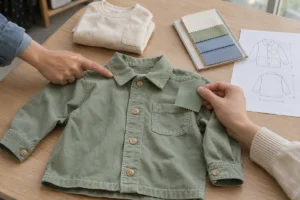
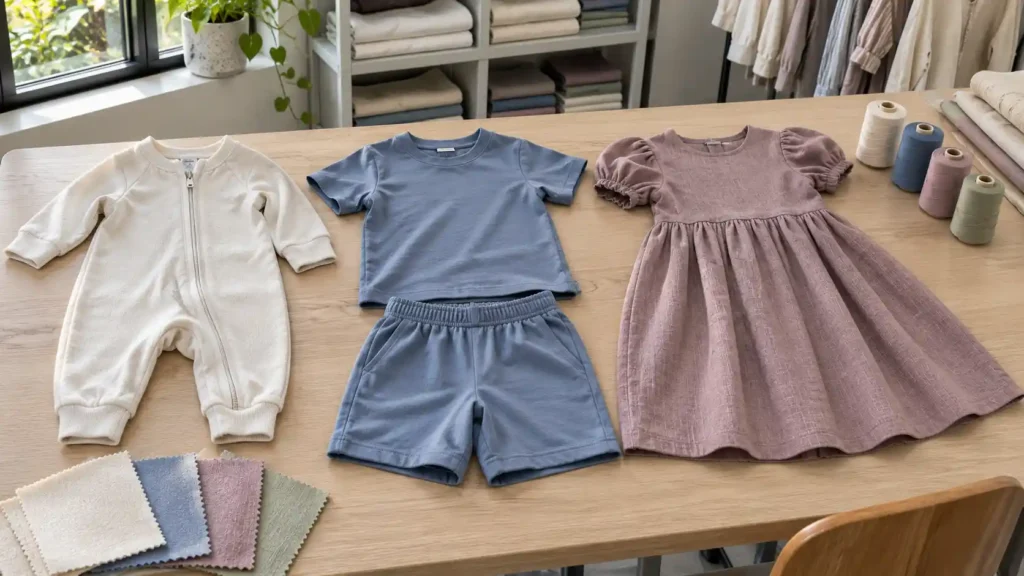
Three different children’s garment samples frame the product brief.
Looking at successful Australian children’s clothing ranges can sharpen your product brief, but it cannot tell you which factory made them. If you are choosing a China-based kidswear manufacturer, study what each brand publicly offers, decide which product characteristics matter to your own customer, and ask candidate suppliers to prove they can develop and repeat those characteristics in a garment you have the right to produce. A familiar label is a source of questions, not a supplier endorsement or a design to copy.
This guide uses ten Australian brands as different product-development lenses. They were selected to show varied categories and design problems, not ranked by sales or quality. The observations come from the brands’ public sites checked in November 2026. Their assortments may change, and those pages do not reveal their actual factories, material test files, costs or production controls. The practical outcome is a clearer request for quotation and a fairer sample comparison when you approach a Chinese OEM or ODM partner.
What brand research can tell you before you choose a factory
A retail page can show a silhouette, category, stated material, size offer, colour story and care claim. It cannot establish how reliably a factory grades sizes, controls shrinkage, attaches a trim or delivers a repeat order. Those are separate questions to test with your own specification, sample, documents and inspection plan. Treat the ten examples below as prompts for the brief you own rather than templates to reproduce.
Before you contact a kidswear manufacturer, choose your product lane. Is your first collection baby essentials, everyday playwear, coordinated family dressing, graphic prints, occasion dresses or swim? Different categories require different fabric sourcing, construction, artwork handling, compliance review and quantities. A supplier that is excellent at simple knitted bodysuits may not be the right one for layered tulle dresses. Likewise, a factory with decorative sewing capability may not be the best choice for technical swimwear.
State what your brand will contribute. Under an OEM arrangement, you normally bring an original design and defined requirements for the factory to make. Under an ODM arrangement, you may start from a supplier-developed style and negotiate what you can change and use. The exact rights, tooling, patterns and exclusivity must be in writing. Our OEM kidswear manufacturer guide explains the routes more broadly. Neither acronym excuses a vague product brief or a missing approval sample.
Ten Australian kidswear brands and the questions they raise
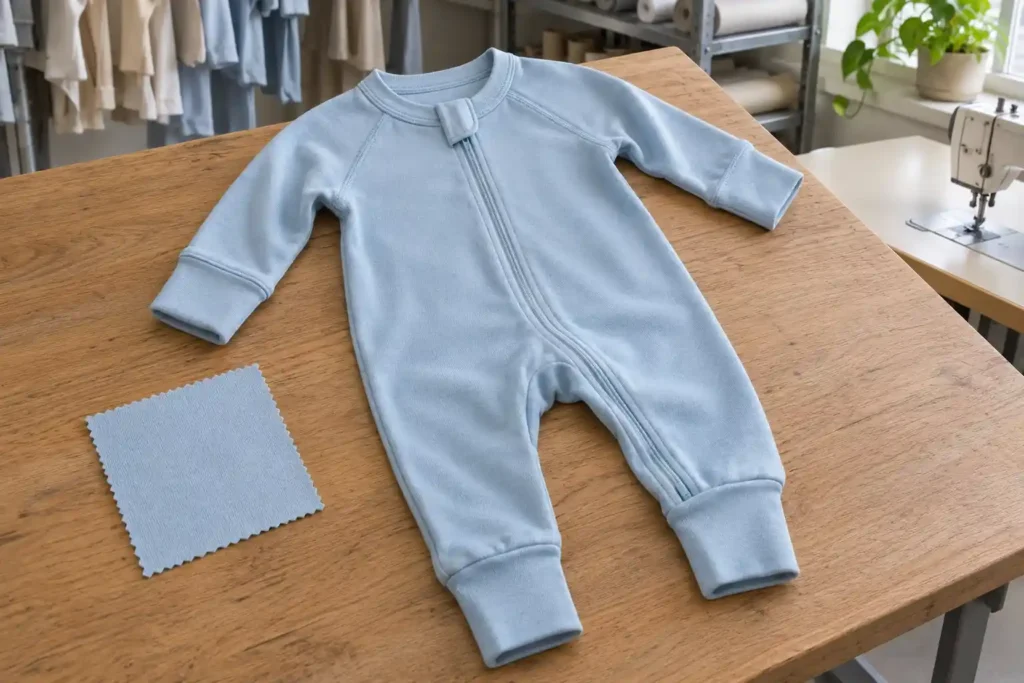
Check the closure, cuffs and seams in the actual sample.
1. Bonds: make everyday closures easy to use and repeat
Bonds’ public baby range prominently includes Zip Wondersuits. The useful observation is the combination of an everyday baby garment, a familiar closure concept, multiple sizes and changing prints. It does not tell you where any particular item is made or which factory controls its zipper. For your own babywear line, the lesson is to define how the product works in a parent’s hands and how that behavior survives production changes.
Ask a candidate kidswear manufacturer to show a finished sample with the specified zipper length, guard, end treatment, seam finish and fabric stretch. Have the same person open and close it repeatedly while the garment is held as it would be in use. Record any catching, exposed edge or awkward dressing step. Then ask for the planned bill of materials: what exact zipper and fabric will be purchased for bulk, which substitutions require your approval, and how will the supplier check them on receipt? A pretty print cannot repair a closure that fails daily use.
2. Cotton On Kids: control complexity across a broad range
Cotton On Kids’ Australian site spans baby and older children’s clothing, including tops, bottoms, dresses, swim and sleep categories. A broad catalogue is not a sensible first-order target for every new brand. It is a reminder that one brand identity can sit over several very different product systems. Each new category adds size rules, fabric platforms, trims, labeling and replenishment decisions.
If you want a broad-looking capsule, ask your kidswear manufacturer to distinguish shared components from category-specific ones. Can two styles use an approved fabric base without compromising fit? Will the same colour match across knit and woven cloth? How are style, colour and size codes carried from the tech pack to cartons? Ask for a small quantity grid and a separate quote for each fabric or print minimum. The lesson is assortment discipline: a coherent two-style launch can teach you more than ten underfunded styles that each require their own mill run.
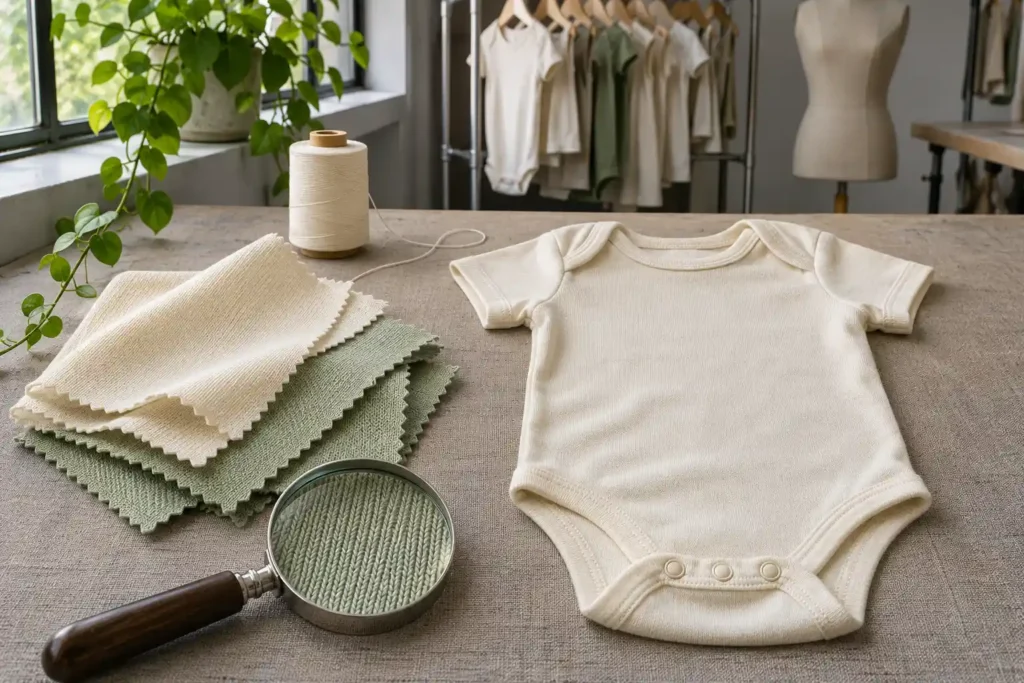
A material story needs a garment and a traceable fabric choice.
3. Purebaby: turn a material story into traceable evidence
Purebaby describes itself as an Australian-owned company making organic clothing for babies and children, and its public baby range features growsuits, bodysuits and soft essentials. A new brand can learn from the clarity of that material-led proposition without borrowing its designs or assuming its supply chain is available to you. If you intend to market an organic fibre, a soft hand feel or another measurable material characteristic, define exactly what the claim means for each finished style.
Ask a prospective kidswear manufacturer for the proposed fabric specification, composition, weight, finishing process and supplier. If a certification or organic claim matters, request current documents that identify the relevant entity, product scope and transaction or material chain; a generic certificate image is not enough. Approve a fabric swatch and garment sample, then agree what happens if the mill changes. You should also test the real care instructions against the actual material and decoration. A sourcing story is credible only when the order file connects the words customers see to the material delivered.
4. Huxbaby: make a restrained visual system precise
Huxbaby’s public baby and children’s offer is recognisable for a relatively restrained contemporary look. The transferable lesson is that simplicity can raise, rather than lower, the standard for material and fit consistency. On an unadorned sweatshirt or romper, colour drift, uneven rib, a twisted seam or a rough label has nowhere to hide. You do not need to imitate another label’s palette to test whether a factory can deliver a clean basic.
Give each candidate a defined reference for fabric surface, colour, rib recovery, hand feel and measurements. Ask for two samples made from the proposed production material, not a showroom piece in a substitute fabric. Review them under consistent light and after the agreed care process. For a kidswear manufacturer, repeatability matters as much as the appeal of the first sample: a second batch should follow the approved pattern and material specification, with any change documented before cutting.
5. Seed Heritage: coordinate products without confusing size systems
Seed Heritage’s public navigation includes women’s, kids’ and baby ranges. If your own brand wants a coordinated family or sibling story, the question is how to make related styles look connected while respecting different bodies, activities and safety needs. An adult garment reduced in scale is not a children’s pattern. Even within kidswear, a baby size and a school-age size can require different openings, ease and closures.
Ask the factory to prepare category-specific size charts and fit samples. Identify the body measurements and garment measurements separately, then decide which visual elements should carry across sizes: colour, print, fabric family or a particular seam detail. Test whether shared fabric behaves appropriately in each garment. A kidswear manufacturer should explain its grading method, show the smallest and largest sizes you need, and document any design detail that must change for fit or practical use. A coordinated collection is a design system, not a single pattern multiplied.
6. Country Road: give customers a size language you can substantiate
Country Road publishes children’s apparel size guidance with body measurements, and its girls’ assortment covers dresses, denim, layers and everyday essentials. That public presentation is useful because it separates a shopper’s body information from the garment sold. Your own label needs a size guide that corresponds to your pattern and fit intent. A number such as “size 6” is not a manufacturing specification by itself.
Send a candidate kidswear manufacturer a measurement chart with named points of measure, tolerance decisions, base size and grading instructions. For example, state where chest width is taken, whether a dress length is measured from shoulder or neck point, and how elastic is measured relaxed and extended. Ask for an actual size set or at least the sizes most likely to reveal grading problems. Check that the web size guide, finished garment and production measurement sheet agree. If you change fit after a sample, version the chart and retire the old one; otherwise a later order may quietly reproduce the wrong size.
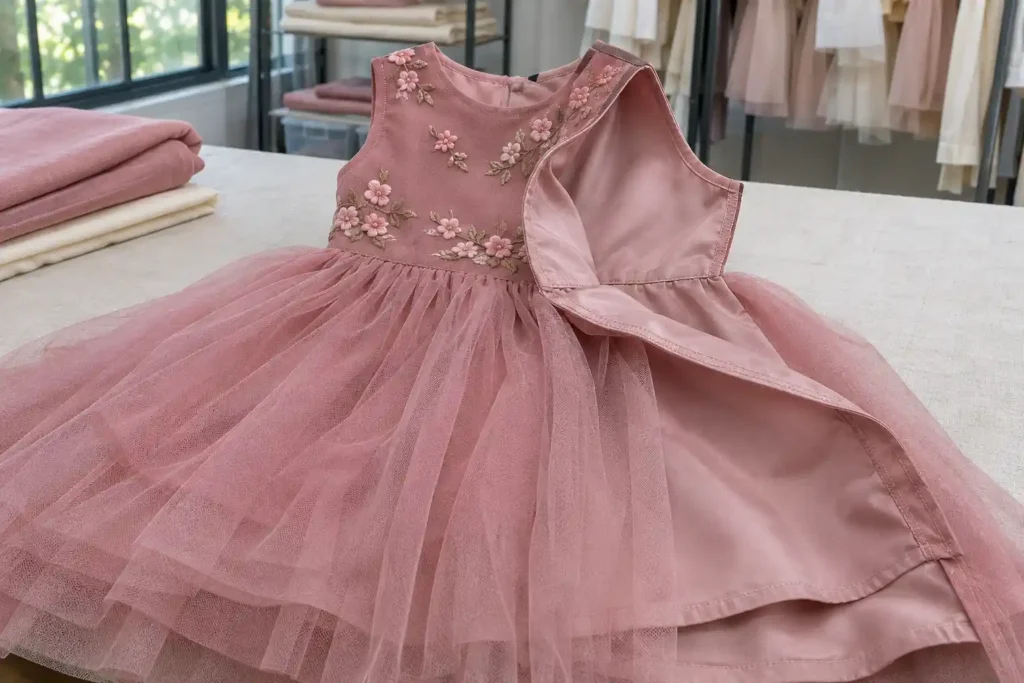
Inspect inside construction as carefully as decoration.
7. Tutu du Monde: treat decoration as a technical product feature
Tutu du Monde describes a Sydney-origin world of tutu dresses, occasion pieces and coordinated accessories. This example highlights a different manufacturing problem from basic knitwear: layered fabric, lining, appliqué, embroidery or other decoration must look right, feel comfortable and remain controlled across sizes. Its public imagery cannot establish another factory’s craft capability, and you should not ask a supplier to copy its distinctive designs.
For your own occasionwear design, send original artwork and a construction brief. Ask a kidswear manufacturer to show the inside of a representative finished garment, not just a close-up of embellishment. Examine backing, seam allowances, lining, closure, trim attachment, skin-contact areas and how the decoration position changes from the smallest to largest size. Record the approved material and trim sources. If a new bead, bow, sequin or glue is proposed, assess the applicable product-safety implications for the intended age and market before accepting it. A beautiful sample is only one part of a repeatable specification.
8. Rock Your Baby: put artwork rights and print execution in the brief
Rock Your Baby and Rock Your Kid present expressive children’s styles, with printed and statement pieces in their public collection. The lesson for a developing label is not to borrow a graphic or licensed character. It is to decide whether original artwork is central to your offer and then control how that artwork moves from file to fabric to finished garment.
Tell a candidate kidswear manufacturer who owns the original art, what reproduction rights the supplier receives, and whether subcontracted printers may keep or reuse files. Request a strike-off on the actual fabric base and a garment sample that shows placement at the sizes you plan to sell. Compare colour, hand feel, stretch, wash response and registration around seams. A print approved on paper or a screen can change when applied to a textured knit. Keep the approved colour and file version with the production pack so a repeat order does not depend on someone’s memory.
9. Wilson & Frenchy: distinguish design origin from manufacturing origin
Wilson & Frenchy describes its clothes as designed in Australia, while its official organic collection page says those pieces are made at a factory in India. That explicit distinction is useful: an Australian brand can design locally and manufacture abroad, but the two statements answer different questions. You cannot infer a brand’s factory from its aesthetic, and you must not describe an imported garment as Australian-made merely because the design team is in Australia.
For your own label, agree who can approve origin, fibre and organic claims before hangtags or product pages are printed. Ask the kidswear manufacturer for the actual manufacturing location, subcontracted processes and material trail for your order. The ACCC’s country-of-origin guidance explains why “designed in” and “made in” should not be treated as interchangeable. Have the supplier review the wording on your label, but keep final responsibility for your consumer claim with the business that sells it.
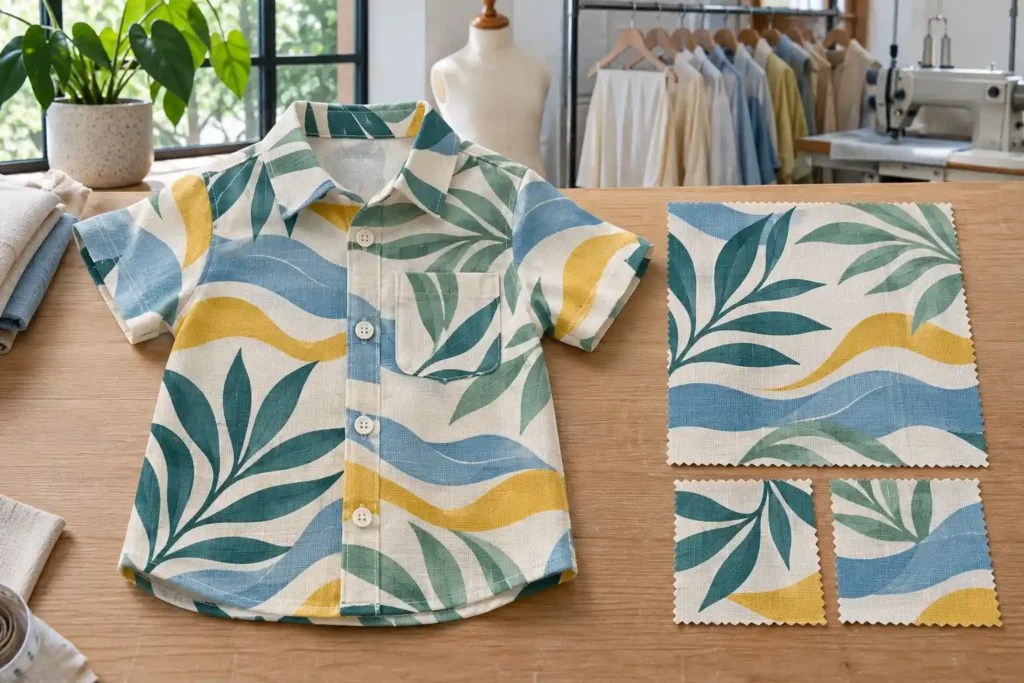
Approve artwork and colour on the chosen fabric.
10. Halcyon Nights: protect artist-led colour and pattern continuity
Halcyon Nights says its baby and kidswear collections begin with original artwork and extend across garments and other products. Its public range also shows swim, sleep and everyday categories. An artist-led range is a strong example of a supplier challenge that a plain product photo can understate: repeat prints, placement, colour matching and usage rights have to survive multiple materials and production runs.
If your brand commissions an artist, define the permitted products, regions and term in your own agreement before sending files to a factory. Ask a kidswear manufacturer how print scale will change between baby and child sizes, how a repeat will align at seams, and how colours are approved on each fabric. A swim fabric, jersey and woven dress fabric may take colour differently. Request physical strike-offs and production swatches with identifying version codes. Keep them for repeat orders. A factory that can explain its file, colour and subcontractor controls is more useful than one that simply says it can print anything.
Choose the right kidswear manufacturer for your product lane
The ten observations point to several different capabilities. Baby essentials call for comfortable closures, soft materials, consistent sizing and clear care information. Graphic playwear needs artwork management and repeatable print quality. Occasionwear needs skilled layered construction and trim control. A coordinated multi-category range needs a supplier who can manage different fabric and pattern systems without hiding complexity behind one price. Decide which lane is yours before comparing supplier websites.
For context, our Australian kids’ clothing manufacturer shortlist covers local production candidates, while the overseas manufacturer comparison for Australian brands examines offshore suppliers. Those are different searches from this brand-observation exercise. If you need ready-made inventory rather than a product you develop, the Australian wholesale supplier guide addresses that route. Your decision should start with the product and the commercial model, then move to the supplier shortlist.
Once you have identified a category, prepare a one-page decision brief before requesting quotes. State your customer and use case, age and size range, intended selling season, target market, original design assets, materials, decoration, quantity by style and colour, packaging, ship-to location and desired approval stages. Separate non-negotiable requirements from areas where a supplier may propose alternatives. Ask two or three qualified candidates to respond to the same brief. That is how you learn whether their prices and schedules describe comparable work.
Compare OEM and ODM proposals on the same outcome
An OEM proposal may begin with your completed technical specification; an ODM proposal may start with a supplier’s existing block or design. Either can work if the finished garment meets your intended product and the contract gives you the rights and control you need. Ask who owns the pattern, artwork, grading and development files. If a supplier offers a catalogue style, ask what other buyers can order, what changes are exclusive, and whether your chosen fabric or trim is available for repeats.
Do not let the acronym decide the comparison. Ask each candidate to price the same intended result, including pattern work, sample rounds, approved fabric, trims, labels, testing responsibilities, inspection, packing and delivery terms. Record what is excluded. A low unit price that assumes stock fabric is not comparable with a quote that includes custom dyeing and a new pattern. If the supplier proposes a cost-saving alternative, preserve the base quote and show the alternative separately. You need to know which product you are approving.
Ask for evidence tied to the actual order
A website can suggest that a supplier handles kidswear; it cannot prove performance for your style. Request a relevant physical sample, a production-site explanation, a bill of materials, an itemised quotation and a realistic approval schedule. Ask what processes are done outside the main facility, how material lots are identified, and which checks occur before cutting, during sewing and before shipment. Check the smallest and largest size where grading or decoration could fail.
Set an approval path. First confirm the brief and material references. Then review a prototype or fit sample, mark corrections, and approve a revised garment made in the intended production materials. For a high-risk detail, ask how the factory will show that the bulk line can reproduce it. A paid pilot order may be useful later, but it answers a broader production question than a first sample. Keep each decision, owner, date and version in a shared record. A kidswear manufacturer who can explain a deviation precisely gives you more useful evidence than one who merely promises that the bulk order will be better.
Make Australian requirements part of the brief, not an afterthought
The Australian market is a destination, not a blanket compliance certificate. Applicable rules depend on the garment, age group, use and claims. For example, the ACCC Product Safety children’s nightwear standard sets requirements for covered nightwear and limited daywear; it should not be casually applied to every dress, nor ignored for a garment that falls within its scope. Identify the category before deciding what tests and fire-hazard labels are required.
O ACCC care-labelling standard covers many clothing and textile products and permits specified forms of care instruction. Give your supplier the approved wording or symbols only after testing or otherwise substantiating the actual garment’s care behavior. A label pasted from a sample made in another fabric can mislead customers and create avoidable returns.
Build a product-by-product evidence list with your Australian compliance adviser or qualified laboratory when needed. Record the exact style, sizes, materials, trims, test specimen, report scope and final label artwork. If the factory changes a fabric, print process or component after a test, reassess whether the old evidence still applies. Ask the supplier to retain traceability from material lot to finished cartons. The selling business remains responsible for what reaches its market; a supplier’s general claim of compliance is not a substitute for order-specific evidence.
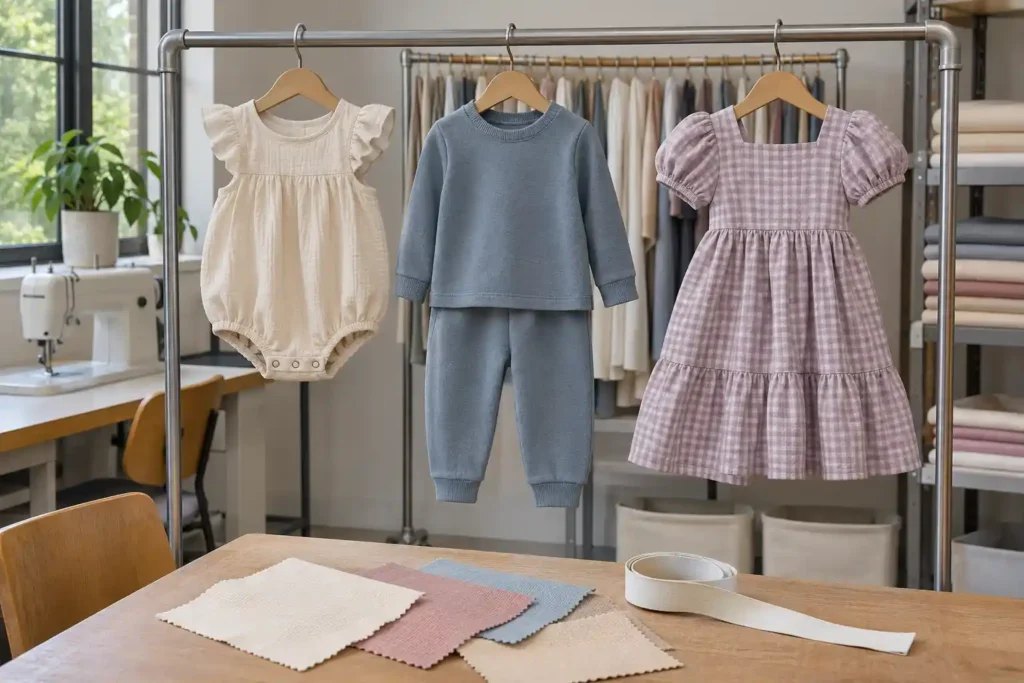
Compare candidates against the same garment brief.
A practical shortlist and sample scorecard
You do not need a complicated weighted formula to make a better decision. Use a simple record with five columns: requirement, factory response, evidence received, open question and decision. Add the same rows for both candidates: category experience, design route and rights, material sourcing, fit and grading, construction, decoration or print, applicable safety and labeling, minimum by style and colour, sample rounds, bulk quality plan, packing, delivery and repeat-order control.
Mark hard stops before scoring preferences. An unexplained material substitution, unclear artwork rights, missing production location or unaddressed product-safety question should not be averaged away by attractive photographs and a low price. For everything else, note what you observed in a physical sample rather than writing only “good quality.” For instance, record that a hem twists after the agreed wash, that the sleeve opening is narrower than the approved chart, or that the print loses detail at a seam. Give both factories the same opportunity to explain and correct a comparable issue.
At the end, decide among select, revise and pause. Select when a supplier has made an acceptable garment, resolved critical questions and documented how it will repeat the result. Revise when a specific, correctable issue remains and the next sample has a defined purpose. Pause when the brief, rights, material identity, compliance plan or factory relationship is too uncertain for a responsible commitment. Keep the rejected and approved versions clearly labelled so an old sample never becomes the accidental bulk standard.
Questions Australian brand founders often ask
Should I ask a factory to copy a brand I admire?
No. Use the public assortment to define a customer problem or quality standard, then develop your own original design. Ask for capabilities such as a comfortable baby closure, a controlled all-over print or a lined occasion dress. Give a supplier only artwork and technical files you are entitled to use. A reference image can help explain an idea, but it does not grant rights to reproduce protected details.
Does an Australian brand name mean the clothes are made in Australia?
No. Brand ownership, design location, fabric origin and garment manufacturing location are separate facts. Confirm each claim from the particular company and product if it matters to your decision. For your own collection, make the location and labeling statements match the real order records. Do not infer a named brand’s supplier from the images or examples in this article.
How many factories should receive my first brief?
Two or three genuinely suitable candidates are usually easier to compare than a broad list receiving a vague message. This is a working method, not a universal rule. Send the same specification and quantity grid to each, then compare their questions, samples and quote exclusions. A factory that challenges an ambiguous requirement may be more useful than one that accepts everything without examining the product.
Is an attractive sample enough to approve bulk production?
No. Confirm that the sample uses the approved material and components, fits the agreed chart, meets applicable requirements, and is tied to a production file. Decide who controls changes during bulk and what evidence you need before shipment. If the style is difficult or the order is large, consider a controlled production trial and inspection rather than treating one hand-sewn sample as proof of line consistency.
Turn observation into an original, testable product
The point of studying ten Australian kidswear brands is to make your own decisions more specific. Their public ranges can suggest questions about closures, category breadth, material claims, minimal construction, coordinated sizing, size communication, decoration, print rights and origin statements. They cannot tell you which China factory to hire or prove how that factory performs. Choose the few product characteristics that make sense for your customer, write them into a brief you own, and require each candidate factory to demonstrate those characteristics through a comparable sample and order-specific evidence.
That process gives you a defensible basis for the next step: select a partner, pay for a purposeful revision or pause until the product is clearer. It also keeps your brand distinct from the examples that inspired the questions. Your launch succeeds on the garment and system you actually approve, not on the reputation of someone else’s label.