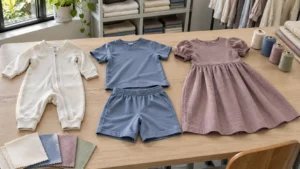
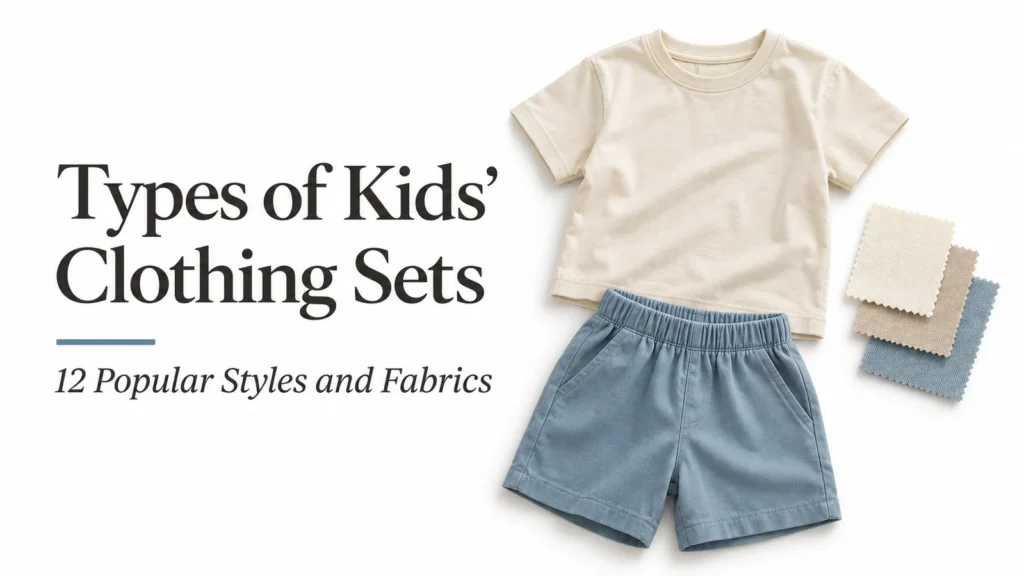
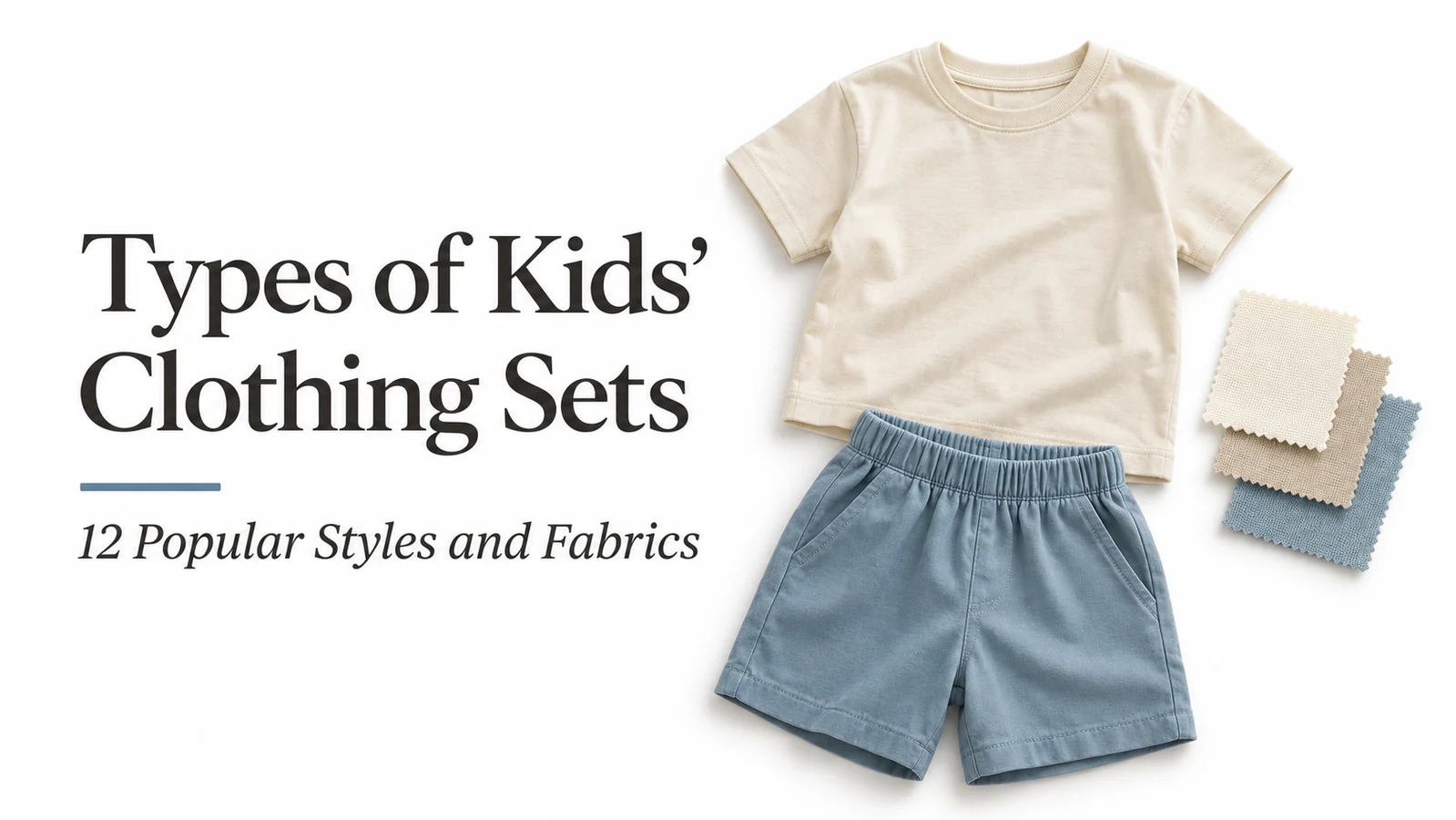
Kids’ clothing sets bring two or more pieces together as one coordinated outfit. Popular types include T-shirt and shorts sets, sweatshirt and jogger sets, top and skirt outfits, baby bodysuit sets, activewear, and pajamas. Some are designed for everyday play; others are better suited to layering or special occasions.
For clothing brands, a matching look is only the beginning. Each piece also needs to fit, feel comfortable, and work with the other. Below, we explore 12 types of kids’ clothing sets, the fabrics that suit them, and the details worth checking before you develop a collection.
What Are the Most Popular Types of Kids’ Clothing Sets?
The 12 common options below cover everyday outfits, babywear, activewear, sleepwear, and occasionwear. A matching set, sometimes called a co-ord set, uses color, print, or design details to make separate garments look like one outfit. A multipack may simply group unrelated basics, while a jumpsuit is one joined garment, not a two-piece set.
Use this overview to shortlist styles for your customers. The best choice depends on the child’s age, when the clothes will be worn, and what each piece needs to do.
| Kids’ Set Type | الأفضل لـ | Fabric Options | One Detail to Check |
|---|---|---|---|
| T-shirt and shorts | Everyday play and warm weather | Jersey top; knit or woven shorts | Movement and coverage |
| Sweatshirt and joggers | Casual wear and layering | French terry or brushed sweatshirt fleece | Weight and shape recovery |
| Top and leggings | Playwear and flexible layering | Jersey top; stretch-knit leggings | Legging opacity and waistband |
| Woven shirt and bottoms | Relaxed or smarter daywear | Poplin, gauze, linen blends | Sitting room and closures |
| Top and skirt | Everyday outfits or occasions | Jersey, woven cotton, lined decorative fabrics | Waist comfort and lining |
| Bodysuit and pants | Baby daywear | Cotton jersey or interlock | Changing access and overlapping layers |
| Overalls and top | Baby and toddler outfits | Knit top; twill, denim, or corduroy overalls | Torso room and dressing access |
| Jacket and bottoms | Layered casual outfits | Denim, twill, or other suitable outer fabrics | Room for the intended inner layer |
| Cardigan and bottoms | Layering and coordinated knitwear | Sweater knits | Shape, weight, and care |
| ملابس رياضية | Sport and active play | Suitable stretch blends | Movement, friction, and supported claims |
| منامة | Sleep and bedtime use | Knits or wovens appropriate to the product | Sleepwear requirements |
| Occasionwear | Parties, celebrations, and formal events | Suiting, woven fabrics, decorative layers | Comfort through a full event |
T-Shirt and Shorts Sets
T-shirt and shorts sets are an easy starting point for everyday or warm-weather collections. Cotton jersey works well for many tees, while the shorts can use the same knit or a woven fabric. A printed T-shirt with solid-color shorts is often enough to create a coordinated look; both pieces don’t need the same print.

The main design question is how the shorts feel during play. Leave room through the seat and leg openings, and check that pale fabric isn’t too sheer. For a cooler-weather variation, the same design direction can become a long-sleeve top and pants set.
Sweatshirt and Jogger Sets
A sweatshirt and jogger set brings a relaxed, sporty look to casual and cooler-weather collections. You can use French terry for a lighter feel or brushed sweatshirt fleece when a warmer, softer inside is the priority. Compare both with the collection’s climate and intended layers in mind.

At HAPA, we recommend choosing the sweatshirt fabric and jogger fabric for what each piece needs to do. The top may benefit from a softer hand feel, while the pants need good recovery at the knees and waistband. Matching sets don’t always need identical fabric. A sample of the complete outfit will show whether the weights and shapes work together.
Top and Legging Sets
A loose tee, tunic, or sweatshirt paired with leggings gives the two pieces different jobs. The top can hang freely, while the leggings need to stretch with the body and recover after movement. Matching color does not mean the same fabric will suit both pieces.
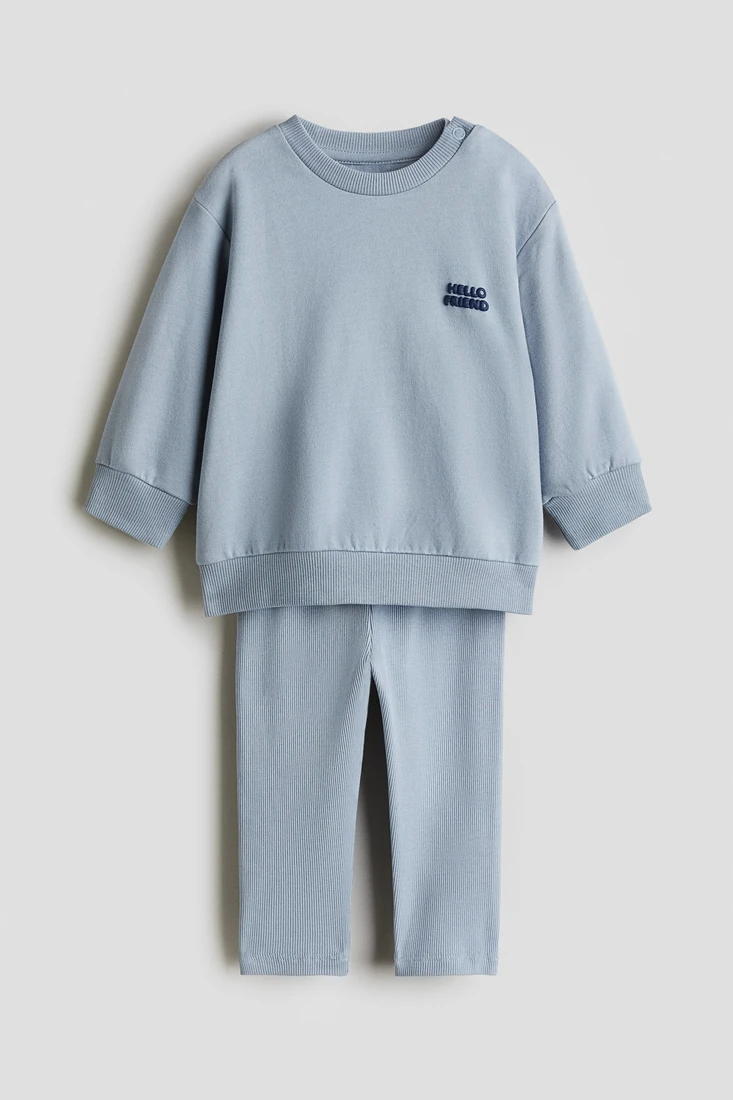
For leggings, make sure the fabric doesn’t become see-through when stretched. Check whether the waistband stays comfortable as the child moves, then look at the top length with the leggings actually worn. A tunic meant to provide extra coverage should still do its job when the child reaches or raises their arms.
Woven Shirt Sets
Woven shirt and shorts or pants sets work for smart-casual collections, holidays, and dressed-up everyday looks. Poplin creates a neat shape, while double gauze or linen blends can feel more relaxed. A polo shirt and shorts is another coordinated option, although the knit fabric needs different handling from a woven shirt.
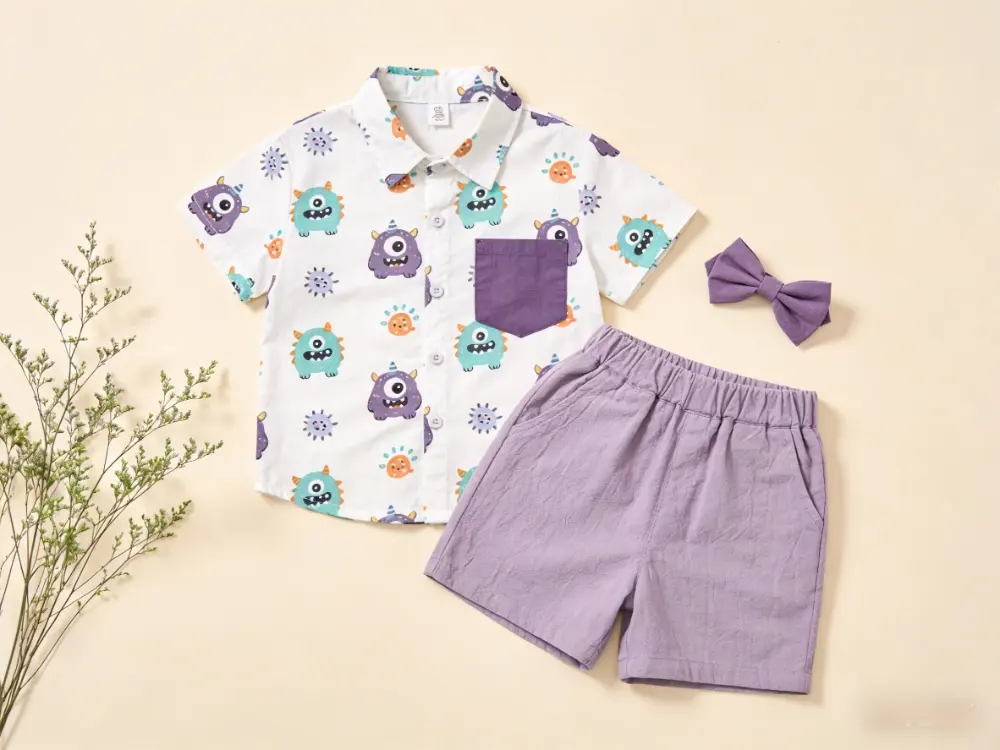
Decide whether the shirt will be tucked in, left loose, or worn open over a tee. That choice changes the length and fit you need. Don’t let a roomy top hide bottoms that feel tight when the child sits.
أطقم بلوزة وتنورة
Top and skirt sets can sit anywhere between everyday fashion and partywear. A simple jersey tee with a woven skirt feels different from a fully matching printed outfit, so brands can choose the style that fits the collection.

The detail worth watching is the waist. Linings, gathered layers, and decorative embroidery can add bulk even when the skirt looks light. If you’re making a skort, treat the built-in shorts as a real garment and check their coverage, not just the outer skirt.
Bodysuit and Pants Sets
Baby bodysuit and pants sets make a practical everyday option for infant collections. Cotton jersey and interlock are useful fabrics to compare, especially for soft, easy-to-wear separates.
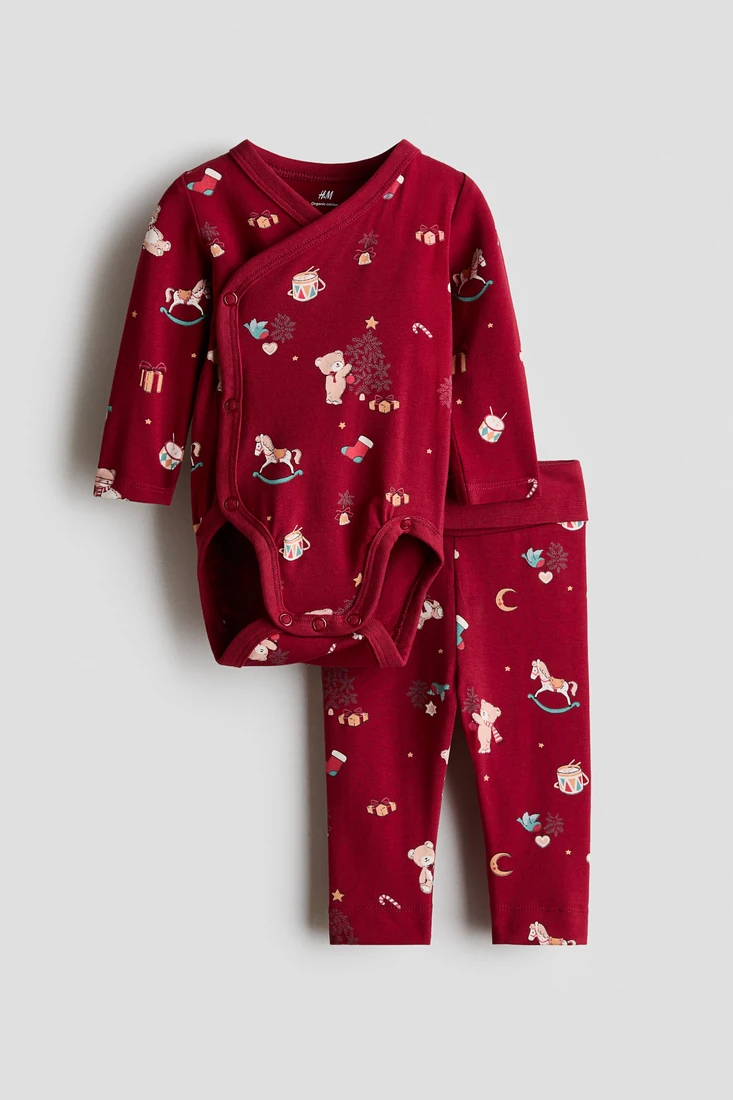
A bodysuit and pants may feel fine separately but become bulky where they overlap at the waist. Check the seams, elastic, and how easily a caregiver can change a diaper. Leave enough room for the diaper when reviewing the fit, and make sure the bodysuit opening and snaps are easy to use.
Overalls and Top Sets
Overalls, also called dungarees, become a clothing set when supplied with a separate top or bodysuit. Shortalls are the shorter version. Compare denim, twill, and corduroy for the overalls, paired with a knit top underneath.
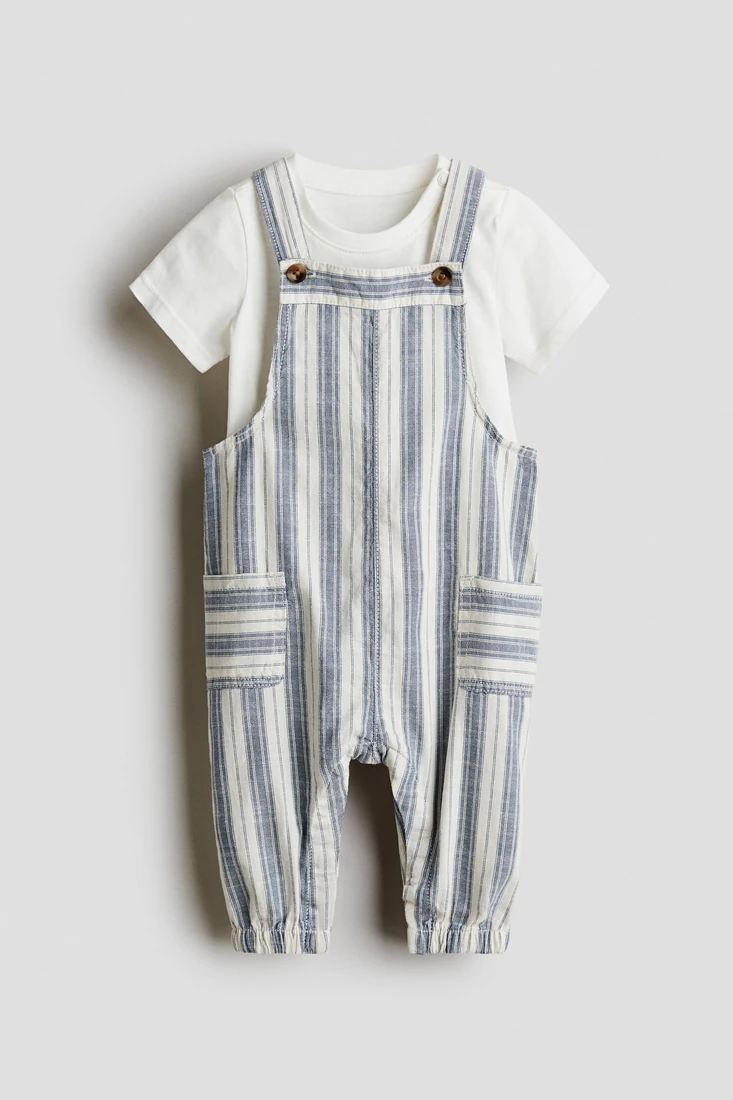
Choose strap and torso lengths with the intended top underneath. If the overalls pull when a child sits or reaches, adjust the fit rather than sizing up blindly. Make changing and toileting manageable, and tell buyers clearly whether the top shown in your product photos is included in the set.
Jacket and Bottoms Sets
Kids’ denim sets and lightweight jacket-and-pants combinations introduce a removable outer layer. An overshirt with coordinated bottoms can serve a similar purpose, although its fit needs to account for the layer underneath, unlike a shirt worn directly against the body.
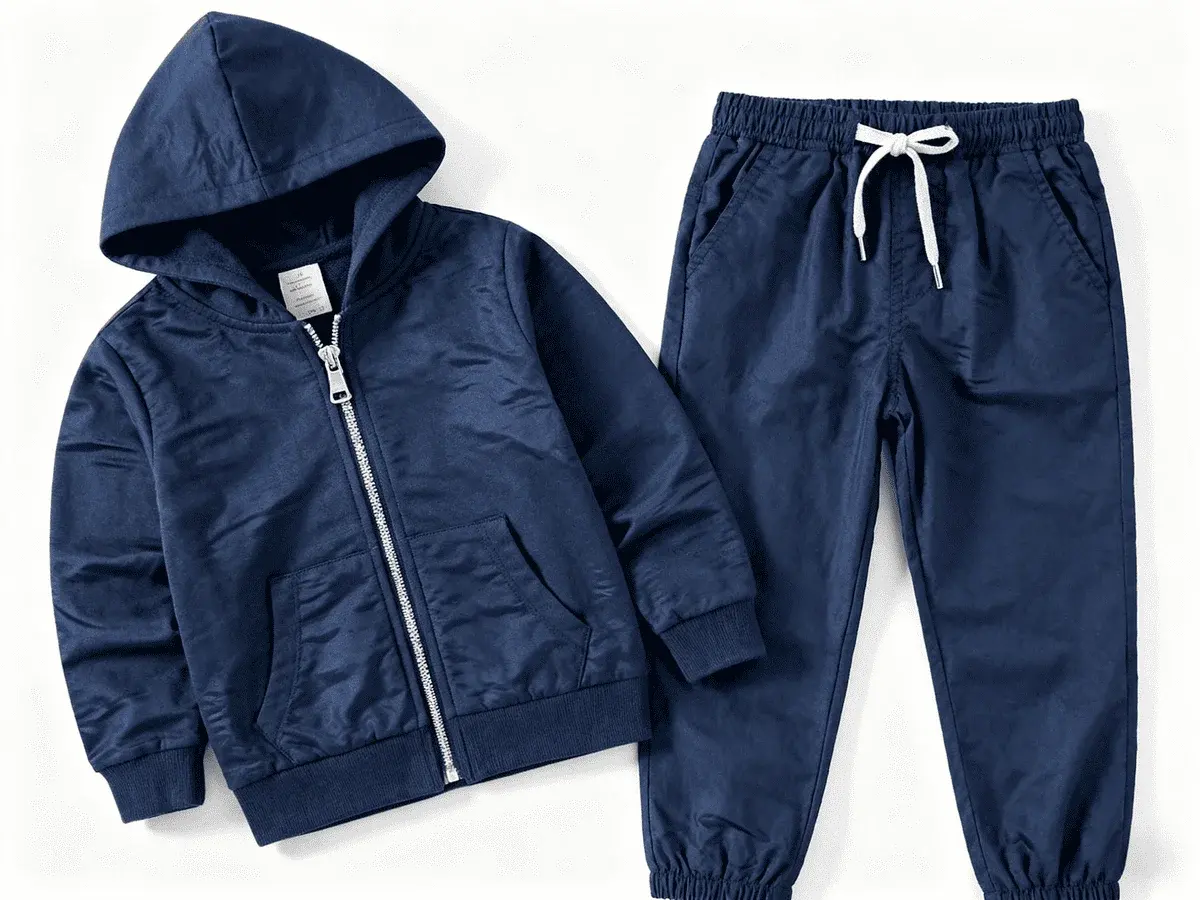
Fit the jacket over the layers you expect children to wear beneath it, especially through the shoulders and arms. If the inner top is only a styling prop, say so on the product page. A matching denim wash can make the outfit look cohesive, but it doesn’t automatically make the set suitable for winter.
Cardigan and Bottoms Sets
Coordinated sweater-knit cardigans with pants or skirts offer a textured alternative to sweatshirt sets. The cardigan can also be worn separately, which makes its length and proportions worth considering beyond the original outfit.
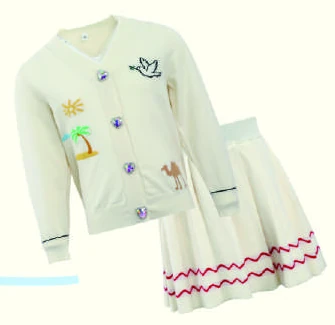
Knit garments can stretch under their own weight, especially where pockets or heavy buttons pull on the fabric. Check the shape of both pieces after care. Don’t assume a cardigan and its matching bottoms will keep the same fit or wash the same way just because they use a similar yarn.
Activewear Sets
An athletic top paired with shorts or leggings should be designed around the activity. Stretch blends are options, but a sporty graphic and a percentage of elastane don’t demonstrate performance. The cut, seams, and fabric all need to work during movement.
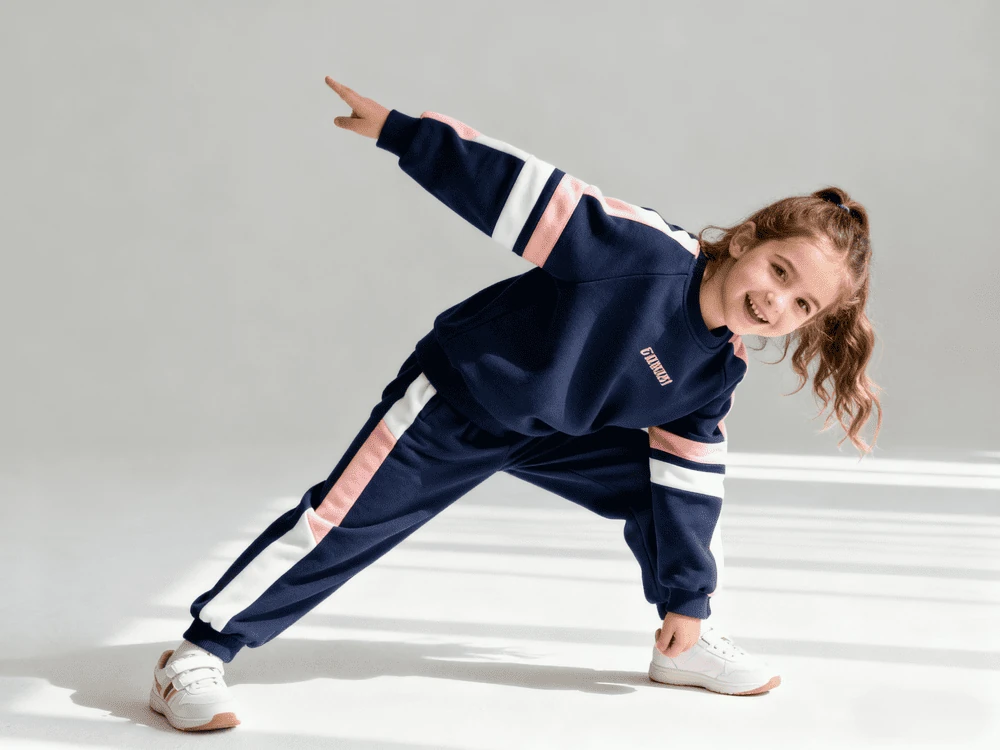
Make sure the fabric stays opaque when stretched and that seams don’t rub during movement. If you plan to call a set quick-drying or moisture-wicking, ask for evidence related to the proposed fabric or finished product. Polyester alone doesn’t prove those claims. A sporty everyday set can still be appealing without technical promises.
Pajama Sets
Pajama sets pair a sleep top with shorts or pants, but choosing them involves more than a soft hand feel. You need to establish the intended use and destination market before settling the design. Comparing pajama fabric options is part of that decision, not a substitute for it.
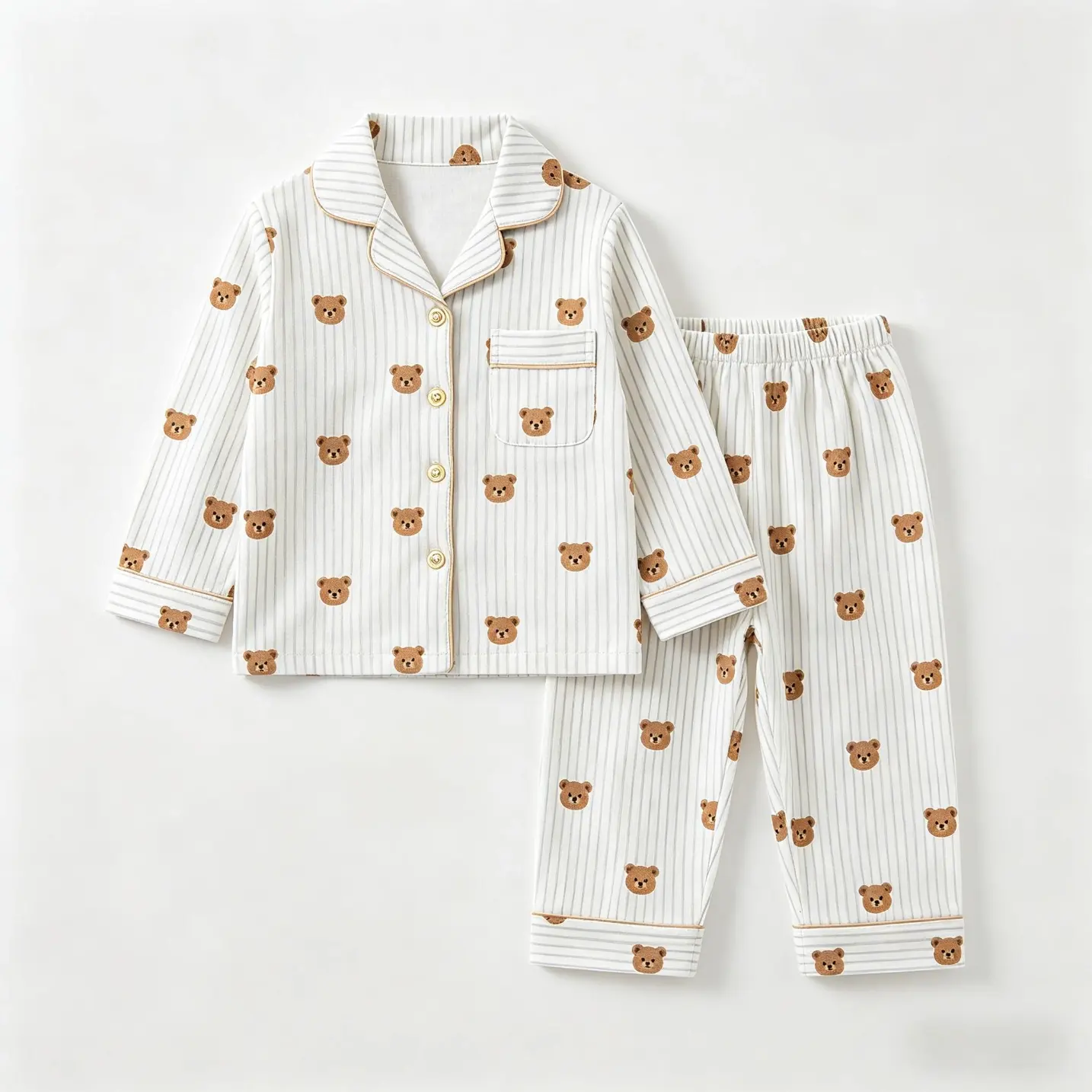
Do not assume a daywear co-ord is suitable for sale as sleepwear. في الولايات المتحدة، CPSC considers design, likely use, and marketing when assessing children’s sleepwear; calling a product loungewear doesn’t automatically put it outside sleepwear requirements. Confirm the applicable requirements with your testing or compliance partner before approving production.
Occasionwear Sets
Party and occasionwear sets might pair a top with a decorative skirt or combine a shirt, vest, and pants. They give brands room to use richer textures, trims, and tailored details.

The outfit still needs to work through a whole event, not just a photo shoot. Check how the child sits and moves with every layer on, and make sure linings and waistbands feel comfortable. Product descriptions should list the included pieces so buyers know exactly what they’re getting.
Choosing Colors and Prints for Kids’ Sets
Once you have chosen a garment combination, decide what connects the pieces visually. Identical prints are one approach; shared colors, contrasting textures, or a repeated detail can also make an outfit feel coordinated. This decision affects both the complete look and how easily each piece fits into the rest of your collection.
Matching Prints and Coordinated Colors
An all-over print on both pieces creates a strong coordinated look. Check the motif at the scale of the finished garments, since a print that reads clearly across a top can look crowded on smaller shorts. Decide whether stripes, checks, or particular motifs need to line up at seams, and communicate those expectations before sampling.
For a quieter combination, use related solid colors or pair a printed piece with a plain one. A color taken from the print can connect the two without repeating the entire design. Different textures can also work together, provided the difference looks deliberate when the garments are placed side by side.
Pieces That Work on Their Own
Consider each garment away from its partner. Does the top have a complete design, or does its artwork rely on the bottoms to make sense? Do the bottoms work with another top in the range? Check shape as well as color: a very long top and a cropped jacket create different proportions with the same pants.
Design for separate wear when that is part of the product’s purpose. Keeping the pieces together can make sense for occasion sets. For everyday matching separates, independent styling can give customers more ways to use the clothes. It doesn’t guarantee more wear, and it doesn’t mean you have to sell the pieces individually.
What Are the Best Fabrics for Kids’ Clothing Sets?
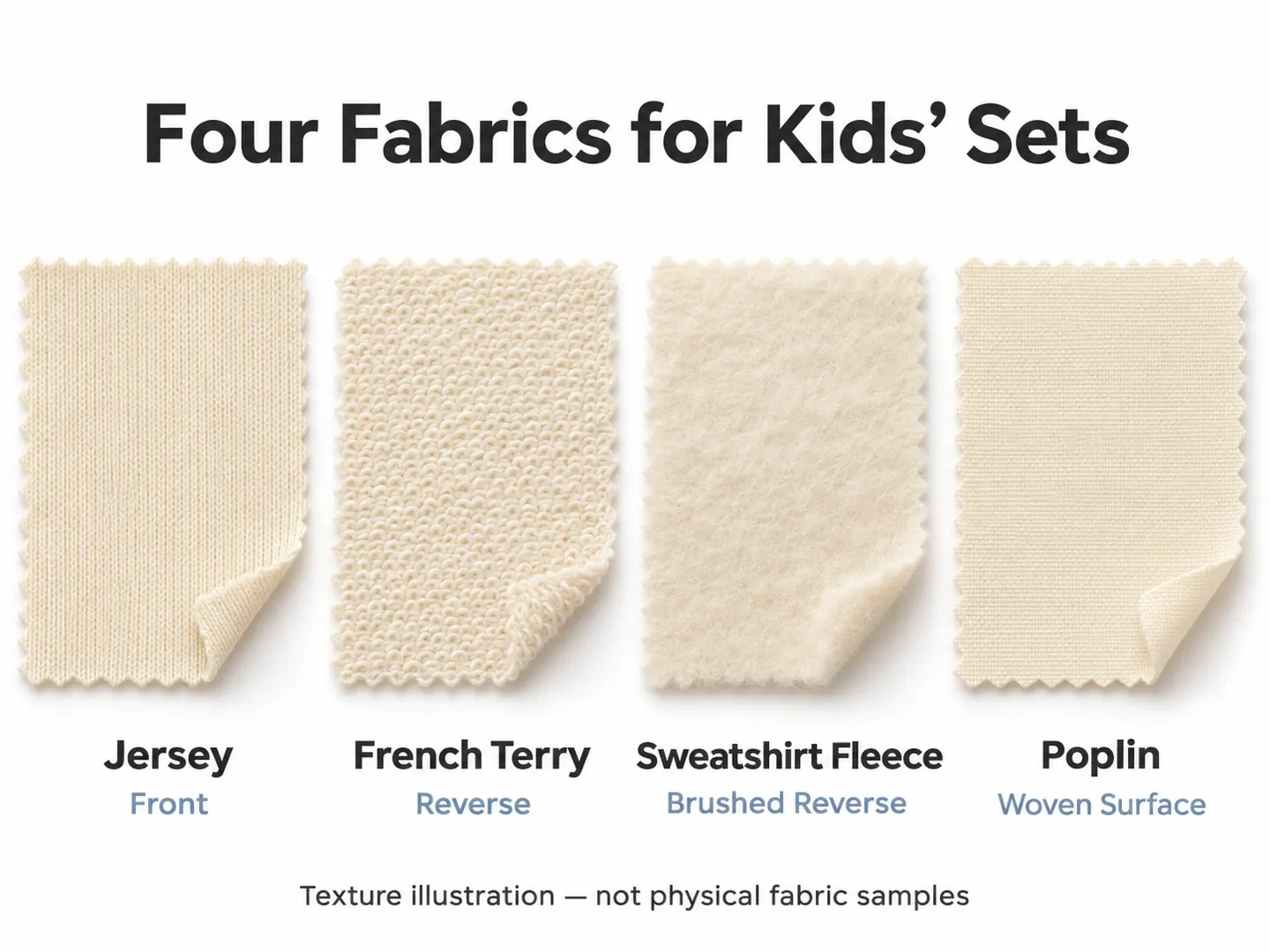
Cotton jersey and interlock suit many everyday tops and baby sets. French terry and sweatshirt fleece are common options for casual sweat sets, while poplin, gauze, denim, and linen blends work for different woven styles. Stretch knits can suit leggings or activewear. The best fabric depends on which piece it’s for and how the child will wear it.
Even fabrics made from the same fiber can behave very differently. A jersey T-shirt, poplin shirt, and corduroy pants may all contain cotton, but they need different fit and care checks. Our guide to أنواع الأقمشة القطنية explains those differences in more detail.
Cotton Knits for Everyday Sets
Single jersey is a familiar option for T-shirts and relaxed tops. Interlock has a smoother, more even appearance on both sides and can suit baby separates. Rib knit is often used for neckbands, cuffs, or garments that need extra stretch. Ask for the actual fabric weight and feel rather than choosing from the name alone.
Cotton Incorporated’s استطلاع تكميلي للعودة إلى المدارس لعام 2025 asked 498 parents who planned to shop for back-to-school clothes. Among those surveyed, 76% preferred cotton for T-shirts and 73% for sweatshirts or hoodies. It also identified comfort, quality, and durability as important shopping priorities. These are consumer preferences, not proof that cotton is best for every style or a measure of kids’ set sales.
For a brand, the practical takeaway is to start with fabrics customers recognize, then check what the finished clothing actually does. Compare softness, weight, stretch, and recovery. A knit that’s comfortable in a loose T-shirt may not be right for close-fitting leggings.
French Terry and Fleece for Sweat Sets
French terry has loops on the inside, while sweatshirt fleece has a brushed, fuzzy inner surface. Both can work for casual matching sets, but they don’t feel or behave exactly the same way.
For sweatshirts and joggers, compare thickness, warmth, stretch, and the fabric’s appearance after washing. Brushed fleece may feel cozy in a cooler climate, but it isn’t always the best choice for a lighter outfit. When speaking with a supplier, specify sweatshirt fleece rather than simply saying ‘fleece,’ which can mean different materials.
Woven Fabrics for Relaxed and Structured Sets
Poplin is an option for a cleaner shirt shape. Double gauze and seersucker provide different textured surfaces for relaxed outfits, while linen blends bring another texture and wrinkle pattern. For bottoms and overshirts, compare suitable weights of twill, denim, or corduroy.
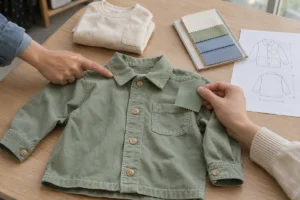
Judge each material by how well it supports the intended silhouette. A shirt and its coordinated pants can use different weights, provided they look right together and have compatible care needs. Ask for the actual proposed fabric: a soft sample of one denim does not establish the feel of another. Check light-colored or open constructions for coverage, including any lining the finished garment will need.
Stretch Blends for Active Sets
Elastane, also called spandex, can be blended with other fibers where stretch is needed. The blend percentage alone doesn’t describe how firmly the fabric stretches, how it recovers, or whether it remains opaque. Review these properties in the direction and areas where the garment will be stretched during use.
Soft viscose or modal blends are separate options for draped styles, not automatic substitutes for performance fabrics. When considering bamboo-derived fabrics, confirm the actual fiber description. For U.S. sales, the FTC distinguishes actual bamboo fiber from rayon or viscose made from bamboo. Neither a plant name nor a soft touch establishes antibacterial or low-allergy performance.
When requesting swatches, give the supplier more than a color reference:
- State which piece each fabric is for and whether the fit is loose or close to the body.
- Ask for composition, construction, weight, and proposed care information so samples can be compared consistently.
- Check stretch, recovery, coverage, and drape against the garment’s intended use.
- Agree which wash, surface, seam, or performance checks the project needs before fabric approval.
Choosing Sets for Different Ages and Seasons
Age and season help narrow the range, but you also need to know how children will wear the clothes. Think about movement, changing, and time spent indoors or outdoors. A baby outfit and a school-age set need different details even if they share the same print.
Use these priorities when reviewing the collection:
- For babies, focus on access for changing, room for a diaper, and comfortable overlapping layers.
- For toddlers, consider sitting, climbing, and learning to dress or use the toilet independently.
- For school-age children, consider the day’s activities, practical pockets, removable layers, and preferences about fit and appearance.
Translate those needs into children’s clothing measurements for each piece. Age labels are useful for organizing a range, but a shared label doesn’t establish that both garments fit the same child well. A deliberately relaxed cut also needs appropriate proportions; it isn’t simply the next size up.
For warm-weather sets, think breathable layers, coverage, and comfort during active play. For cooler seasons, consider how easily children can add or remove a layer. Summer in one market may feel different from summer in another, so tell the manufacturer where the collection will be sold before finalizing materials.
What Makes a Matching Set Work?
A good kids’ matching set should look coordinated, fit comfortably, and move well during everyday activities. Check each garment separately, then look at the complete outfit together. Don’t judge the result from photographs alone.
At HAPA, we recommend approving the top and bottoms as individual garments و as a pair. Two pieces may fit well on their own but still feel awkward together. We also look at how they change after washing: if one piece shrinks or twists more than the other, the set can lose its original proportions.
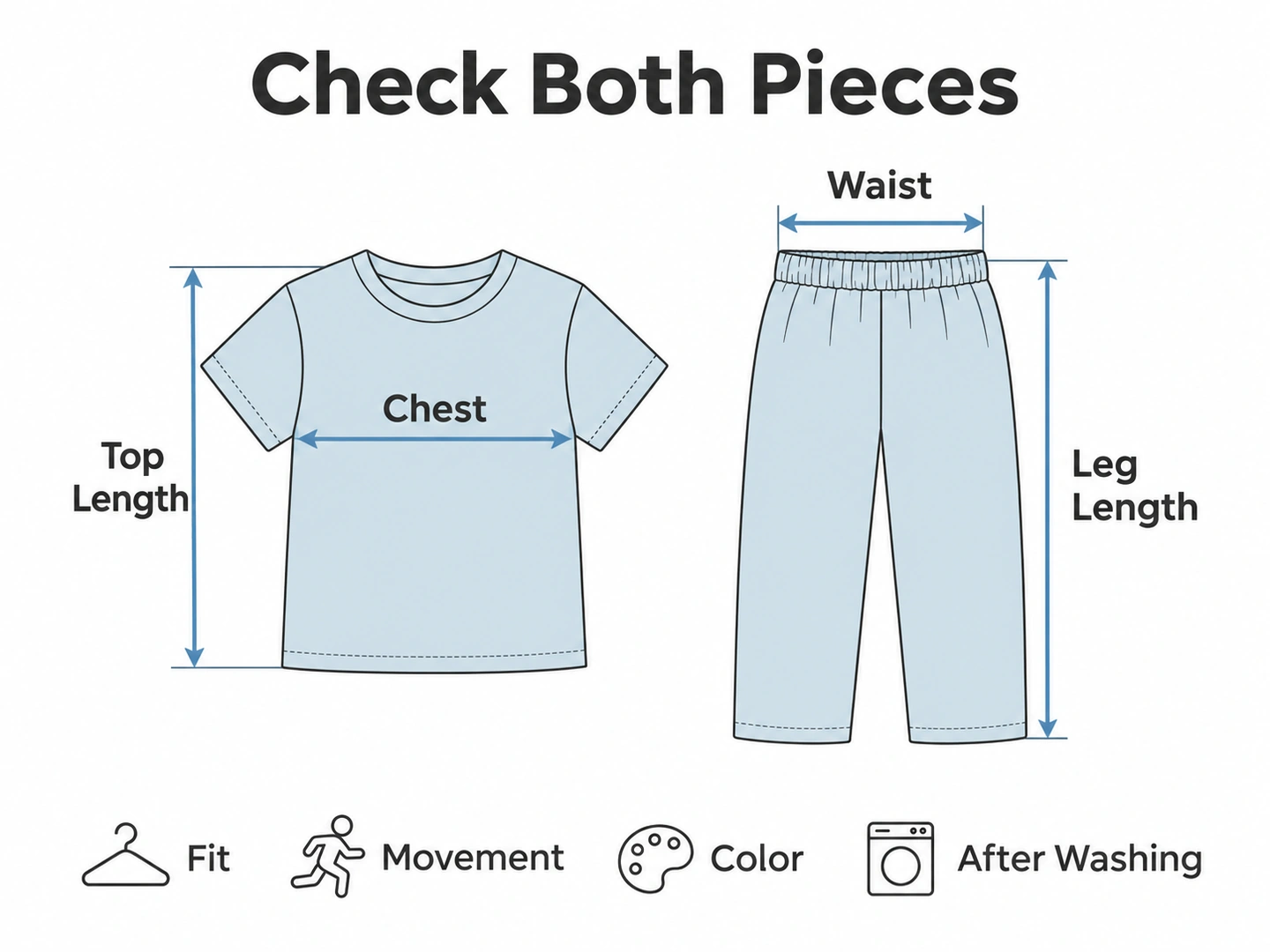
Fit Each Piece Separately
Check the top through the chest, shoulders, and length, then review the bottom through the waist, seat, rise, and leg. Look at ordinary movements such as reaching, sitting, and bending. A roomy chest does not compensate for a tight waistband.
Approve both pieces, not just the better-fitting half of the set. Record which measurements need changing and review the revised combination together. If the set spans several sizes, agree how the size range will be reviewed rather than assuming that one attractive sample settles every fit question.
Check Closures and Skin-Contact Details
Follow the dressing process from start to finish. Check the neck opening, fastener access, waistband, and whether one garment must be removed to adjust the other. For younger children, include changing and toileting in that review.
Turn the garments inside out. Feel the seams, labels, elastic edges, and decoration backings that touch the body. Assess comfort separately from safety: a comfortable fastening still needs to meet the product’s applicable safety and testing requirements.
Compare the Set After Washing
Wash the complete sample as instructed, then compare both pieces with their original measurements and appearance. Look for changes in length, shape, surface, and color, particularly where those changes make the two pieces look uneven together. This trial helps guide development; it doesn’t replace agreed laboratory tests or prove how every production batch will behave.
Keep Colors and Care Compatible
Compare each material with the approved visual target. Different textures can make the same named color look different, so use the complete set during الموافقة على القماش واللون. Separate an intentional tonal difference from an unintended mismatch.
Check care requirements for the full construction, including print, lining, and decoration. If the two pieces require different treatment, decide whether that fits the product’s intended use and communicate it clearly.
Record the result for each sample, including:
- Top and bottom fit: Accepted measurements and any adjustments still needed.
- Movement and comfort: What happens when the child sits, bends, reaches, or gets dressed.
- Care results: Changes in shape, size, color, or surface after the agreed wash check.
- Final set details: Color match, included items, labeling, and remaining corrections.
Planning a Kids’ Set Collection
For a first collection, we’d start with a few sets that serve different needs, rather than offering lots of similar outfits in more colors. A T-shirt and shorts set can cover everyday wear, a sweatshirt and jogger set adds a layering option, and a dressier outfit gives the range another purpose. That makes it easier for buyers to understand why each style belongs in your collection.
At HAPA, we suggest deciding what each set is meant to do before moving into fabric selection and sampling. You don’t need a huge range to show a clear brand direction. You need a manageable mix of styles your customers can understand and your team can develop consistently.
Before contacting a manufacturer, prepare:
- Customer and market: Target ages, sales countries, intended use, and season.
- What’s in each set: The actual garments included, with any styling-only items identified separately.
- Style references: Images, preferred fit, colors, prints, and decorative details for each piece.
- Fabric direction: Materials you’re considering and any care or performance requirements.
- كميات: Planned order by style, color, and size; state whether you mean individual garments or complete sets.
- Timing and branding: Target delivery date, labels, hangtags, and packaging requirements.
With these details in place, a manufacturing partner can help narrow fabric choices, plan samples, and work out a production approach that fits your collection.
Create Custom Kids’ Clothing Sets With HAPA
في هابا, we help clothing brands turn creative ideas into high-quality kids’ clothing sets. With 16 years of manufacturing experience, a 6,000 m² factory, ، و 100+ skilled sewing specialists, we offer complete OEM/ODM solutions, from fabric sourcing and design development to sampling and bulk production.
Whether you’re developing casual matching sets, sweat sets, or stylish girls’ outfits, we can customize fabrics, fits, prints, embroidery, and branding to match your vision. Our Flexible MOQ starts at 150 pieces, with mixed sizes available.
Ready to create your next collection? Share your designs or reference images, and contact HAPA for a custom quote.
خاتمة
The right types of kids’ clothing sets depend on who will wear them and when. T-shirt and shorts outfits, sweat sets, baby separates, activewear, and occasionwear each serve different needs. Start with the occasion, then choose the fit, fabric, and styling details that support it.
For clothing brands, the best-looking set should also work as a complete outfit. Approve both garments, check how they fit and wash together, and build a focused range rather than adding styles simply to fill a catalog.
الأسئلة الشائعة
Here are a few common questions about ordering and selling kids’ matching sets.
Can the Top and Bottom Be Ordered in Different Sizes?
That depends on the supplier’s production and packing arrangements, and on how your brand plans to sell the outfit. Ask whether separate size selection is available, then specify each garment’s size and the way it should be identified in the package. Don’t assume a fixed-size set can be freely mixed.
What Counts as a Three-Piece Kids’ Set?
It contains three specified garments or items. A shirt, vest, and pants is one combination; a top, bottoms, and cardigan is another. There is no single configuration that explains every three-piece listing, so identify the included items clearly rather than leaving customers to infer them from a photograph.
Can a Kids’ Set Be Sold as Separates?
Yes, if the brand plans its product listings, stock, pricing, and packaging that way. Being able to wear the pieces separately doesn’t mean they are available to purchase separately. Confirm the arrangement with the supplier and make the buying options clear to customers.
Are Sibling Matching Outfits the Same as Clothing Sets?
No. A kids’ clothing set combines garments for one child, while sibling matching outfits connect the looks of different children. They can overlap: each child might wear a two-piece set with matching colors or prints, without wearing identical clothes.
What Is the Difference Between a Matching Set and a Two-Piece Outfit?
A matching set is designed to look coordinated through color, print, or styling. A two-piece outfit simply includes two garments, whether they match or not. Many kids’ matching sets are two-piece outfits, but the terms don’t mean exactly the same thing.