HAPA Garments, Muhong Apparel, and Hongyu Apparel are three Chinese kidswear manufacturers you can put on an initial sourcing shortlist. Their public websites describe different combinations of product development, private labeling, and garment production. The best choice for your Shopify brand depends on the products you sell, the quantities you can support, and how reliably the supplier can deliver the exact sizes and colors your customers order.
That is a screening shortlist, not a verified performance ranking. We reviewed public supplier information and official platform and U.S. regulatory guidance in September 2026. We have not established a common set of independently audited quality, delivery, or customer-return results for these companies. This guide is published by HAPA, which is also included as a candidate; apply the same checks to us as to any other supplier.
Before requesting samples, define your operating model. A brand launching a small collection needs a manageable development process and an affordable first order. An established store needs consistent repeat production and replenishment. A store that wants individual orders shipped directly to customers needs a fulfillment service that a sewing factory may not provide. Below, we explain how to turn a shortlist into a defensible buying decision.
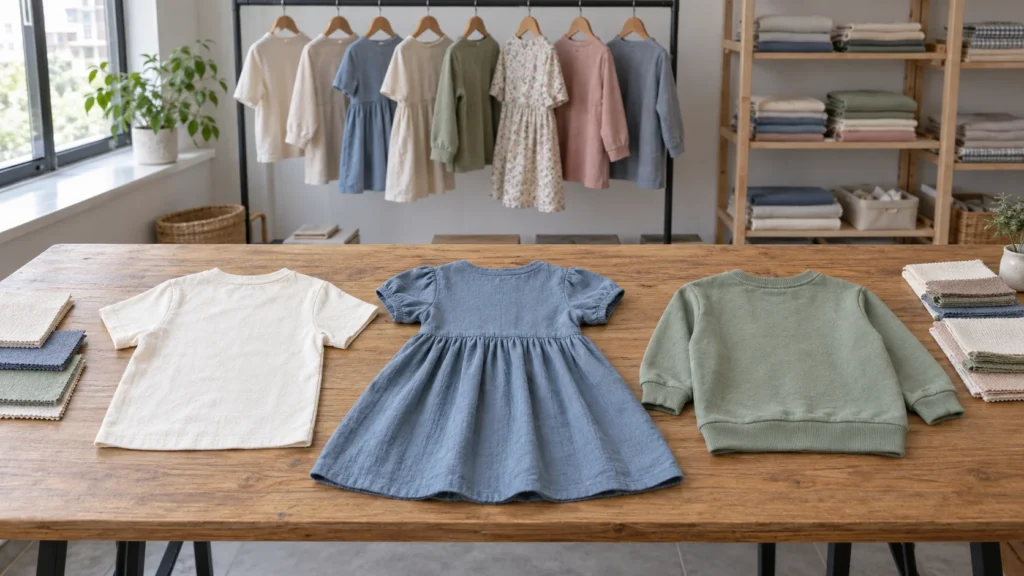
Figure 1. Compare samples against the needs of your collection.
Start with a shortlist you can actually verify
When comparing Chinese kidswear manufacturers, separate the supplier’s advertised service from evidence that it can perform that service for your particular garment. A relevant website is a reason to investigate. An approved sample, a clear quotation, and a well-executed pilot order are more useful evidence for selection.
HAPA Garments for a kidswear development discussion
HAPA’s children’s clothing OEM page describes support with design review, patterns and grading, fabric selection, sampling, production checks, labels, and packaging. These are relevant services to discuss if your Shopify collection requires original garments or development help.
ملكنا خدمة تصنيع ملابس الأطفال الأصلية page provides the starting scope. Ask us to confirm which stages your quotation includes, who approves the fit, and how the final sample is tied to production instructions. A product category on a website does not prove that every construction, material, or age range is suitable for the same production route.
For a first discussion, send one representative style rather than an entire mood board. Specify the intended customer, size range, fabric direction, quantity by color, destination market, and delivery location. Compare the resulting development proposal against the same brief sent to other candidates.
Muhong Apparel for questions about DTC operations
Muhong Apparel’s About Us page identifies a Dongguan kidswear business offering OEM and ODM customization. It describes pattern development, sampling, bulk production, and private-label packaging. The same page says the company operates a self-owned DTC brand through Shopify.
That last statement gives you a specific topic to investigate; it does not establish an integration service or verified results for client stores. Ask how its experience translates into the work you are buying. Can the team follow your variant list, prepare your warehouse’s packing format, and show how it handles a replenishment order?
If your brief includes a particular fiber claim or fabric characteristic, request the supporting specification and relevant evidence for the actual material proposed. Evaluate those documents on their scope, not the prominence of a sustainability phrase on the supplier’s website.
Hongyu Apparel for distinguishing blanks from custom production
Hongyu Apparel’s Kids Wear Manufacturer page presents custom kidswear categories and a development sequence including material sourcing, patternmaking, samples, and revisions. Its broader website also distinguishes ready-made blanks from customization services.
This distinction matters for a Shopify startup. Adding your label to a stock garment and developing your own fit are different purchases. Ask which route a quotation describes and which parts of the product you can change. Do not transfer a minimum quantity or delivery estimate from a blank wholesale offer to a custom style.
Because its public offering extends beyond kidswear, request examples relevant to your actual category and age range. A general apparel portfolio should lead to a focused sample review, including fit, finishing, and product-specific documentation.
Make the comparison fair
These Chinese kidswear manufacturers should receive the same core brief before you compare their responses. Include the same fabric assumptions, quantities, size breakdown, decoration, packaging, and shipment destination. If one supplier changes a specification to reduce the price, ask it to show that change explicitly.
Keep an evidence record for each candidate: the advertised service, the supporting material you requested, the evidence received, and any unresolved question. Do not assign a high score merely because the sales representative answers quickly. A useful response resolves a production decision or provides evidence that another person can check.
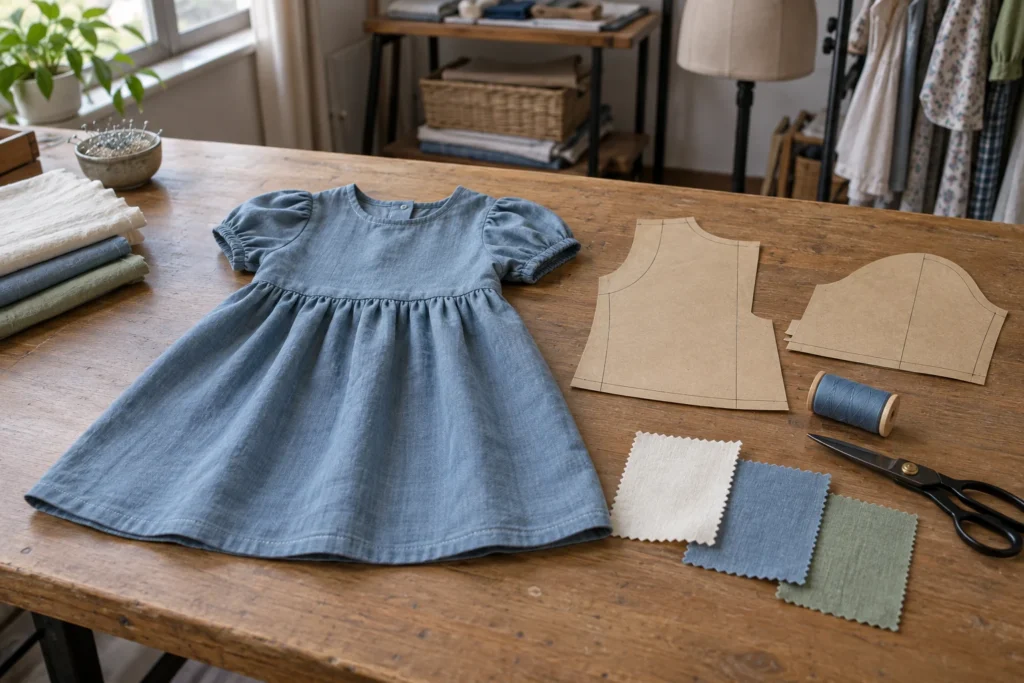
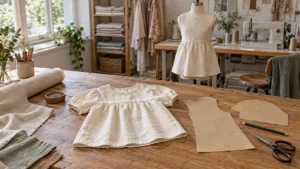
Figure 2. Define the product before comparing manufacturing proposals.
Match the manufacturing model to your Shopify business
Your online store does not determine how the garment should be manufactured. It determines some of the information and delivery discipline you need around the garment. Before asking for a quote, decide what product differentiation you are buying and who will hold the stock.
A first collection needs a narrow, workable scope
If you are starting without sales history, concentrate the brief. Fewer styles, carefully chosen colors, and a justified size range make it easier to understand the money committed to each sellable item. This does not mean every startup should buy the smallest advertised order. It means the first order should answer a business question you can evaluate.
Ask a supplier to quote a base version of the garment and separately priced options. A custom print, special trim, unusual fabric finish, or elaborate box can create work beyond cutting and sewing. Decide which details customers are likely to value enough to support their cost.
For example, you may choose a distinctive fit and a consistent fabric while keeping packaging simple. Another brand may depend on an occasionwear detail and accept a more involved sampling stage. The right manufacturing proposal follows that product decision.
A growing brand needs repeatability
For a store with established sellers, Chinese kidswear manufacturers should be assessed on what happens after the first successful batch. Ask whether the material can be sourced again, how pattern revisions are controlled, and what happens when a mill changes a fabric or shade.
Provide previous sales by size and color where available. A reorder of a winning style is not necessarily the same quantity split as the first order. If only two sizes need replenishing, find out whether the supplier can accommodate that mix and how it affects price or production planning.
Keep an approved reference sample and the relevant specifications accessible to both sides. A returning customer should not have to discover that a familiar size fits differently because an undocumented pattern adjustment entered a later batch.
Manufacturing and direct fulfillment are separate scopes
A factory may ship cartons to your warehouse without offering individual customer fulfillment. If you want orders dispatched directly from China, ask specifically about order transfer, inventory updates, picking accuracy, dispatch expectations, tracking, returns, and customer-data handling.
Do not infer these services from the phrase “ecommerce ready” or from a supplier using Shopify for its own retail business. Ask for a demonstration of the proposed workflow using a test order, and agree who handles exceptions.
For private-label work more broadly, HAPA’s خدمة تصنيع العلامات التجارية الخاصة outlines development and branding topics to discuss. Your written scope should identify where manufacturing ends and warehousing or fulfillment begins.
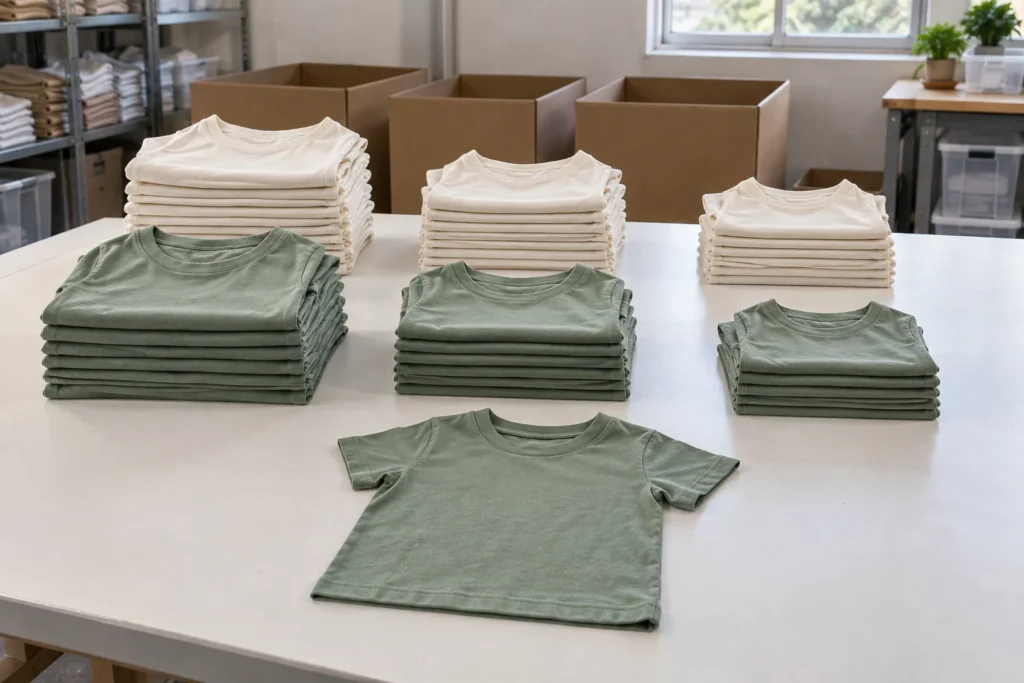
Figure 3. Plan stock by size and color, not just total quantity.
Translate your collection into variants and packing instructions
A supplier can make an attractive garment and still create problems for your store if the sizes, colors, and cartons cannot be reconciled with your inventory. Evaluate Chinese kidswear manufacturers on this handover as carefully as you evaluate a sample seam.
Use one consistent variant list
Shopify’s guidance on using SKUs recommends unique identifiers for effective variant tracking and reporting. It also distinguishes SKUs from barcodes. A barcode and your internal product code may work together, but they are not interchangeable concepts.
Give the supplier a controlled list showing the style, color, size, identifier, and ordered quantity. If your warehouse requires a barcode, confirm the code type, supplied data, placement, and scanning check with the receiving team. Avoid allowing multiple people to invent separate names for the same shade or size.
An illustrative collection with two styles, three colors per style, and five sizes has thirty style-color-size combinations. An even purchase of ten units per combination would total three hundred garments. That is only planning arithmetic, not a recommended buy: actual demand may be concentrated in a few variants.
The point is to review the order at the level customers will purchase. A reasonable total quantity can conceal an unhelpful distribution, with too much stock in slow variants and too little in the sizes people want.
Make packout part of sample approval
Before bulk packing, request a representative packed sample. Inspect the fold, garment protection, size identification, label placement, and outer carton arrangement. Check whether the item is ready for your own team or fulfillment partner to receive and pick.
Explain whether cartons should contain a single variant or an agreed assortment. Ask for packing information that reconciles to the purchase order. If a carton contains mixed sizes, the receiving team needs to know that before opening it.
Keep the branding decisions tied to practical use. An attractive hangtag can cover a scanning label, and an oversized package can complicate storage or dispatch. Review the garment as a sellable, handleable item, not only as a photograph.
Test the complete handover before launch
Run a small receiving rehearsal with the sample or pilot goods. Match the physical size and color to the product record, inspect the packing information, and try the picking process your team will actually use. Record discrepancies with photographs and clear references.
If the supplier’s labels are correct but your product records use a different color name, resolve the mapping before stock goes live. Good manufacturing coordination includes the unglamorous work of making sure the right garment reaches the right customer.
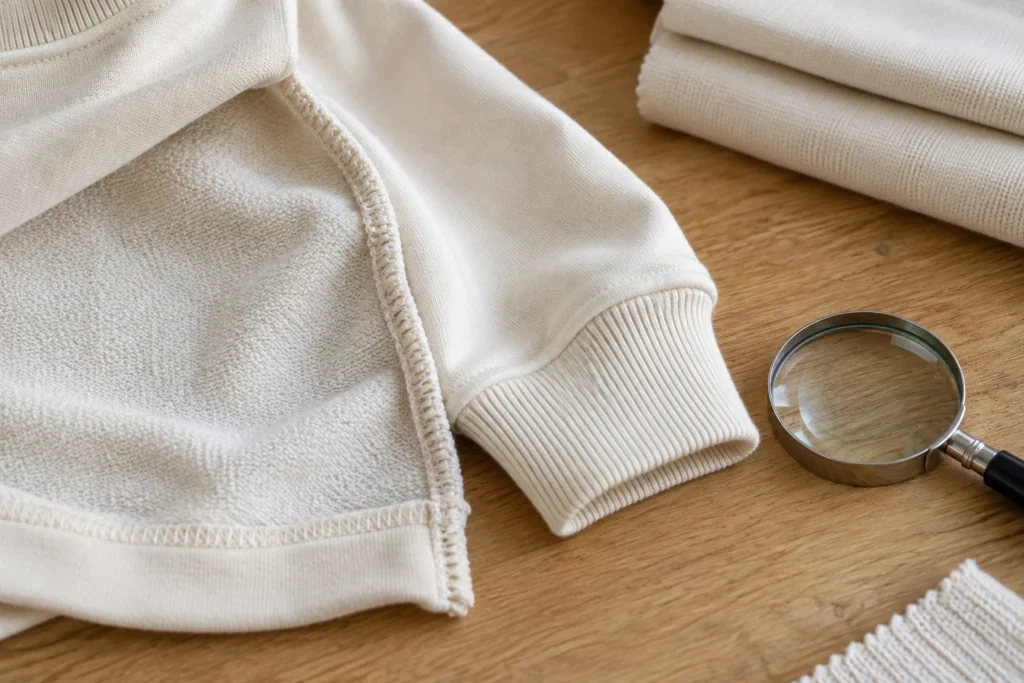
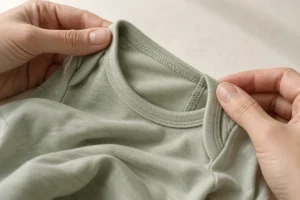
Figure 4. Check construction details during sample review.
Check samples and product evidence before committing
The best Chinese kidswear manufacturers for your business will be those that meet your product requirements in a repeatable way. A polished sample presentation is useful, but approval needs a definition of acceptable fit, construction, materials, and documentation.
Write sample comments that can be acted on
Start with measurable points and observable behavior. Identify the sample version, size, material, and area being reviewed. Instead of saying the neckline feels wrong, describe where it sits, how the opening behaves, and the change you need.
Ask how the garment will be checked on a suitable fit reference. Consider dressing, movement, seams against skin, and the behavior of closures. An age label alone does not tell a factory what body measurements or ease your customers expect.
Review the proposed care process and agree how relevant changes will be assessed. Fabric appearance, shrinkage, twisting, and recovery can affect the customer’s experience after purchase. These are subjects for a product-specific assessment plan, not reasons to accept an unexplained “wash tested” statement.
Consolidate your team’s feedback before sending it. Contradictory instructions create uncertainty about which version is approved. Keep the final sample, comments, measurement specification, and material references together so production has a clear target.
Treat U.S. compliance documents as product-specific evidence
For applicable children’s products sold in the United States, the CPSC explains the domestic manufacturer’s or importer’s role in issuing a Children’s Product Certificate. Its CPC guidance describes the required product identification, applicable rules, and supporting manufacturing and testing information, with relevant exceptions and determinations.
Ask a qualified reviewer to establish which requirements apply to your exact product and materials. Check that reports and certificate information correspond to the product being ordered. A certificate for a different garment or an unrelated laboratory report does not answer that question. Supplier assistance with paperwork does not itself transfer the responsible party’s obligations.
For other destinations, arrange the corresponding market-specific review. Avoid treating one document as permission to sell every children’s garment in every country.
Review labels and online descriptions together
For most covered textile products in the United States, the FTC’s textile labeling guidance explains fiber content, country-of-origin, and responsible-business disclosures. Care labeling has its own requirements. Confirm the rules and any applicable exceptions for your product before labels are printed.
Keep your online material descriptions consistent with the evidence and approved labeling. A supplier’s marketing term should not automatically become a product claim on your store. Have a reviewer check statements that need substantiation, particularly where a fiber origin, treatment, or environmental benefit is implied.
دليل HAPA لـ تقييم شركة مصنعة لملابس الأطفال الأصلية offers related questions for supplier discussions. Request the actual documents and product evidence behind an answer, including when the supplier is HAPA.
Agree the response to a failed check
Before ordering, define how inspection findings will be reported and who decides whether goods are released. Agree the scope of checks, timing, access to goods, and treatment of discrepancies.
A useful remedy process identifies who reviews the evidence and what happens next. Rework, replacement, credit, or another resolution must be agreed for the situation; none should be assumed from a friendly sales conversation. Preserve records so a problem can be linked to a specific batch and product version.
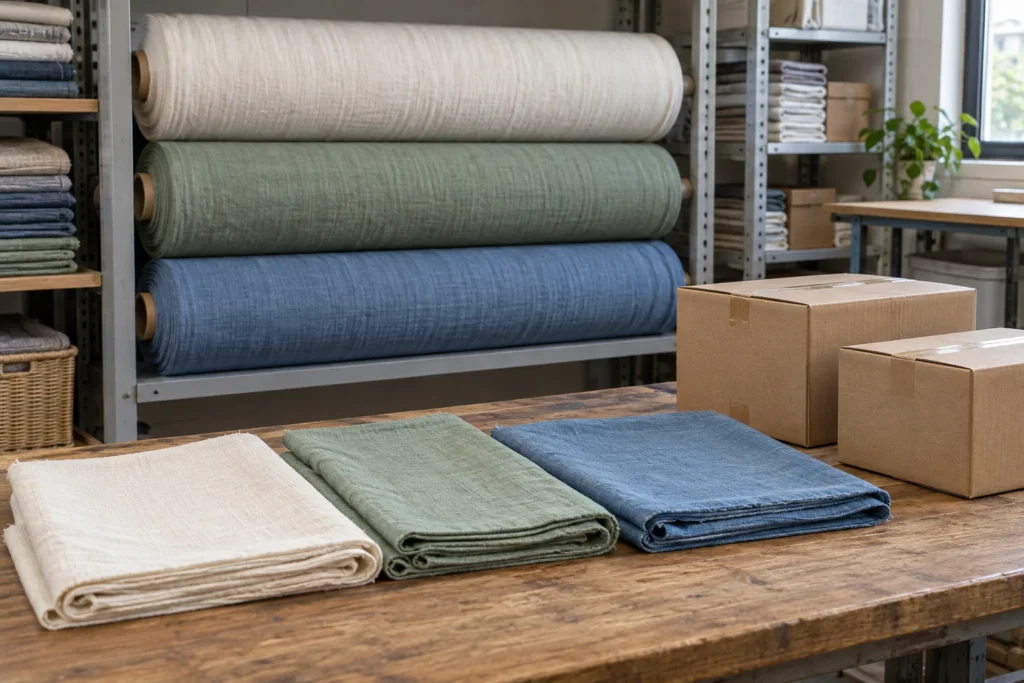
Figure 5. Confirm material availability for future orders.
Compare total commitment and replenishment risk
Quotations from Chinese kidswear manufacturers are easiest to compare when you separate the garment price from everything required to develop, receive, and sell the order. A cheaper unit price can accompany a larger material commitment or a less convenient assortment.
Ask what the minimum order actually applies to
The quoted minimum may apply to a style, a color, a fabric purchase, a print run, or a trim order. Ask which constraint controls your proposed collection. Also ask whether the reorder requirement is different from the opening order.
A supplier might accept a small sewing quantity while a material supplier requires a larger purchase. Establish whether you pay for unused material, who stores it, how long it can be held, and whether it can be used on another approved style. These are commercial terms to negotiate, not automatic benefits.
Request a written breakdown that connects every assumption to your order. If a website advertises a low minimum, ask whether that offer applies to your fabric, customization, and size assortment. Treat the signed quotation as the operative proposal.
Build a cash plan around decisions and milestones
List sample development, materials, production, packaging, inspection, freight, import costs, and receiving charges separately. Obtain current freight and import estimates from the appropriate logistics or customs professionals for your goods and destination.
Then place payments against milestones. You may need funds for development before the final garment is approved and funds for the next order before all opening stock has sold. Model those overlaps using your own sales assumptions.
Use sellable units when evaluating the delivered cost. If part of an order is held for review, the full invoice has still affected cash even though every garment may not be available for sale. Leave room in the plan for investigation and correction rather than assuming a perfect arrival.
Use this cash plan to compare proposals on a common basis and identify questions that could materially change the decision. Replace assumptions with written quotations as they become available.
Plan the reorder before paying for the first batch
Ask Chinese kidswear manufacturers to describe the steps in a repeat order: stock confirmation, material approval, production scheduling, finishing, inspection, dispatch, and transport. A single headline lead time may omit several of those stages.
Find out when a delivery date becomes a commitment and what assumptions can change it. If the brand has a seasonal launch, work backward from goods received and checked at the destination, not simply the date cartons leave the factory.
Discuss how shortages will be handled across variants. A partial shipment may help one store and disrupt another. Decide whether the supplier should hold the order, propose a split shipment, or seek approval for another option. Keep that decision tied to actual demand and the additional costs.
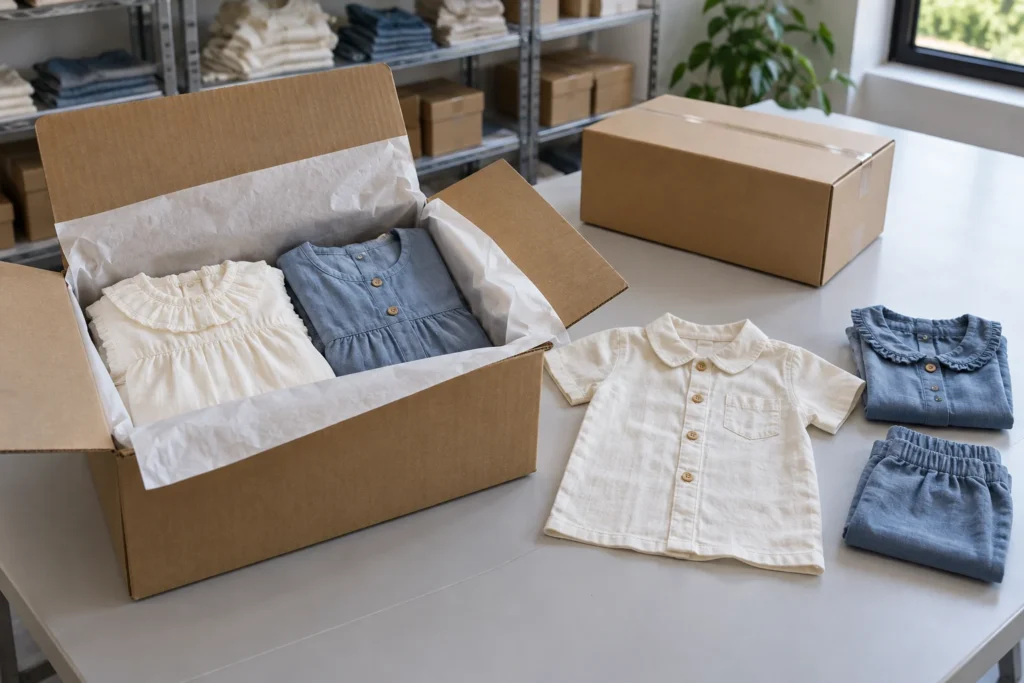
Figure 6. Use a pilot order to check the complete handover.
Choose through a controlled pilot and a clear handover
Once you have narrowed the field, compare Chinese kidswear manufacturers through a pilot that resembles the work you intend to repeat. A basic sample cannot prove performance on a collection with different fabrics, sizes, decorations, and packing requirements.
Define what the pilot needs to prove
Choose a representative product and specify the approval criteria before work begins. Include the final fabric and construction where practical, the size checks needed for your range, the packing method, and the information required at receipt.
Evaluate the process as well as the garment. Did the supplier identify missing details? Were changes documented? Did it ask before substituting a material? Could the packing information be reconciled with the goods?
Keep a record of exceptions and how they were resolved. A supplier that gives an early, specific explanation of a problem may be easier to manage than one that repeatedly promises everything is fine without evidence. Judge that behavior across the actual pilot, not from a single reassuring message.
Make the final selection against your priorities
For a design-led launch, development interpretation and sample correction may carry more weight. For an established basics range, repeat fit, material continuity, and replenishment may dominate. For a warehouse-intensive operation, accurate variant packing may be a deciding requirement.
Set non-negotiable conditions separately from preferences. Missing essential product evidence should not disappear inside an average score that is improved by attractive packaging or a low price. Resolve any mandatory condition before releasing production.
HAPA’s broader guide to البحث عن مصنع ملابس أطفال can help organize the questions you send. Keep your own shortlist grounded in responses to your brief rather than copying a supplier list unchanged.
Does the factory need to connect directly to Shopify?
Not necessarily. If you buy finished stock and use your own warehouse or a fulfillment partner, the factory may only need accurate manufacturing, labeling, and shipment instructions. Any connection to your store should serve a defined operational need.
If the supplier will fulfill customer orders, test how orders and inventory move between systems and who handles failed transfers or returns. A claim of Shopify familiarity is not evidence that this particular workflow has been implemented for you.
Which candidate should you contact first?
Start with the company whose advertised service most closely matches the gap in your team. HAPA presents a kidswear development and private-label scope; Muhong describes kidswear manufacturing alongside its own DTC activity; Hongyu presents both custom apparel and blank-based routes. These are reasons to ask different questions, not independently verified superiority claims.
Send the same representative brief to your chosen candidates, compare the written scope, and order samples only when the assumptions are clear. The best Chinese kidswear manufacturers for Shopify brands are ultimately the suppliers that can demonstrate the required product, documentation, packing, and repeat-order performance for that brand. Let the evidence from your own controlled evaluation decide who earns the production order.